Marie Jean Antoine Nicolas Caritat (1743-1794), Marquis de Condorcet, was born at Ribemont, Picardy, France.
He was educated at the Jesuit College in Reims and at the College of Navarre in Paris. At sixteen his mathematical abilities gained the praise of D’Alembert and Clairaut. A few years later he published a book on the integral calculus. He became a member of the Academy of Sciences in 1769. In 1785 he published a book on the calculus of probability and an important essay on the application of this to deciding the validity of majority decisions in various voting methods. His interests, however, were much broader than mathematics. Through his friendship with the economist Turgot, he became inspector-general of the mint. He moved in the same social circles as Voltaire. He published letters on the corn laws and on theology. He worked for the suppression of slavery.
He welcomed the French Revolution, writing pamphlets supporting democracy and proposing a new constitution. He became a member of the municipality of Paris in 1790, represented Paris in the legislative assembly, and became one of its secretaries. In this capacity he was the principal author of the address to the European powers when they threatened wage war against the new French democracy. As a member of the committee for public instruction, he drew up a plan for the organization of a comprehensive system of state education. In 1791 he announced his support for a republican form of government, ahead of such groups as the Jacobin Club.
His criticism of the death penalty urged for Louis XVI and his objection to the assumption of judicial functions by the political Convention, led to his condemnation as an enemy of the Republic. He fled into hiding at the home of Madame Vernet, who with his wife and friends persuaded him to write, under difficult conditions, his main work, A Sketch for a Historical Picture of the Progress of the Human Mind, and some essays. For his own safety, he was kept as a prisoner in the house. When he eventually escaped from his friends he was captured by villagers who, recognizing the marks of gentility and education, assumed he was an enemy of the Republic and imprisoned him. He was found dead shortly afterwards.
In his major work, written under shadow of almost certain death at the guillotine, he sought to demonstrate that a conspiracy of priest and kings had created the bad laws responsible for most of the evils experienced by the common man. He elaborated nine epochs that mankind had already passed through, the last beginning with a great intellectual revolution of Newton, Locke, and Condillac, and ending with the French moral and political revolution of 1789. Condorcet predicted that the future would see the removal of inequality in freedom and rights among nations and among social classes, and the improvement of individuals—intellectually, morally, and physically.
In this respect, Condorcet attached particular importance to provision of universal education, as did Adam Smith, Thomas Paine, and Thomas Jefferson. He concluded that advances in reason and science would lead people to limit family size so that the ultimate limitation of natural resources would not create a catastrophe for the human race. (Malthus apparently failed to realize this when he criticized Condorcet’s ideas in An Essay on the Principle of Population.) Condorcet also championed the rights of women, in his pamphlet On the Admission of Women to the Rights of Citizenship (1790). Extracts from Condorcet’s works are given below.
History Portrays the Progress of the Human Mind
1 Sensations are attended by pleasure or pain; and man for his part has the capacity to transform such momentary impressions into permanent feelings of an agreeable or disagreeable character, and then to experience these feelings when he either observes or recollects the pleasures and pains of other sentient beings. . . Finally, as a consequence of this capacity and of his ability to form and combine ideas, there arise between him and his fellow-creatures ties of interest and duty, to which nature herself has wished to attach the most precious portion of our happiness and the most painful of our ills.
2 But if one studies this development as it manifests itself in the inhabitants of a certain area at a certain period of time and then traces it on from generation to generation, one has the picture of the progress of the human mind. This progress is subject to the same general laws that can be observed in the development of the faculties of the individual, and it is indeed no more than the sum of that development realized in a large number of individuals joined together in society. What happens at any particular moment is the result of what has happened at all previous moments, and itself has an influence on what will happen in the future.
3 It will be necessary to indicate by what stages what must appear to us today a fantastic hope ought in time to become possible, and even likely—to show why, in spite of the transitory successes of prejudice and the support that it receives from the corruption of governments or peoples, truth alone will obtain a lasting victory. We will demonstrate how nature has joined together indissolubly the progress of knowledge and that of liberty, virtue and respect for the natural rights of man; and how these, the only real goods that we possess (though so often separated that they have even been held to be incompatible) must on the contrary become inseparable from the moment when enlightenment has attained a certain level in a number of nations, and has penetrated throughout the whole mass of a great people whose language is universally known and whose commercial relations embrace the whole area of the globe. Once such a close accord had been established between all enlightened men, from then onwards all will be the friends of humanity, all will work together for its perfection and its happiness. . . .
The Fight to Advance Reason and Science
4 In England Collins and Bolingbroke, in France Bayle, Fontenelle, Voltaire, Montesquieu and the schools founded by these famous men, fought on the side of truth, using in turn all the weapons with which learning, philosophy, wit and literary talent can furnish reason; using every mood from humor to pathos. . . never ceasing to demand the independence of reason and the freedom of the press as the right and the salvation of mankind; protesting with indefatigable energy against all the crimes of fanaticism and tyranny; pursuing, in all matters of religion, administration, morals and law, anything that bore the marks of tyranny, harshness or barbarism; invoking the name of nature to bid kings, captains, magistrates and priests to show respect for human life; laying to their charge, with vehemence and severity, the blood their policy or their indifference still spilled on the battlefield or on the scaffold; and finally, taking for their battle cry—reason, tolerance, humanity . . .
5 Huyghens discovered the laws of circular motion. At the same time he furnished the method of determining to what circle each element of any curve ought to belong. By combining these two theories Newton discovered the theory of curvilinear motion and applied it to those laws which Kepler had found to be followed by the planets in their elliptical orbits. . .
But Newton perhaps did more for the progress of the human mind than discover this general law of nature; he taught men to admit in physics only precise and mathematical theories, which account not merely for the existence of a certain phenomenon but also for its quantity and extension. . .
These discoveries belong to the mathematical sciences. But the nature of the law of universal gravitation and of the principles of mechanics and their consequences in so far as they reflect on the eternal order of the universe are within the province of philosophy . . .
6 All errors in politics and morals are based on philosophical errors and these in turn are connected with scientific errors. There is not a religious system nor a supernatural extravagance that is not founded on ignorance of the laws of nature. The inventors, the defenders of these absurdities could not foresee the successive perfection of the human mind. Convinced that men in their day knew everything that they could ever know and would always believe what they then believed, they confidently supported their idle dreams on the current opinions of their country and their age.
Advances in the physical sciences are all the more fatal to these errors in that they often destroy them without appearing to attack them.
7 At the same time the habit of correct reasoning about the objects of these sciences, the precise ideas gained by their methods, and the means of recognizing or proving the truth of a belief should naturally lead us to compare the sentiment that forces us to accept well founded opinions credible for good reasons, with that which ties us to habitual prejudices or forces us to submit to authority. Such a comparison is enough to teach us to mistrust opinions of the latter kind, to convince us that we do not really believe them even when we boast of believing them, even when we profess them with the purest sincerity. This secret, once discovered, makes their destruction immediate and certain.
Mathematics Helps Us Understand Probabilities
8 The existing applications of the calculus of probability foretell how they can aid the progress of the other sciences. In some cases they can determine the probability of unusual facts and inform us whether they should be rejected or whether they deserve to be verified. In other cases they can determine the probability of the constant recurrence of those facts that often present themselves in the practice of the arts and are not by themselves linked to an order already regarded as a general law: as, for example, in medicine the salutary results of certain remedies and the success of certain preservatives. Other applications show us what is the probability of a class of phenomena being the result of the intention of an intelligent being or of their being dependent on other preceding or coexisting phenomena; the probability too that must be attributed to that necessary and unknown cause that we call chance, a word whose true meaning can be determined only by the study of this calculus.
9 These applications have also taught us to recognize the different degrees of certainty that we can hope to attain, the degree of likelihood an opinion must possess before we can adopt it and use it in argument—without infringing the rights of reason or the principles of conduct, without sacrificing prudence or offending justice. They show us the advantages and disadvantages of the different systems of voting and the different ways of deciding an issue by a majority vote; the different degrees of probability that these methods produce, and for any question the degree that the public interest may rightly demand.
10 And how useful to public economy has been the application of this same calculus in the organization of life annuities, tontines, private savings banks, benefit schemes and insurance policies of every kind! Ought not the application of the calculus of probability to be applied to that part of public economy which includes the theory of measures, money, banking, financial operations, as well as taxation, its legal distribution, its actual distribution which so often contradicts the law, and its consequences for all sections of the social system?
11 The progress of philosophy and the sciences has favored and extended the progress of letters, and this in turn has served to make the study of the sciences easier, and that of philosophy more popular. The sciences and the arts have assisted one another despite the efforts of the ignorant and the foolish to separate them and make them enemies. Scholarship, which seemed doomed by its respect for the past and its deference towards authority always to lend its support to harmful superstitions, has nevertheless contributed to their eradication, for it was able to borrow the torch of a sounder criticism from philosophy and the sciences. It already knew how to weigh up authorities and compare them; it now learned how to bring every authority before the bar of Reason. It had already discounted prodigies, fantastic anecdotes, facts contrary to all probability; but after attacking the evidence on which such absurdities relied, it now learned that all extraordinary facts must always be rejected, however impressive the evidence in their favor, unless this can truly turn the scale against the weight of their physical or moral probability.
Seeking Progress from Misery to Happiness
12 We still see vast areas in which men groan in slavery, vast areas offering the spectacle of nations either degraded by the vices of a civilization whose progress is impeded by corruption, or still vegetating in the infant condition of early times. We observe that the labors of recent ages have done much for the progress of the human mind, but little for the perfection of the human race; that they have done much for the honor of man, something for his liberty, but so far almost nothing for his happiness. At a few points our eyes are dazzled with a brilliant light; but thick darkness still covers an immense stretch of the horizon. There are a few circumstances from which the philosopher can take consolation; but he is still afflicted by the spectacle of the stupidity, slavery, barbarism, and extravagance of mankind; and the friend of humanity can find unmixed pleasure only in tasting the sweet delights of hope for the future.
13 If man can, with almost complete assurance, predict phenomena when he knows their laws, and if, even when he does not, he can still, with great expectation of success, forecast the future on the basis of his experience of the past, why, then, should it be regarded as a fantastic undertaking to sketch, with some pretence to truth, the future destiny of man on the basis of his history? The sole foundation for belief in the natural sciences is this idea, that the general laws directing the phenomena of the universe, known or unknown, are necessary and constant. Why should this principle be any less true for the development of the intellectual and moral faculties of man than for the other operations of nature? Since beliefs founded on past experience of like conditions provide the only rule of conduct for the wisest of men, why should the philosopher be forbidden to base his conjectures on these same foundations, so long as he does not attribute to them a certainty superior to that warranted by the number, the constancy, and the accuracy of his observations?
The Causes of Inequality
14 Our hopes for the future condition of the human race can be subsumed under three important heads:
The abolition of inequality between nations,
The progress of equality within each nation,
The true perfection of mankind.
15 Are those differences which have hitherto been seen in every civilized country in respect of the enlightenment, the resources, and the wealth enjoyed by the different classes into which it is divided, is that inequality between men which was aggravated or perhaps produced by the earliest progress of society, are these part of civilization itself, or are they due to the present imperfections of the social art? Will they necessarily decrease and ultimately make way for a real equality, the final end of the social art, in which even the effects of the natural differences between men will be mitigated and the only kind of inequality to persist will be that which is in the interests of all and which favors the progress of civilization, of education, and of industry, without entailing either poverty, humiliation, or dependence?
16 In looking at the history of societies we shall have had occasion to observe that there is often a great difference between the rights that the law allows its citizens and the rights that they actually enjoy, and, again, between the equality established by political codes and that which in fact exists amongst individuals: and we shall have noticed that these differences were one of the principal causes of the destruction of freedom in the ancient republics, of the storms that troubled them, and of the weakness that delivered them over to foreign tyrants.
These differences have three main causes: inequality in wealth; inequality in status between the man whose means of subsistence are hereditary and the man whose means are dependent on the length of his life (or, rather, on that part of his life in which he is capable of work); and, finally, inequality in education.
We therefore need to show that these three sorts of real inequality must constantly diminish without however disappearing altogether: for they are the result of natural and necessary causes which it would be foolish and dangerous to wish to eradicate; and one could not even attempt to bring about the entire disappearance of their effects without introducing even more fecund sources of inequality, without striking more direct and more fatal blows at the rights of man.
Removing Inequalities in Wealth
17 It is easy to prove that wealth has a natural tendency to equality, and that any excessive disproportion could not exist or at least would rapidly disappear if civil laws did not provide artificial ways of perpetuating and uniting fortunes; if free trade and industry were allowed to remove the advantages that accrued wealth derives from any restrictive law or fiscal privilege; if taxes on covenants, the restrictions placed on their free employment, their subjection to tiresome formalities and the uncertainty and inevitable expense involved in implementing them did not hamper the activity of the poor man and swallow up his meager capital; if the administration of the country did not afford some men ways of making their fortune that were closed to other citizens; if prejudice and avarice, so common in old age, did not preside over the making of marriages; and if, in a society enjoying simpler manners and more sensible institutions, wealth ceased to be a means of satisfying vanity and ambition, and if the equally misguided notions of austerity, which condemn spending money in the cultivation of the more delicate pleasures, no longer insisted on the hoarding of all one's earnings.
18 Let us turn to the enlightened nations of Europe, and observe the size of their present populations in relation to the size of their territories. Let us consider, in agriculture and industry, the proportion that holds between labor and the means of subsistence, and we shall see that it would be impossible for those means to be kept at their present level and consequently for the population to be kept at its present size if a great number of individuals were not almost entirely dependent for the maintenance of themselves and their family either on their own labor or on the interest from capital invested so as to make their labor more productive. Now both these sources of income depend on the life and even on the health of the head of the family. They provide what is rather like a life annuity, save that it is more dependent on chance; and in consequence there is a very real difference between people living like this and those whose resources are not at all subject to the same risks, who live either on revenue from land, or on the interest on capital which is almost independent of their own labor.
Here then is a necessary cause of inequality, of dependence and even of misery, which ceaselessly threatens the most numerous and most active class in our society.
19 We shall point out how it can be in great part eradicated by guaranteeing people in old age a means of livelihood produced partly by their own savings and partly by the savings of others who make the same outlay, but who die before they need to reap the reward; or, again, on the same principle of compensation, by securing for widows and orphans an income which is the same and costs the same for those families which suffer an early loss and for those which suffer it later; or again by providing all children with the capital necessary for the full use of their labor, available at the age when they start work and found a family, a capital which increases at the expense of those whom premature death prevents from reaching this age.
It is to the application of the calculus to the probabilities of life and the investment of money that we owe the idea of these methods which have already been successful, although they have not been applied in a sufficiently comprehensive and exhaustive fashion to render them really useful, not merely to a few individuals, but to society as a whole, by making it possible to prevent those periodic disasters which strike at so many families and which are such a recurrent source of misery and suffering.
Achieving Equality in Education
20 The degree of equality in education that we can reasonably hope to attain, but that should be adequate, is that which excludes all dependence, either forced or voluntary. We shall show how this condition can be easily attained in the present state of human knowledge even by those who can study only for a small number of years in childhood, and then during the rest of their life in their few hours of leisure. We shall prove that, by a suitable choice of syllabus and methods of education, we can teach the citizen everything that he needs to know in order to be able to manage his household, administer his affairs, and employ his labor and his faculties in freedom; to know his rights and to be able to exercise them; to be acquainted with his duties and fulfill them satisfactorily; to judge his own and other men's actions according to his own lights and to be a stranger to none of the high and delicate feelings which honor human nature; not to be in a state of blind dependence upon those to whom he must entrust his affairs or the exercise of his rights; to be in a proper condition to choose and supervise them; to be no longer the dupe of those popular errors which torment man with superstitious fears and chimerical hopes; to defend himself against prejudice by the strength of his reason alone; and, finally, to escape the deceits of charlatans who would lay snares for his fortune, his health, his freedom of thought and his conscience under the pretext of granting him health, wealth, and salvation.
21 We shall show how favorable to our hopes would be a more universal system of education by giving a greater number of people the elementary knowledge which could awaken their interest in a particular branch of study, and by providing conditions favorable to their progress in it; and how these hopes would be further raised, if more men possessed the means to devote themselves to these studies, for at present even in the most enlightened countries scarcely one in fifty of the people who have natural talents, receives the necessary education to develop them; and how, if this were done there would be a proportionate increase in the number of men destined by their discoveries to extend the boundaries of science.
22 . . . These various causes of equality do not act in isolation; they unite, combine, and support each other and so their cumulative effects are stronger, surer, and more constant. With greater equality of education there will be greater equality in industry and so in wealth; equality in wealth necessarily leads to equality in education: and equality between the nations and equality within a single nation are mutually dependent.
So we might say that a well directed system of education rectifies natural inequality in ability instead of strengthening it, just as good laws remedy natural inequality in the means of subsistence, and just as in societies where laws have brought about this same equality, liberty, though subject to a regular constitution, will be more widespread, more complete than in the total independence of savage life. Then the social art will have fulfilled its aim, that of assuring and extending to all men enjoyment of the common rights to which they are called by nature.
23 In the political sciences there are some truths that, with free people (that is to say, with certain generations in all countries) can be of use only if they are widely known and acknowledged. So the influence of these sciences upon the freedom and prosperity of nations must in some degree be measured by the number of truths that, as a result of elementary instruction, are common knowledge; the swelling progress of elementary instruction, connected with the necessary progress of these sciences promises us an improvement in the destiny of the human race, which may be regarded as indefinite, since it can have no other limits than that of this same progress.
The Need to Provide Equality for Women
24 Certain violations of natural right have escaped the notice of philosophers and legislators, even while concerning themselves zealously to establish the common rights of individuals of the human race, and in this way to lay the foundation of political institutions. For example, have they not all violated the principle of the equality of rights in tranquilly depriving one-half of the human race of the right of taking part in the formation of laws by the exclusion of women from the rights of citizenship?
To show that this exclusion is not an act of tyranny, it must be proved either that the natural rights of women are not absolutely the same as those of men, or that women are not capable of exercising these rights.
But the rights of men result simply from the fact that they are rational, sentient beings, susceptible of acquiring ideas of morality, and of reasoning concerning those ideas. Women having, then, the same qualities, have necessarily the same rights. Either no individual of the human species has any true rights, or all have the same; and he or she who votes against the rights of another, whatever may be his or her religion, color, or sex, has by that fact abjured his own.
25 It would be difficult to prove that women are incapable of exercising the rights of citizenship. Although liable to become mothers of families, and exposed to other passing indispositions, why may they not exercise rights of which it has never been proposed to deprive those persons who periodically suffer from gout, bronchitis, etc.?
26 It is said that no woman has made any important discovery in science, or has given any proofs of the possession of genius in arts, literature, etc. But, on the other hand, it is not pretended that the rights of citizenship should be accorded only to men of genius. It is added that no woman has the same extent of knowledge, the same power of reasoning, as certain men; but what results from that? Only this, that with the exception of a limited number of exceptionally enlightened men, equality is absolute between women and the remainder of the men; that this small class apart, inferiority and superiority are equally divided between the two sexes. But since it would be completely absurd to restrict to this superior class the rights of citizenship and the power of being entrusted with public functions, why should women be excluded any more than those men who are inferior to a great number of women?
27 Lastly, shall it be said that there exists in the minds and hearts of women certain qualities which ought to exclude them from the enjoyment of their natural rights? Let us interrogate the facts. Elizabeth of England, Maria Theresa, the two Catherines of Russia—have they not shown that neither in courage nor in strength of mind are women wanting?
28 Women are superior to men in the gentle and domestic virtues. They, as well as men, know how to love liberty, although they do not participate in all its advantages; and in republics they have been known to sacrifice themselves for it. They have shown that they possess the virtues of citizens whenever chance or civil disasters have brought them upon a scene from which they have been shut out by the pride and the tyranny of men in all nations.
29 It has been said that women, in spite of much ability, of much sagacity, and of a power of reasoning carried to a degree equaling that of subtle dialecticians, yet are never governed by what is called "reason".
This observation is not correct. Women are not governed, it is true, by the reason (and experience) of men; they are governed by their own reason (and experience).
Their interests not being the same (as those of men) by the fault of the law, the same things not having the same importance for them as for men, they may, without failing in rational conduct, govern themselves by different principles, and tend towards a different result. It is as reasonable for a woman to concern herself respecting her personal attractions as it was for Demosthenes to cultivate his voice and his gestures.
30 Excluded from public affairs, from all those things which are judged of according to rigorous ideas of justice, or according to positive laws, the things with which they are occupied and which are affected by them are precisely those which are regulated by natural feelings of honesty (or, rather, propriety) and of sentiment. It is, then, unjust to allege as an excuse for continuing to refuse to women the enjoyment of all their natural rights motives that have only a kind of reality because women lack the experience which comes from the exercise of these rights.
31 If reasons such as these are to be admitted against women, it will become necessary to deprive of the rights of citizenship that portion of the people who, devoted to constant labor, can neither acquire knowledge nor exercise their reason; and thus, little by little, only those persons would be permitted to be citizens who had completed a course of legal study. If such principles are admitted, we must, as a natural consequence, renounce the idea of a liberal constitution. Only the various aristocracies have had such principles as these for foundation or excuse.
32 Neither can the subjection of wives to their husbands be alleged against their claims, since it would be possible in the same statute to destroy this tyranny of the civil law. The existence of one injustice can never be accepted as a reason for committing another.
Responding to the Limits of Natural Resources
33 With all the progress in industry and welfare that establishes a happier proportion between men's talents and their needs, each successive generation will have larger possessions, either as a result of this progress or through the preservation of the products of industry; and so, as a consequence of the physical constitution of the human race, the number of people will increase. Might there not then come a moment when these necessary laws begin to work in a contrary direction; when, the number of people in the world finally exceeding the means of subsistence, there will in consequence ensue a continual diminution of happiness and population, a true retrogression, or at best an oscillation between good and bad?
34 But even if we agree that the limit will one day arrive, nothing follows from it that is in the least alarming as far as either the happiness of the human race or its indefinite perfectibility is concerned; if we consider that, before all this comes to pass, the progress of reason will have kept pace with that of the sciences, and that the absurd prejudices of superstition will have ceased to corrupt and degrade the moral code by its harsh doctrines instead of purifying and elevating it, we can assume that by then men will know that, if they have a duty towards those who are not yet born, that duty is not to give them existence but to give them happiness; their aim should be to promote the general welfare of the human race or of the society in which they live or of the family to which they belong, rather than foolishly to encumber the world with useless and wretched beings.

It is, then, possible that there could be a limit to the amount of food that can be produced, and, consequently, to the size of the population of the world, without this involving that untimely destruction of some of those creatures who have been given life, which is so contrary to nature and to social prosperity . . .
the last thing he commented on was fucking ol ladies in mens clothing who whine
 He was called to the bar in 1859, but, although contributing to a Liberal review, edited by Challemel-Lacour
 , did not make much of an impression until, on 17 November 1868, he was selected to defend the journalist Delescluze,

 a young officer of engineers, as his assistant secretary of war, he displayed prodigious energy and intelligence. He quickly organized an army, which might have relieved Paris if Metz had held out, but Bazaine's surrender brought the army of the Prussian crown prince into the field, and success was impossible. After the French defeat near Orléans early in December the seat of government was transferred to Bordeaux.In May 1869, he was elected to the Assembly, both by a district in Paris and another inMarseille, defeating Hippolyte Carnot
 for the former constituency and Adolphe Thiers
 andFerdinand de Lesseps
 for the latter. He chose to sit for Marseille, and lost no opportunity of attacking the Empire in the Assembly. At first opposed to the war with Germany, he did not, like some of his colleagues, refuse to vote for funds for the army, but took a patriotic line and accepted that the war had been forced on France. When the news of the disaster at Sedan
 reached Paris, Gambetta called for strong measures. He proclaimed the deposition of the emperor at the corps législatif, and the establishment of a republic at the Hôtel de Ville. He was one of the first members of the new Government of National Defense, becomingMinister of the Interior. He advised his colleagues to leave Paris and run the government from some provincial city.

 . On (17 January) (1870), he spoke out against naming a new Imperial Lord Privy Seal, putting him into direct conflict with the regime's de facto prime minister, Emile Ollivier.
  (see Reinach, J., Discours et Playdories de Léon Gambetta, I.102 – 113) His powerful oratory caused a complete breakdown of order in the Corps. The Monarchist Right continually tried to interrupt his speech, only to have Gambetta's supporters on the Left attack them. The disagreement reached a high point when M. le Président Schneider asked him to bring his supporters back into order. Gambetta responded, thundering "l'indignation exclut le calme!"(Reinach, Discours et Playdories, I.112)Self-Exile to San Sebastián
 . Gambetta's stance has been explained by reference to his status as a republican lawyer, who fought from the bar instead of the barricade and also to his father having been a grocer in Marseille. As a small-scale producer during the decades of the Second Industrial Revolution in France, Joseph Gambetta had chain groceries taking business away from his establishment. This added a measure of resentment to the "petit bourgeois" identity. This resentment was not only directed at bourgeois industrial capitalism, but also at the worker, who was now proclaimed as the backbone of the French economy, stripping the title from the small, independent shopkeeper. This resentment may have been passed down from father to son, and manifested itself in an unwillingness to support the lower-class Communards usurpation of what rightfully belonged to the "petit bourgeoisie."On 24 June 1871, a letter was sent by Gambetta to his Parisian confidant, Dr. Édouard Fieuzal:While in San Sebastián, Gambetta walked the beaches daily, the warm sea winds of early spring doing little to refresh his mind. Meanwhile the Paris Commune had taken control of the city. Despite his earlier career, Gambetta voiced his opposition to the Commune in a letter to Antonin Proust, his former secretary while Minister of the Interior, in which he referred to the Commune as "les horribles aventures dans lesquelles s’engage ce qui reste de cette malheureuse France".
 , a small coal-mining town along the Loire River. There, he boldly proclaimed the radical republic he once supported to be "avoided as a plague" (se tenir éloignés comme de la peste) (Discours, III.5). From there, he went to Grenoble. On 26 September 1872, he proclaimed the future of the Republic to be in the hands of "a new social level" (une couche sociale nouvelle) (Discours, III.101), ostensibly the petite bourgeoisie to whom his father belonged.
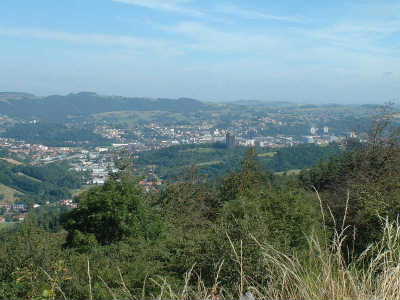 , a small coal-mining town along the Loire River. There, he boldly proclaimed the radical republic he once supported to be "avoided as a plague" (se tenir éloignés comme de la peste) (Discours, III.5). From there, he went to Grenoble. On 26 September 1872, he proclaimed the future of the Republic to be in the hands of "a new social level" (une couche sociale nouvelle) (Discours, III.101), ostensibly the petite bourgeoisie to whom his father belonged.
 ; nor did he attempt to form a ministry, but accepted the office of president of the chamber of deputies in January 1879. This position did not prevent his occasionally descending from the presidential chair to make speeches, one of which, advocating an amnesty to the communards, was especially memorable. Although he directed the policy of the various ministries from behind the scenes, he evidently thought that the time was not ripe for asserting openly his direction of the policy of the Republic, and seemed inclined to observe a neutral attitude as far as possible. However, events hurried him on, and early in 1881 he headed off a movement for restoring scrutin de liste, or the system by which deputies are returned by the entire department which they represent, so that each elector votes for several representatives at once, in place of scrutin d'arrondissement, the system of small constituencies, giving one member to each district and one vote to each elector. A bill to re-establish scrutin de liste was passed by the Assembly on 19 May 1881, but rejected by the Senate on 19 June.When Adolphe Thiers resigned in May 1873, and a Royalist, Marshal MacMahon
 , was placed at the head of the government, Gambetta urged his friends to a moderate course. By his tact, parliamentary dexterity and eloquence, he was instrumental in voting in the French Constitutional Laws of 1875 in February 1875. He gave this policy the appropriate name of "opportunism," and became one of the leader of the "Opportunist Republicans". On 4 May 1877, he denounced "clericalism" as the enemy. During the 16 May 1877 crisis, Gambetta, in a speech at Lille on 15 August called on President MacMahon se soumettre ou se démettre, to submit to parliament's majority or to resign. Gambetta then campaigned to rouse the republican party throughout France, which culminated in a speech at Romans (18 September 1878) formulating its programme. MacMahon, unwilling to resign or to provoke civil war, had no choice but to dismiss his advisers and form a moderate republican ministry under the premiership of Dufaure
 .Léonie Léon in 1875The romance of his life was his connection with Léonie Leon, the full details of which were not known to the public till her death in 1906. She was the daughter of a creole French artillery officer. Gambetta fell in love with her in 1871. She became his mistress, and the liaison lasted until he died. Gambetta constantly urged her to marry him during this period, but she always refused, fearing to compromise his career; she remained, however, his confidante and intimate adviser in all his political plans. It seems she had just consented to become his wife, and the date of the marriage had been fixed, when the accident which caused his death occurred in her presence. Contradictory accounts of this fatal episode exist, but it was certainly accidental, and not suicide. Her influence on Gambetta was absorbing, both as lover and as politician, and the correspondence which has been published shows how much he depended upon her.However, some of her later recollections are untrustworthy. For example, she claimed that an actual interview took place in 1878 between Gambetta and Bismarck. That Gambetta after 1875 felt strongly that the relations between France and Germany might be improved, and that he made it his object, by travelling incognito, to become better acquainted with Germany and the adjoining states, may be accepted, but M. Laur appears to have exaggerated the extent to which any actual negotiations took place. On the other hand, the increased knowledge of Gambetta's attitude towards European politics which later information has supplied confirms the view that in him France lost prematurely a master mind, whom she could ill spare. In April 1905 a monument by Dalou to his memory at Bordeaux was unveiled byPresident Loubet.
 , who did his mortuary mask, and his personal photographer Étienne Carjat
 all sat at his death-bed, making five widely different representations of him which were each published by the press the following day. His public funeral on 6 January 1883 evoked one of the most overwhelming displays of national sentiment ever witnessed.
 Maison de Jardis, the place where Gambetta died in Sèvres.


 An adherent of the theory of the divine right of kings, which advocates the divine origin and lack of temporal restraint of monarchical rule, Louis continued his predecessors' work of creating a centralized state governed from the capital. He sought to eliminate the remnants of feudalismpersisting in parts of France and, by compelling the noble elite to inhabit his lavish Palace of Versailles, succeeded in pacifying the aristocracy, many members of which had participated in the Fronde rebellion during Louis' minority. By these means he consolidated a system of absolute monarchical rule in France that endured until the French Revolution.
 the War of the League of Augsburg,
  and the War of the Spanish Succession—and two minor conflicts
 —the War of Devolution
 and the War of the Reunions. Louis encouraged and benefited from the work of prominent political, military and cultural figures such as Mazarin, Colbert
 , Turenne
  andVauban
 , as well as Molière
 , Racine,
 Boileau, La Fontaine, Lully, Le Brun, Rigaud, Le Vau, Mansart, Charles and Claude Perrault, and Le Nôtre.
 and Bourgogne's eldest son and his second eldest son, Louis, duc de Bretagne (the older brothers of the future Louis XV)—
 predeceased him


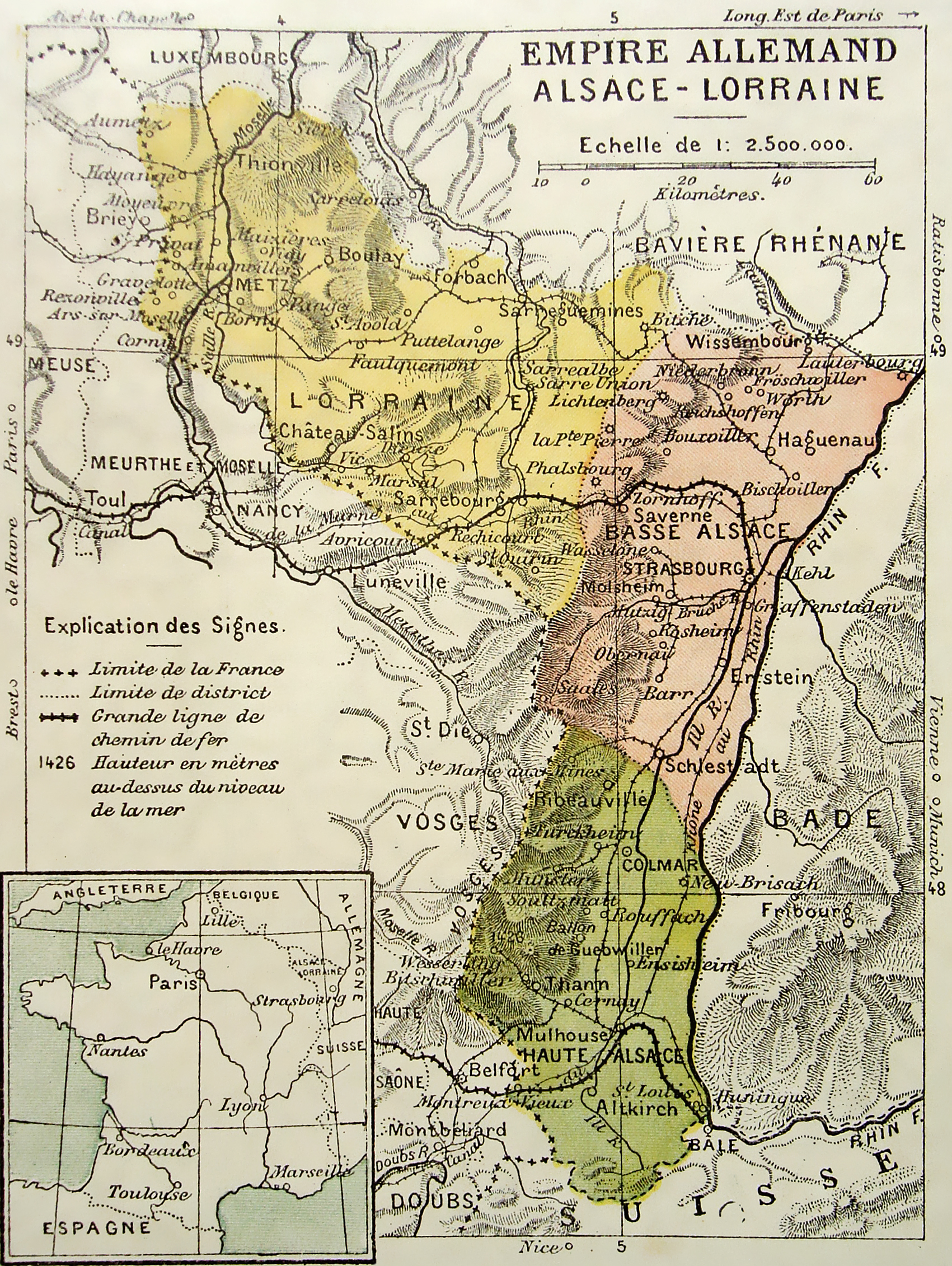
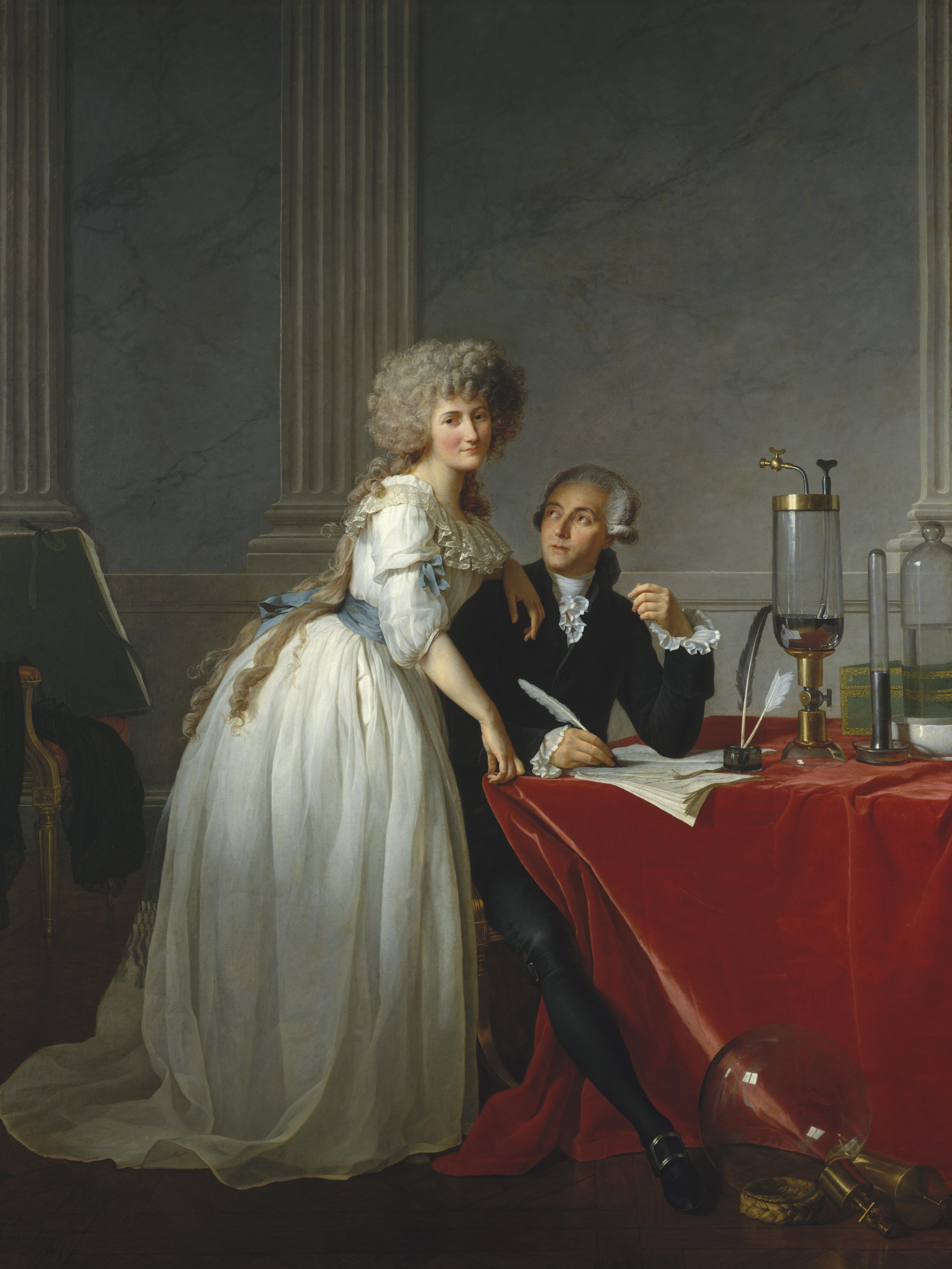


 during the Reign of Terror, in 1794. He had also intervened on behalf of a number of foreign-born scientists including mathematician Joseph Louis Lagrange, granting them exception to a mandate stripping all foreigners of possessions and freedom. Lavoisier was tried, convicted, and guillotined on 8 May in Paris, at the age of 50.