
Showing posts with label mexican war. Show all posts
Showing posts with label mexican war. Show all posts
Tuesday, 22 May 2012


Tuesday, 27 December 2011
cerro corda

In 1821 the old authoritarian system of Spain collapsed in Mexico leaving no group of citizens trained to assume the responsibility of government.(above one of my commercial figures available for sale in unpainted form)form
 (excellent opportunity to convert here with crescent figure , change hat to dragoon model , change pistol to colt, use maybe the timpo confederate one,add sabre in other hand then cut off pockets and holster, paint in details of dragoon jacket)
 change this one into either infantry of tenneessee rifiles, keep hat but change rifle to look longer, change boots to trousers)"The Mexicans tried
 every form of government: an empire with a self made emperor, a federal republic, a centralist republic, and a dictatorship.
 The results were always disastrous. … The dominant feature in the history of early Mexico were rebellions of generals who pronounced themselves against the government and proclaimed a "plan" denouncing existing
  abuses and promising reforms." plastyic
 figures from the great blog i like what i like
"The leading actor in this tragicomedy was Antonio Lopez de Santa Anna Perez de Lebron. Born in Jalapa on February 21, 1794,
 to a family of indifferent social standing, he had a gift for concocting plans and instigating pronunciamientos that remains unmatched to this day. A talented commander, revered as a hero for his battle victories, and a
  clever politician who was able to shift his allegiance when public opinion changed, he was in turn the champion of the liberals, the defender of the conservatives, and the promoter of dictatorship."
above from my collection mexican lancer from irregular miniatures) Santa Anna's military career began on June 10, 1810, despite his father's objections, he became an infantry cadet fighting for the Spanish against the insurgents. He quickly climbed up the ranks becoming a lieutenant by the age of 18. "He first appeared on the political scene at Veracruz in 1821 when he switched his allegiance away from Spain and pronounced for "El Libertador," Agustin de Iturbide."

Santa Anna decided to secure his place in history as a outstanding military leader in Mexico's war of independence by liberating the city of Veracruz from Spanish control. Veracruz's defenses were considered impregnable, but this did not deter Santa Anna. On July 21, 1821, he led a vigorous assault on the city.
 He continued the battle until October 21, when the Spanish retreated to the harbor island fortress of San Juan de Ulua. Santa Anna proclaimed Veracruz liberated.
  He was emerging as a revolutionary hero.
On May 19, 1822, Agustin de Iturbide was named the first emperor of Mexico, but his reign would be short-lived. Iturbide's obsessive vanity and his neglect of his duties drove the country's economy to ruin. Within ten months his empire had collapsed. In December of 1822 Santa Anna pronounced Veracruz, were he was governor, against the empire and proclaimed a republic. Santa Anna prepared his forces in Veracruz for Iturbide's attack, but the assault never materialized. Instead, other generals joined Santa Anna in rejecting Iturbide as emperor. In February 1823 virtually all military and political leaders signed the Plan of Casa Mata. This declaration called for an end to Iturbide's rule.

On July 27 1829, the Spanish made their last desperate bid to regain control of Mexico. They sent a small expedition of three thousand soldiers to Tampico, Mexico to reconquer her former colony.
 Drawing upon his authority as governor of the state of Veracruz, Santa Anna recruited and armed two thousand men. It was a small force, but it was large enough to be a formidable military threat. "The new general rushed to Tampico to beat off the Spaniards, who had already been defeated by heat and yellow fever. After a short but bloody action, the Spanish troops surrendered, and Santa Anna began to be known throughout Mexico as the "Savior of the Country" and the "Victor of Tampico." Santa Anna himself retired to his hacienda and was quoted as saying, "that I would not have to answer another call to arms."
Santa Anna's retirement would not be a long one. In the early 1830 Vice-president Anastasio Bustamante took over the president's office from Vincente Guerrero.
 "Bustamante's administration improved government finances, but ruled Mexico through terror, imprisonment, and assassination. One victim of the firing squad was Guerrero." The execution of Guerrero angered many Mexicans and triggered another military revolt. Santa Anna was one of the first to pronounce against Bustamante. By the end of that year Bustamante was removed from office. On April 1, 1833, Santa Anna was elected president of the republic. United States forces captured the port of Veracruz on March 27, 1847.(above a conversion from the excellent blog I LIKE WHAT I LIKE)
 Following this, General Winfield Scott advanced towards Mexico City. General Antonio López de Santa Anna,
 commanding Mexican forces in the area, blocked Scott's march at Cerro Gordo, near Xalapa,
 with more than 12,000 soldiers in a fortified defile. Represented were the remnants of the Division of the North (5,650 total: 150 Artillery, 4,000 Infantry & 1,500 Cavalry: Ampudia Brigade (3d,4th,5th & 11th Line Infantry Regiments),
 (above my version of Robert E Lee with new metal scabbard and sword)Vasquez Brigade (1st,2d,3d & 4th Light Infantry Regiments) and Juvera Cavalry Brigade (5th, 9th Morelia & Coraceros Cavalry Regiments), plus reinforcements from the Capitol: Rangel Brigade (6th Infantry
  (one of my commercial toy soldier figures of Cerro Corda battle)Regiment, Grenadiers of the Guard, Libertad & Galeana Battalions, two Cavalry Squadrons & 8 guns), Pinzon Brigade, Arteaga Brigade (Puebla Activo & Natl Guards Battalions)& Canalizo Special Cavalry
  Division.
Army Corps of Engineers Capt. Robert E. Lee discovered a mountain trail around Santa Anna's position.
 (Lees stained glass window in his honour)General Scott quickly moved the main body of his command along the trail, flanking the Mexicans. A sharp action ensued on April 18, 1847, routing Santa Anna's force.
(Above another of my commercial figures representing the battle, these are in metal but thought you'd like to see some of the range maybe with an idea to copying in plastic as regards a conversion)
 The Mexicans lost 1,000 killed and wounded with an additional 3,000 men taken prisoner. United States casualties comprised 64 killed and 353 wounded. General Santa Anna, caught off guard by the Fourth
 Regiment of the Illinois Volunteer Infantry, was compelled to ride off without his artificial leg,
  which was captured and is still on display at the Illinois State Military Museum in Springfield, Illinois.
This battle has been called "the Battle of Thermopylae of the West", because the use of terrain was similar to the maneuver that the Persians used to eventually defeat the Greeks. During the rout, members of the Saint Patrick's Battalion provided the Mexicans with the greatest opposition to United States forces in this battle.
 They had the most to fear being captured by the Americans, leading them to threaten with friendly fire fellow Mexican combatants intent on retreating or surrendering. Because of heavy artillery engagement by
  Americans, the battalion's members had to spend most of their time returning volley
 at the Americans; therefore, its unlikely that more than a few "friendly fire" incidents actually took place.
Scott moved on to Puebla,
 75 miles (120 km) from Mexico City, where he halted on May 15, 1847. There were five company grade officers in Scott's corp of engineers who were of significant historical interest; Captain Robert E. Lee, Captain George B. McClellan,
 Captain Joseph E. Johnston,
 Lieutenant John G. Foster
  and Lieutenant P. G. T. Beauregard.
  All went on to serve as generals in the American Civil War (1861–1865).
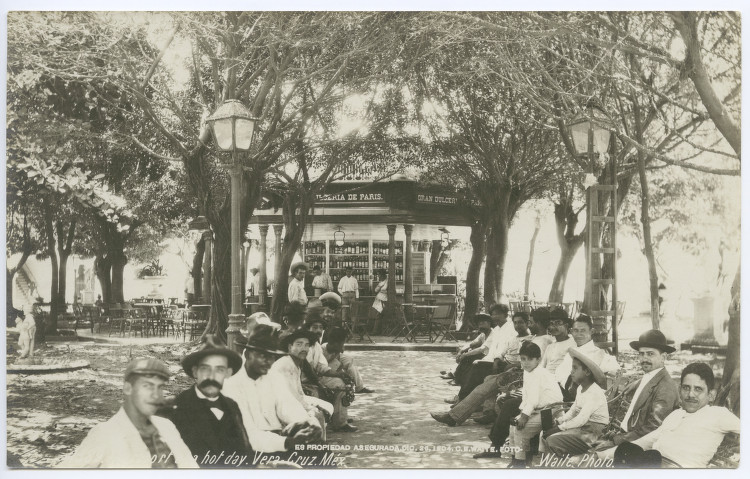
 senorita in vera cruz
The weapons of the U.S. soldiers in the Mexican-American War included muskets and rifles, pistols, Colt revolvers, bayonets and swords, and artillery pieces. The high quality and reliability of the U.S. weapons, and the mobility of the Flying Artillery, gave the U.S. soldiers a distinct advantage over their Mexican counterparts.
The .69-caliber, smoothbore flintlock musket was standard issue for the U.S. soldier. It had an effective range of about 100 yards. About ten different models were used during the war, the most famous being the 1822 model.
 Some troops also carried the Hall breech-loading flintlock rifle or the Model 1841 percussion musket (also called the “Mississippi rifle”). Relatively few men carried percussion rifles. Many officers carried double-barreled shotguns for close combat. Dragoons also occasionally were armed with breech-loading Hall carbines with a shorter barrel.
Some troops also carried the Hall breech-loading flintlock rifle or the Model 1841 percussion musket (also called the “Mississippi rifle”). Relatively few men carried percussion rifles. Many officers carried double-barreled shotguns for close combat. Dragoons also occasionally were armed with breech-loading Hall carbines with a shorter barrel.The Model 1816 Musket was originally produced at Harper's Ferry Arsenal and the Springfield Armory Arsenal. They were produced between 1816 and 1844 copying the design of the 1777 French Muskets. below

Standard sidearms were flintlock or percussion smoothbore pistols that were inaccurate beyond a range of 10 or 15 yards. Other troops, most notably officers and Texas Rangers, carried the more expensive Colt revolver. The Hartford Courant reported that “each arm is calculated to hold six  charges, which may be fired in as many seconds, and again reloaded as quickly as an ordinary fire arm. The regiment of the United States Mounted Rifles,
 for whom a thousand of these arms have been made…can fire a volley of six thousand balls into an enemy’s ranks, without loading, and
  afterwards load and fire at the rate of six thousand charges per minute.”
  The Colt, of course, was effective only in close quarters, such as colliding cavalry charges or hand-to-hand combat. Other weapons included swords, bayonets, and Bowie knives.
charges, which may be fired in as many seconds, and again reloaded as quickly as an ordinary fire arm. The regiment of the United States Mounted Rifles, for whom a thousand of these arms have been made…can fire a volley of six thousand balls into an enemy’s ranks, without loading, and afterwards load and fire at the rate of six thousand charges per minute.” The Colt, of course, was effective only in close quarters, such as colliding cavalry charges or hand-to-hand combat. Other weapons included swords, bayonets, and Bowie knives.Saturday, 11 June 2011
Mexican American war

Subscribe to:
Posts (Atom)