
Thursday, 20 May 2010


Sunday, 16 May 2010

Saturday, 15 May 2010

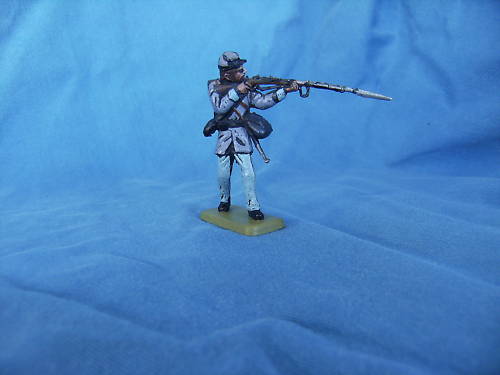
DshBL4w3fWgV!~~_12.jpg)

SCBL4wNUfQTw~~_12.jpg)
Wednesday, 7 April 2010
THE MYTH OF CUSTER
 nardi
nardi young
young No other single event in American history has captured the public imagination more completely. The legend gave rise to such contortions as Custeriana, and Custerphiles. In such circumstances can the ‘truth’ ever be discovered?
Cw~~_12.jpg)
He was disliked by his men, including officers. During April 1867 85 men deserted from the 7th Cavalry, and Albert Barnitz wrote in his journal, referring to Custer resentfully and sarcastically :”the ‘Brevet Major General commanding’ is fast losing whatever little influence for good he may have once had in the Regiment, and… he ………will eventually come to grief , as a consequence of his tyrannical conduct.” He drove his men too hard, according to Corporal Jacob Horner, who served under him: “He was too hard on the men and the horses. He changed his mind too often. He was always right. He never conferred enough with his officers. When he had a notion we had to go”.
 His ‘understanding’ of native Americans did not stop him lying and cheating and going back on his word. Riding out in March 1869 Custer managed to make contact with the bands of Southern Cheyenne led by Little Robe and Medicine Arrows. Their villages consisted mainly of the members and families of the ‘dog soldier’ warrior society which led the people in warfare. Custer treacherously captured four warriors under the flag of truce.
 He threatened to hang three of them, and the other was sent to the villages to communicate their plight. In this way Custer extracted promises that the dog soldiers would come in to the reservation at Camp Supply. Understandably they never complied with their ‘promise’ but, being men of honour themselves; they must have held Custer in contempt
 atlantic
he had more flaws than most and failed to learn from what little experience he had of fighting native Americans. A more intelligent man would have learned from that alone. In general the native Americans were only engaged in battle when they wished it to happen. In keeping with the US military generally Custer misinterpreted the normal native American practice of strategic withdrawal as an unwillingness to fight, when in fact they were protecting their families.
 Custer should have realized this when he escaped by the skin of his teeth at the Washita River when he was caught out attacking a peaceful village nearly ten years before the Battle of the Little Big Horn. The engagement at the Washita was Custer’s only previous engagement with native Americans before his ‘Last Stand’. It is difficult to contemplate how his superiors could put a man in charge who had as many suspensions from duty as ‘Indian’ engagements to his name.

ARCHERS
 The Archery Law 1363
The importance of archers grew in importance in Medieval England because the whole of the English population was involved in Medieval Warfare! In 1252 the 'Assize of Arms' was passed which decreed that every English man between the ages of 15 to 60 years old were to equip themselves with a bow and arrows. The Plantagenet King Edward III took this further and decreed the Archery Law in 1363 which commanded the obligatory practice of archery on Sundays and holidays! The Archery Law "forbade, on pain of death, all sport that took up time better spent on war training especially archery practise". The development of different weapons, in particular the cannon and gun, this requirement of Englishmen was abated freeing the archery 'Butts' for other types of buildings.There were two main types of a bow and arrow, the long bow and the crossbow. With advances in both machinery and archery the crossbow quickly became a deadly and accurate weapon. However, this weapon was flawed since its rate of fire was slower than the long bow. The long bow was an improved version of the bow and arrow. This weapon also had a flaw, for it was more expensive to make. The armies usually had both long bowmen and crossbowmen since both weapons were very effective
In Elizabetan times it started to dwindle.By the end of the 1500's firearms were in common use. The musket was invented towards the end of the Medieval era in 1520.
By 1595 all bows were ordered to be exchanged for muskets. The most popular firearm was called a Matchlock (this name derived as it was fired by the application of a burning match). It was inaccurate, slow to load and expensive.
It was eventually replaced by the Flintlock. Canons were developed which replaced the heavy artillery of the Medieval years such as the ballista, trebuchet and the Mangonel. These early canons were made of bronze or iron and fired stone or iron. They were made in different sizes and were used on both land and on sea
French plastic Marines

French marine fusiliers fighting in flooded trenches at Dixmude in December 1914 watercolor by artist Charles Fouqueray, present during combat .The story of the French Marines is one of the epics of the World War. Such is the story of the Breton's. At Dixmude, under command of their own officers, retaining not only the costume, but the soul and language of their profession they were still sailors. Grouped with them were seamen from all the naval stations. 

300
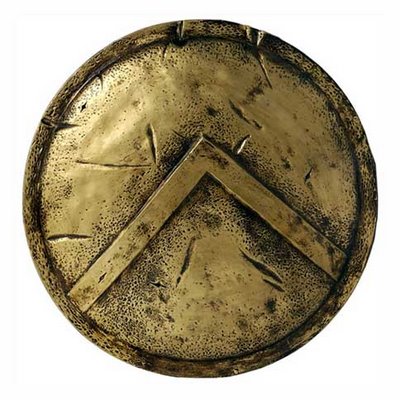
 The 300 Spartans is a 1962 Cinemascope film depicting the Battle of Thermopylae. Made with the cooperation of the Greek government, it was shot in the village of Perachora in the Peloponnese. It starred Richard Egan as the Spartan king Leonidas, Ralph Richardson as Themistocles of Athens and David Farrar as Persian king Xerxes, with Diane Baker as Ellas and Barry Coe as Phylon providing the requisite romantic element in the film. In the film, a force of Greek warriors led by 300 Spartans fights against a Persian army of almost limitless size. Despite the odds, the Spartans will not flee or surrender, even if it means their deaths.
When it was released in 1962, critics saw the movie as a commentary on the Cold War,[1] referring to the independent Greek states as "the only stronghold of freedom remaining in the then known world", holding out against the Persian "slave empire".Xerxes I of Persia leads a vast army of soldiers into Europe to crush the small city-states of Greece to fulfill not only the idea of "one world ruled by one master", but also to avenge the defeat of his father, Darius I of Persia at the battle of Marathon 10 years earlier. Accompanying him are Artemisia I, the Queen of Halicarnassus who beguiles Xerxes with her feminine charm, and Demaratus, an exiled king of Sparta whose warnings Xerxes pays little heed toIn Corinth, Themistocles of Athens wins the support of the Greek allies and convinces both the delegates and the Spartan representative, Leonidas I, to grant Sparta leadership of their forces. Outside the hall, Leonidas and Themistocles agree to fortify the pass at Thermopylae until the rest of the army arrives. After this, Leonidas learns of the Persian advance and travels to Sparta to spread the news.
 View of the Thermopylae pass at the area of the Phocian Wall. In ancient times the coastline was where the modern road lies, or even closer to the mountain
In Sparta, fellow king Leotychidas is fighting a losing battle with the Ephors over a festival that is due to take place, and that the army should wait until after the festival is over to march, by which time the Persians will have conquered Greece. Leonidas secretly decides to take his personal bodyguard of 300 men to the pass, who are exempt from the decisions of the Ephors and the Gerousia. They are reinforced by Thespians led by Demophilus and other Greek allies.

After days of fighting, Xerxes grows angry as his army is "slaughtered like sheep" by the Greeks, with the Spartans in the forefront. Leonidas further pressures his men after receiving word that the remainder of the Spartan army will only fortify the isthmus in the Peloponnese and will advance no further. The Greeks constantly beat back the Persians, and Xerxes begins to consider withdrawing to Sardis until he can equip a larger force at a later date. Just then, he receives word from Ephialtes of a goat-track through the mountains. Rewarding Ephialtes greatly, Xerxes sends his army onward.

Saturday, 3 April 2010


two great companies. HELMET AND A.T.K.M
eric kemp runs helmet and makes these fantastic plastic soldiers .Find him at Helmet.com.

 http://www.allthekingsmentoysoldiers.com/completed_projects.html
A.T.K.M dodes plastic and metal. They are really good. Check out his plastic stuff

Sunday, 28 March 2010

Fremch Hussar Conversions


Saturday, 27 March 2010

Thursday, 25 March 2010
THE RED RIVER BATTLE

The soldier is a Nardi plastic figure from Italy
- nardi
Thursday, 11 March 2010

Sunday, 7 March 2010

Saturday, 6 March 2010
CHARBENS AND CHERILEA BY PLASTICS OF THE PAST
its not on the face of it a briliant product but once you see these john O'brien paint jobs you realise how good they can be.


wlqBrBLEqIVmEE!~~_12.jpg)


Subscribe to:
Posts (Atom)