Saturday, 2 October 2010
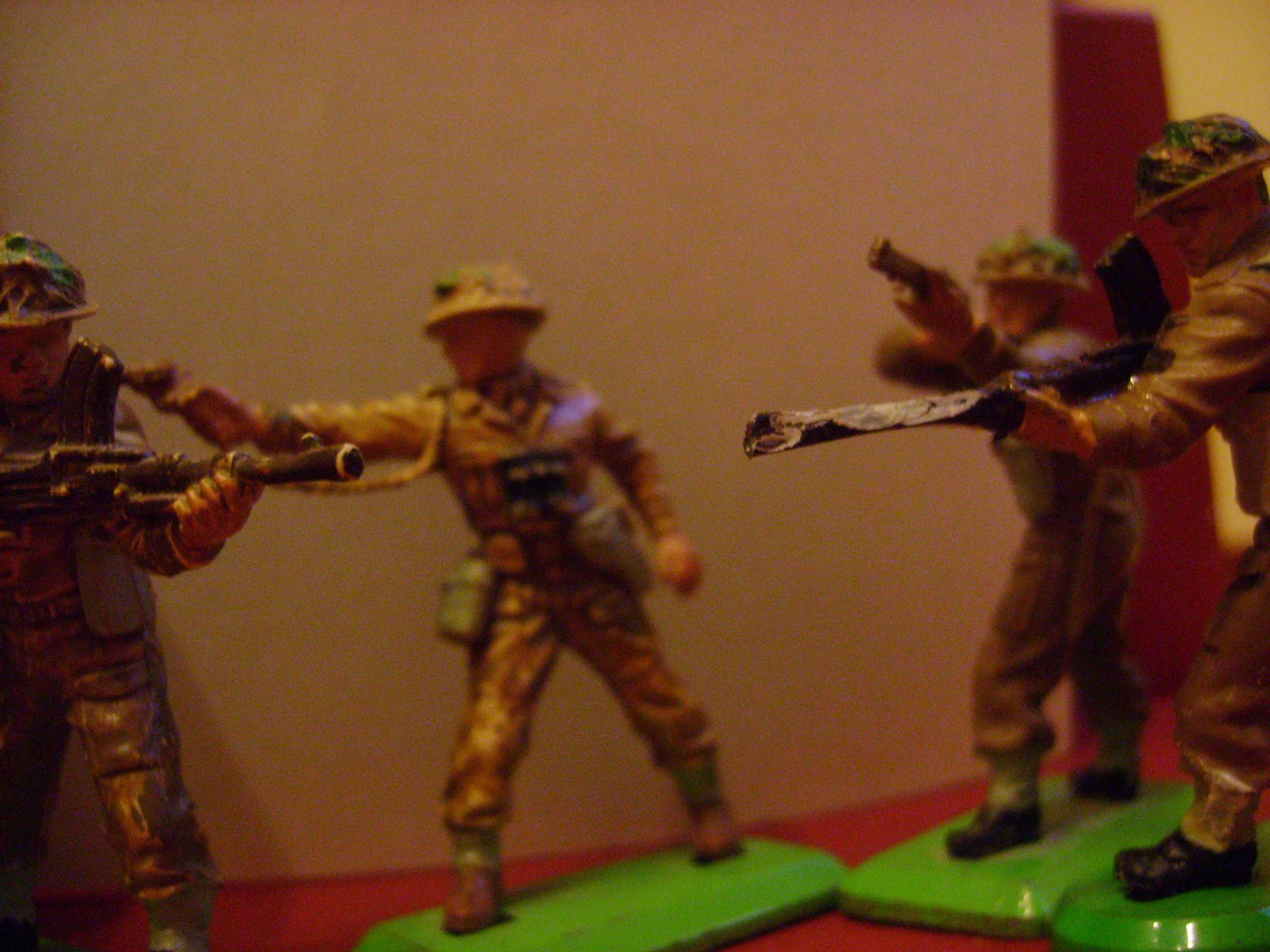
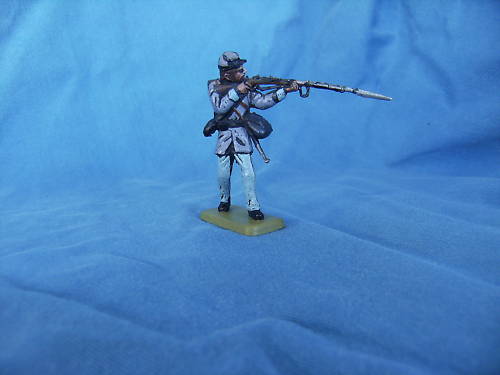
recent photos from my digital
Monday, 5 July 2010
French ww1 cavalry
After the front was broken on 27 May 1918, 4th squadron, 10th Chasseurs à cheval (light cavalry) regiment was dispatched to support the 299th infantry regiment, from Savoy, which had lost 2/3 of its personnel.While Chaudin had been taken, the road to the Villers-Cotterêt forest was open to the enemy. On 30 May, 4th squadron would charge to open the path for the counterattack of the infantrymen of 299th regiment.
Commanded by captain d'Avout, the squadron was down to eighty cavalrymen.
What hope was there for such a weak force against the momentum of a victorious infantry? that simply wasn't the question.
- Draw sabers!
Eighty blades spring like so many lightning bolts. Eighty breasts pant.
A Dieu vat!
- Richert, dress your line, one rank, two meter interval. To the German infantry, ride!
- Direction: to the right of the single tree in front of you!
Lieutenant Richert salutes with his saber the colonel and staff of the 299th. The infantrymen, pale with emotion, salute back...
The platoon deploys as if this was just a parade drill, passes the 299th's line... starts...
Immediately, the German machine guns rattle. Fortunately, they're firing extremely low, mowing the rye. Only two horses fall.
- Charge! Charge!
The german artillery wakes up. Volleys of shrapnel fill the air with their sharp cracks. 2nd platoon starts to follow, then it's 3rd platoon's turn...
The charge sweeps the plateau. At full gallop, bent over their horses' necks, the chasseurs echo the officers' cry:
Charge! charge!
The machine-guns of the 299th are supporting the movement to the right. Other horses, a few men fall.
Behind the cavalrymen, colonel Vidal starts moving his regiment with fixed bayonets. A shout is heard:
Forward! Forward!
The Germans hadn't had the time to come to their senses. Surprised by the suddenness of the attack, unware of the paltry numbers of the cavalrymen, the officers don't have time to give orders. The first line offers no resistance. Their skirmishers lie on the ground, protecting themselves with their packs. The squadron rushes over them. It is now riding on toward the steep ravine through which runs the Vierzy-Soissons railroad, its front on the plateau now an echeloned 300m.
Until now, losses have been light, despite heavy machine-gun fire and the German artillery's shrapnel barrage. What will happen when the platoons reach the second line, an invisible line that has had time to realize the situation? Suddenly, a German infantry squad rises through the rye in front of 1st platoon.
An officer orders them to fire. Rifles crack, bullets whistle, lieutenant Richert's horse falls... a moment of anguish. The platoon starts to waver, but only for a passing second. Richert stands up, waves his saber: Forward! forward!
The platoon passes him, continues the charge, while the officer jumps on his now standing horse. A strange scene now unveiled. Everywhere, on the ravines edge, German soldiers appeared, not to fire, but to flee.
At captain d'Avout's command, the squadron regroups facing north. On this side of the plateau, there still are German squads left, prolonging the line the squadron has just overrun.
Frightened by this charge in their rear, by the sight of the sight of the tirailleurs regiment which is moving in support of the 299th, the men drop their weapons and throw up their arms. The Moroccans only have to pluck them.
In a few minutes, the charge swept the plateau over 2km, first from the west, then from south to north. The infantrymen of the 299th followed it with bayonets. They only had to send to the rear the men of 7th Grenadier over whom the charge had ridden and who surrendered without any resistance. There wasn't a single armed German left on the plateau...
299th reoccupied the position from which they'd been driven in the morning. The squadron slowly marched back to the small wood from which it started...
The men count themselves. Fourteen horses and their riders are missing... but one by one, the missing cavalrymen find their way back to the squadron, several of them carrying their dead horse's packs. One wounded. Not a single dead.
After the front was broken on 27 May 1918, 4th squadron, 10th Chasseurs à cheval (light cavalry) regiment was dispatched to support the 299th infantry regiment, from Savoy, which had lost 2/3 of its personnel.
Friday, 2 July 2010
Arabs
ABD-EL-KADER (c. 1807-1883), amir of Mascara, the great opponent of the conquest of Algeria by France, was born near Mascara in 1807 or 1808. His family were sherifs or descendants of Mahomet, and his father, Mahi-ed-Din, was celebrated throughout North Africa for his piety and charity. Abd-elKader received the best education attainable by a Mussulman of princely rank, especially in theology and philosophy, in horsemanship and in other manly exercises. While still a youth he was taken by his father on the pilgrimage to Mecca and Medina and to the tomb of Sidi Abd-el-Kader El Jalili at Bagdad - events which stimulated his natural tendency to religious enthusiasm.
While in Egypt in 1827, Abd-el-Kader is stated to have been impressed, by the reforms then being carried out by Mehemet Ali, with the value of European civilization, and the knowledge he then gained affected his career.

Mahi-ed-Din and his son returned to Mascara shortly before the French occupation of Algiers (July 1830) destroyed the government of the Dey. Coming forward as the champion of Islam against the infidels, Abd-el-Kader was proclaimed amir at Mascara in 1832.
He prosecuted the war against France vigorously and in a "short time had rallied to his standard all the tribes of western Algeria. The story of his fifteen years' struggle against the French is given under Algeria.
To the beginning of 1842 the contest went in favour of the amir; thereafter he found in Marshal Bugeaud an opponent who proved, in the end, his master.

Throughout this period Abd-el-Kader showed himself a born leader of men, a great soldier, a capable administrator, a persuasive orator, a chivalrous opponent.We have now come to the time when the French soldier began to wear the red trousers which later became so distinctive a part of his attire: an outcome, we are told, of the necessity for finding a commercial use for the red madder dye then being produced extensively in the French territories in North Africa.
The French conquest of-Algeria grew out of a long-standing quarrel with the Dey of Algiers over corn supplied to France during the Directorate. French troops landed at Sidi-Ferruch on June 14, 1830, capturing Algiers on July 5. It was not until December 23. 1847 that the legendary Arab leader Abd-el-Kader finally surrendered to General Lamoriciére.He was one of the most distinguished and efficient of Bugeaud's generals, rendered special service at Isly (14 August 1844), acted temporarily as governor-general of Algeria, and finally effected the capture of Abd-el-Kader in 1847.From 1848 to 1851 Lamoricière was one of the most conspicuous opponents of the policies of Louis Napoleon, and at the coup d'état of 2 December 1851 he was arrested and exiled.See him on the right with the other leaders of the battle at Castelfidardo
He refused to give his allegiance to Emperor Napoleon III. In 1860 he accepted command of the papal army, which he led in the Italian campaign of 1860.On 18 September that year he was severely defeated by the Italian army at Castelfidardo.
The French infantry of the line – still sub-divided into grenadiers, battalion companies and voltigeurs-had retained a style of dress much resembling the Napoleonic, with its bell-topped shako and long-tailed coat.
By the 1840s, however, a new branch of light infantry had come into existence: the Chasseurs d’Orléans, clothed in dark blue with blue-gray trousers. They eventually replaced the existing Infanterie légére and, under the new denomination of Chasseurs à Pied, continued to wear basically the same uniform until 1914.
François Certain Canrobert, (Saint-Céré 1809 - Paris 1895) was a French officer who spent the first part of his career in the war for the conquest of Algeria. Close to Napoleon III, he supported him during the coup of 2 December 1851 and took part in suppressing the republican resistance against the new regime. He was made Marshal of France on his return from the Crimean War (1856) and became a leader of the Bonapartist party after the fall of the Second Empire.
The Foreign Legion needs no introduction. This remarkable corps owed its origin to the eight foreign regiments which, after Waterloo, were formed into the Légion de Hohenlohe. In 1830, however, the corps was disbanded, but many of its former members rejoined in 1831, when the Légion Etrangere was raised.
Several new bodies of French troops, apart from the native regiments, came into being as a result of the conquest of Algeria, in particular the mounted Chasseurs d’Afriqu e, and the Zouaves, originally Arab infantry, but eventually entirely European in composition.
Louis Léon César Faidherbe (3 June 1818 – 29 September 1889) was a French general and colonial administrator. He created the Senegalese Tirailleurs when he was governor of Senegal.In 1863 he became general of brigade. From 1867 to the early part of 1870, he commanded the subdivision of Bona in Algeria, and was commanding the Constantine division at the commencement of the Franco-Prussian War.His fervent faith in the doctrines of Islam was unquestioned, and his ultimate failure was due in considerable measure to the refusal of the Kabyles, Berber mountain tribes whose Mahommedanism is somewhat loosely held, to make common cause with the Arabs against the French.
On the 21st of December 1847, the amir gave himself up to General Lamoriciere at Sidi Brahim. On the 23rd, his submission was formally made to the duc d'Aumale, then governor of Algeria. In violation of the promise that he would be allowed to go to Alexandria or St Jean d'Acre, on the faith of which he surrendered, Abd-el-Kader and his family were detained in France, first at Toulon, then at Pau, being in November 1848 transferred to the château of Amboise.
There Abd -el -Kader remained until October 1852, when he was released by Napoleon III. on taking an oath never again to disturb Algeria.

The amir then took up his residence in Brusa, removing in 1855 to Damascus. In July 1860, when the Moslems of that city, taking advantage of disturbances among the Druses of Lebanon, attacked the Christian quarter and killed over 3000 persons, Abd-el-Kader helped to repress the outbreak and saved large numbers of Christians.
For this action the French government, which granted the amir a pension of £4000, bestowed on him the grand cross of the Legion of Honour. In 1865, he visited Paris and London, and was again in Paris at the exposition of 1867. In 1871, when the Algerians again rose in revolt, Abd-el-Kader wrote to them counselling submission to France.
After his surrender in 1847 he devoted himself anew to theology and philosophy, and composed a philosophical treatise, of which a French translation was published in 1858 under the title of Rappel d l'intelligent. Avis a l'indif Brent. He also wrote a book on the Arab horse. He died at Damascus on the 26th of May 1883. 

Prisoner of the Apaches
In 1929, the Spanish teacher Myrtle Love, from the town of Isleta, New Mexico, west of Texas, who was very interested in old west history, received a phone call from the El Paso sheriff saying that there was a man under arrest with a very interesting story to tell. The man’s name was Race Compton and was arrested when found sleeping in a rail road freight car. He looked like a vagabond. He told Miss Love that he was going to get dynamite and excavation equipment so he could go back to an old cave that had been sealed off by the Indians and presumably inside contained millions of dollars in gold ingots and gold coins.Compton said “in 1859, the stage coaches were hard at work transporting people, mail, promissory notes and some times large sums of gold. Stations for the stage coaches were established along the region of the Trans- Pecos for passengers and conductors to eat. One of these stations was in Eagle Springs, Texas located at the foot of Eagle Mountain, about 15 miles south of Van Horn and 12 miles north east of Indian Hot Springs.Big Foot Wallace was a famous adventurer and Texas Ranger. He was one of the stage coach conductors, along with Joea Peacock who was only 19 but had been involved in several incidents with fugitives and Indians and had killed a few men.During these times, bands of Apaches were very active in their incursions along the Texas territories. Their Chief, Victorio was commanding the major part of these rebel Indians. Even thou it was said that Chief Victorio was white and that he had been kidnapped as a child from Coahuila, Mexico, he had a peculiar hatred towards the white men.During one of the stage coach runs, the Apaches attacked and in some 20 minutes killed two passengers and one of the station attendants. The horses were stolen and Peacock was hurt in the leg by an arrow and taken prisoner by the Indians. The Apaches and their prisoner rode none stop on horse back to the Tres Castillos Mountains in Chihuahua, Mexico. This is about 20 miles south of the Rio Grand River where they felt safe from the Texas Rangers, the Calvary and the Mexican soldiers. The prisoner’s wound was not bad, but it was taken care of by a young Indian woman named Juanita, presumed to be Chief Victorio’s daughter. Victorio tried to kill the prisoner several times but Juanita kept him from it because she had fallen in love with the prisoner.At night the young Indian woman and the white prisoner would get together in secret. She tried to get him to marry her, but he was very cautious for he knew that she was the only reason he was still alive.Finally Peacock said he would marry her only if she would tell him were Chief Victorio had hidden the treasure. He was intrigued by what he saw, the Indians were carrying off gold ingots probably stolen from a train robbery and taking them to Mexico to trade for rifles and ammunition.Juanita told him that the gold was being stored in a cave in the Eagle Mountains, close to were Peacock had been taken prisoner. She told him he could get there by going thru Hot Indian Springs. She also told him that the entrance was well hidden in the rocks and that he had to crawl on all fours to get in because the entrance was very small. Juanita told him that she had gone to the cave many times with her father and that she remembered seeing dozens of gold ingots, many bags with gold coins and chests full of religious artifacts and jewelry stashed away in the back of the cave. Her father had mentioned to her that it would take some 50 mules to transport all that had been stolen and hidden in the cave for years.Afterwards, when Victorio and several of his warriors were taking gold ingots to trade for guns, they were spotted by soldiers on the old Indian path. One Indian woman was hurt and two soldiers died that day.After this, Victorio was afraid that the location and contents of the cave would be investigated and discovered. So they got out what they were going to need and sealed off the small entrance with rocks making it look like part of the same mountain. Even so, Juanita told her lover she could find the entrance to the cave with no problem. That night, Peacock planned his escape thinking that with all that he knew he could find the cave without the help of anyone.Finally, one day, Victorio and his men left on an incursion into Chihuahua, leaving only women, children and the elderly in camp. With Juanita’s help, Peacock got a horse and water. He promised the young Indian he would be back for her as soon as possible. The prisoner left for the mountains and crossed the desert. After several days, he finally arrived at Eagle Springs.It is a long story. Peacock after resting, decided to begin the search with out any luck. Probably because sometimes what one person describes, is not what another person sees. Discouraged, he returned to his old job with the stage coaches while the Indians were being eliminated by the Texas Rangers and the Mexican soldiers. Finally, in the Tres Castillos Mountains, in June of 1880, Victorio, some 60 warriors and 18 women, including Juanita, were killed. All of those who knew of the location of the hidden cave where gone, the enormous treasure was lost.In 1895, Peacock met Peace Compton that was a gold prospector and because of the interest of both of them for gold, the ex Apache prisoner told him of Victorio’s cave. They spent 15 years looking for the treasure. In 1915 Peacock died. Compton kept the ranch they had and continued looking for the cave, although he sometimes had to work to be able to buy dynamite and food.In the end, he told Miss Love that as soon as he got out of jail, he would go back to the mountains to dynamite the cave he had finally found, approximately 5 miles east of Hot Indian Springs and south of the old Indian path. He described the place to be about one day on horse back, south of Sierra Blanca and a half day west of Hot Indian Springs. He added to Love that a torrential rainfall had removed some of the rocks that covered the entrance to the cave and that he only had to dynamite the rocks that were left.Compton was never heard of after leaving jail. An old resident of Sierra Blanca that had met him, said that he had died of a heart attack on his way back to the mountains and that he had been buried in Sierra Blanca.The history of the lost treasure of Victorio is still alive. Everything suggests that the gold ingots, the bags of gold coins and the chests of jewelry are still in the mountains. What you need is a sense of adventure, good research, patience, and last but not least, good detection equipmentFriday, 11 June 2010
MOKAREX. OLD WARRIORS NEVER DIE
François Certain CanrobertFrançois Certain Canrobert (June 27, 1809 – January 28, 1895), known as Maréchal Canrobert, was a marshal of France.
He was born at Saint-Céré (Lot) and educated at St.Cyr; he received a commission as sub-lieutenant in 1828, becoming lieutenant in 1833.
He went to Algeria in 1835, served in the expedition to Mascara, at the capture of Tlemcen, and in 1837 was promoted to captain. In the same year he received the Légion d'honneur for courageous conduct. In 1839 he was employed in organizing a battalion of the French Foreign Legion for the Carlist Wars.
In 1841 he was again serving in Africa. Promoted lieutenant-colonel in 1846 and colonel of the 3rd regiment in 1847, he commanded the expedition against Ahmed Sghir in 1848, and defeated the Arabs at the Djerma Pass.
Transferred to the Zouaves, he defeated the Kabyles, and in 1849 displayed both courage and energy in reinforcing the blockaded garrison of Bou Saada, and in command of one of the attacking columns at Zaatcha (December 1849).
For his valour on the latter occasion he received the rank of general of brigade and the commandership of the Legion of Honour. He led the expedition against Narah in 1850 and destroyed the Arab stronghold.
Summoned to Paris, he was made aide-de-camp to the president, Louis Napoleon, and took part in the coup d'état of December 2, 1851.
In the Crimean War he commanded a division at the Battle of Alma, where he was twice wounded. He held a dormant commission entitling him to command in case of St Arnaud's death, and he thus succeeded to the chief command of the French army a few days after the battle.
He was slightly wounded and had a horse killed under him at Inkerman, when leading a charge of Zouaves. Disagreements with the British commander-in-chief and, in general, the disappointments due to the prolongation of the siege of Sevastopol led to his resignation of the command, but he did not return to France, preferring to serve as chief of his old division almost up to the fall of Sevastopol.
After his return to France he was sent on diplomatic missions to Denmark and Sweden, and made a marshal and senator of France (grand cross Legion of Honour, and honorary G.C.B.).
He commanded the III Army Corps in Lombardy in 1859 (Austro-Sardinian War or Italian Second Independence War), distinguishing himself at Magenta and Solferino.
He successively commanded the camp at Châlons, the IV army corps at Lyon and the army of Paris.
In the Franco-Prussian War he commanded the VI army corps, which won the greatest distinction at the Battle of Gravelotte, where Canrobert commanded on the St. Privat position. The VI Corps was amongst those shut up in Metz and included in the surrender of that fortress.
After the war Canrobert was appointed a member of the superior council of war, and was also active in political life, being elected senator for Lot in 1876 and for Charente in 1879 and again in 1885. He died at Paris and received a public funeral. His memoirs (Souvenirs) were published in 1898 at Paris.
Wednesday, 9 June 2010
FIRST WORLD WAR MOKAREX FRENCH and book


here are some mokarex plastic showing the french in the first world war.maybe the best plastics ever made. apart from this here is a really great book.A moving exploration of the cultures of violence, martyrdom and grief brought into existence by the Great War. Originally written in French, the book presents its ideas in an evocative style and makes more sweeping claims than is usually the case in English-language historiography; the authors are also participating in French historical debates which may have less significance to a foreign audience. However, 14-18 is very successful in its invocation of the profound transformations wrought by this disaster.
A moving exploration of the cultures of violence, martyrdom and grief brought into existence by the Great War. Originally written in French, the book presents its ideas in an evocative style and makes more sweeping claims than is usually the case in English-language historiography; the authors are also participating in French historical debates which may have less significance to a foreign audience. However, 14-18 is very successful in its invocation of the profound transformations wrought by the experience of "total war," and offers insightful, psychologically grounded analysis of World War I and its reverberations. 

Thursday, 20 May 2010
Sunday, 16 May 2010
Saturday, 15 May 2010
Subscribe to:
Posts (Atom)


ii80klg~~_12.jpg)

R4BLu6Oiilq!~~_12.jpg)
ii80klg~~_12.jpg)
UwEGk~%24(KGrHqQOKjwEvqEtNICrBL7sjBDEp!~~_12.jpg)

g~~_12.jpg)


DshBL4w3fWgV!~~_12.jpg)

SCBL4wNUfQTw~~_12.jpg)