Wednesday, 18 April 2012

french snow troops v italian ones

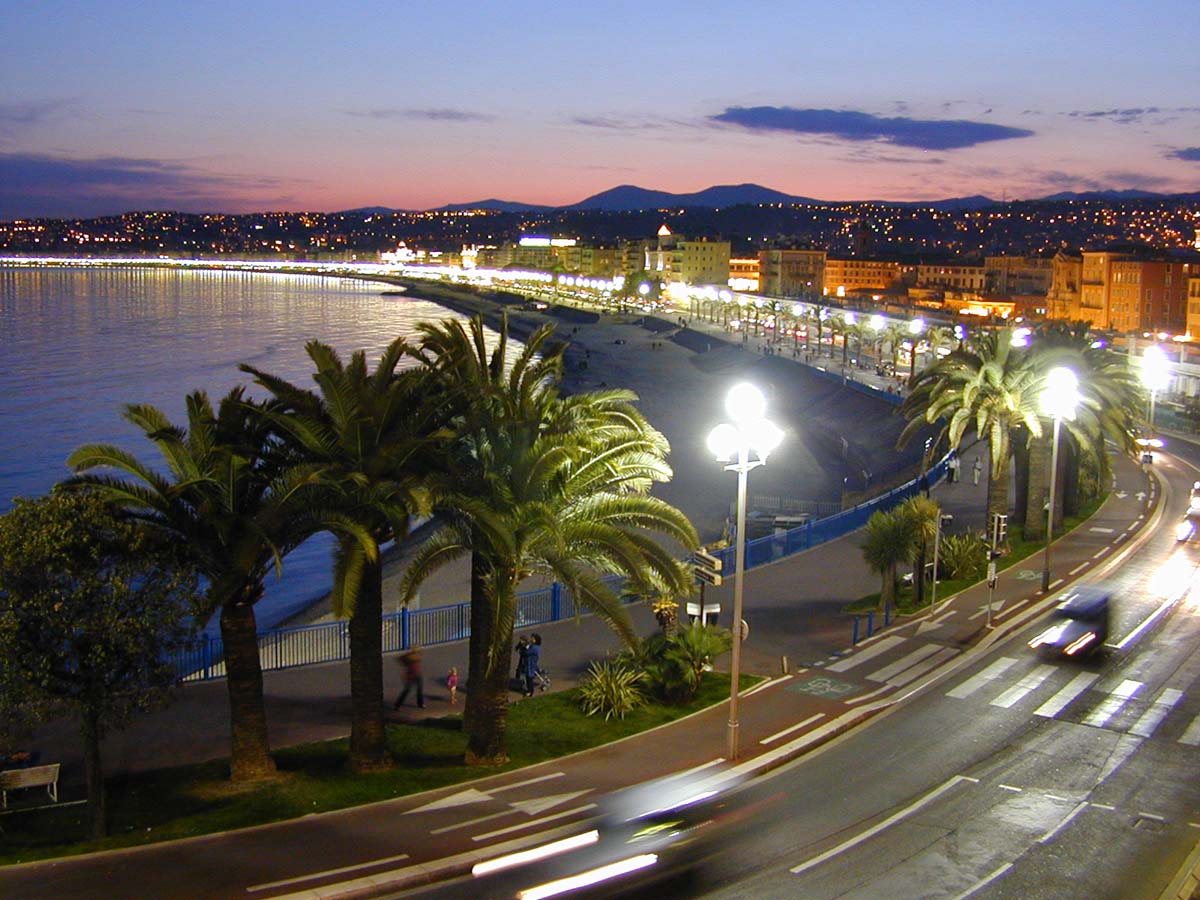
The Italian invasion of France in June 1940 was a small-scale invasion that started near the end of the Battle of France during World War II. The goal of the Italian offensive was to take control of the Alps File:2008 Jungfrau.jpgmountain range and the region around Nice, and to win the colonies in North Africa. File:Nice-night-view-with-blurred-cars 1200x900.jpgThe offensive did not meet its planned goals, with the Italian forces making only limited headway

On 10 June 1940, Italy declared war on France and Britain. The French government was already fleeing to Bordeaux and Paris was an open city. Feeling that the war would soon be over, Italian dictator Benito Mussolini said to Pietro Badoglio(one of many many Italian war criminals never brought to justice), the Chief of Staff of the Italian Royal Army (R, "I only need a few thousand dead so that I can sit at the peace conference as a man who has fought".Mussolini had the immediate war aim of expanding the Italian colonies in North Africa by taking land from the British and French colonies.
However, Italy was not prepared for war and Italy's armed forces made little impact during the last few days of the Battle of France. Mussolini was well aware of Italy's military limitations at the time, but he still sought to profit from Germany's successes.Of Italy's declaration of war, Franklin Delano Roosevelt—President of the United States—said:
On this tenth day of June 1940, the hand that held the dagger has struck it into the back of its neighbor.


<><>
Much of June was lost as the Italian armed forces prepared for an invasion. But, even after additional time for preparations, the hastily-prepared Italian forces were not at their prime. The Royal Italian Army massed 32 divisions in two armies on the French border. The Regia Aeronautica (Italian Royal Air Force) supported the Royal Army and flew 716 missions and dropped 276 t (304 short tons) of bombs. The Regia Marina (Italian Royal Navy) did little to support the invasion.
The French armed forces were in no shape to resist the Italians. The French Army (Armée de Terre) was already defeated in the north and only a relatively small force was maintained on the border with Italy. The French Air Force (Armée de l'Air) was relocating to French North Africa by the time of the Italian declaration of war and the subsequent offensive.
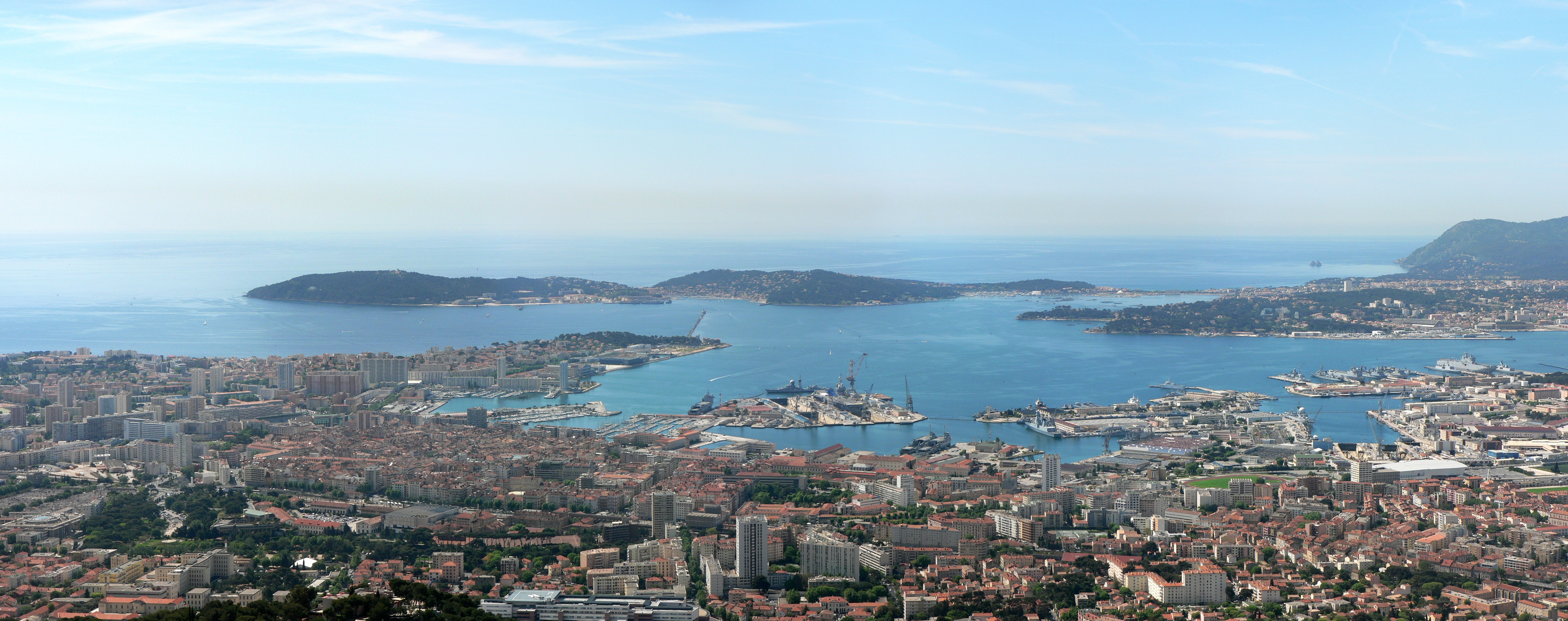
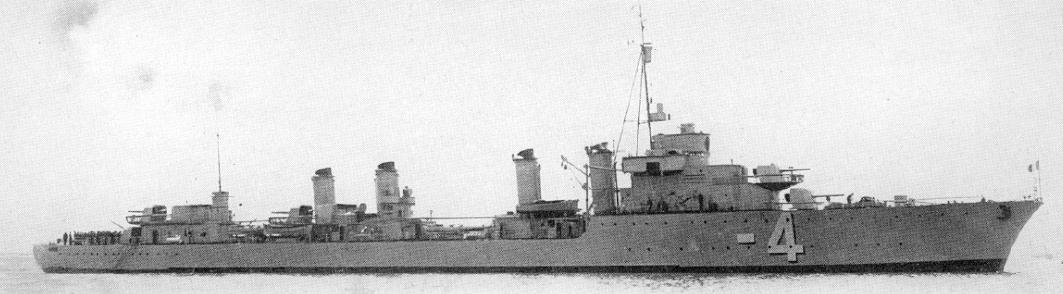
The French Navy (Marine Nationale) was the only service in a position to act against the Italians. At dawn on 14 June, the French 3rd Squadron based in Toulon File:Toulon Faron3 P1440701-P1440708.jpgcarried out an operation in Italian waters. Four heavy cruisers and 11 destroyers opened fire on the oil storage tanks and military installations on the Ligurian coast and in the port of Genoa. No Italian aircraft appeared and the coastal artillery scored only one hit. The French destroyer AlbatrosFile:Milan 1936-1937.jpg received a 155 mm (6.1 in) round on her boiler room, which killed 12 seamen.
On 16 June, the French sloop La Curieuse forced the Italian submarine Provana to surface off Oran File:Oran2.JPGand then sank it by ramming. La Curieuse also sustained heavy damage on her stem. This was the first Italian submarine to be sunk by the French Navy.


During the night of 16 June and into the morning of 17 June, Marshal Philippe Pétain proposed an armistice with the German government. On 20 June, the French government asked the Italian government for an armistice.


Battle for France. Note Italian invasion in the south.
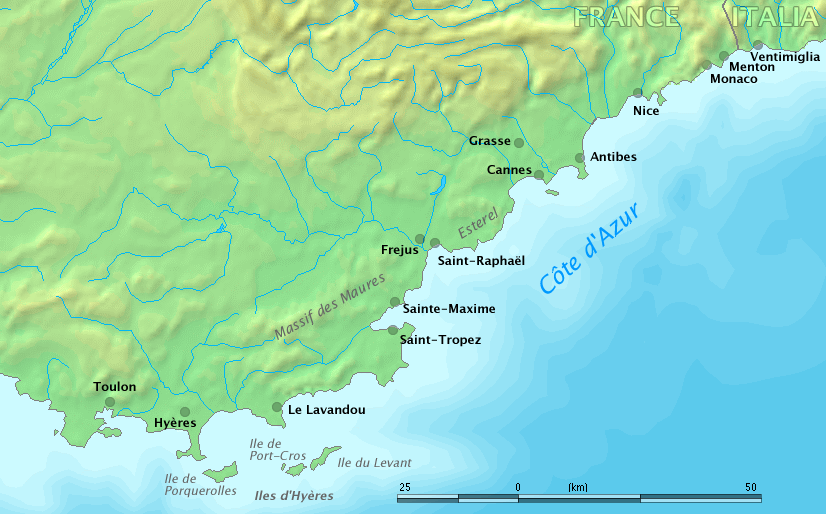
On 20 June, the Italian campaign began and, on 21 June, troops of the Italian Royal Army crossed the French border in three places The Italians attacked in two directions. One force attempted to advance through the Alps and another force attempted to advance along the Mediterranean coast towards Nice. Initially, the Italian offensive enjoyed a limited level of success. The French defensive lines on the Italian border were weakened due to French High Command shuffling forces to fight the Germans. Some French mountain units had been sent to Norway. However, the Italian offensive soon stalled at the fortified Alpine Line File:Bloc B1 Rimplas.JPG(as the southern portion of the fortifications that included the Maginot Line was called) in the Alps and along the Mediterranean coast. The attack through the Little Saint Bernard PassFile:Col du Petit-Saint-Bernard - cromlech.jpg in the Alps had to stop due to a massive snow storm. The Italian forces attacking through the French Riviera advanced only about 5 mi (8.0 km) and were stopped in the vicinity of the town of Menton, File:Menton Old Town and Harbour.jpgwhich was partially occupied by the Italian army; on the Côte d'Azur the Italian invasion was held up by a French NCO and seven men.File:Cotedazur.png
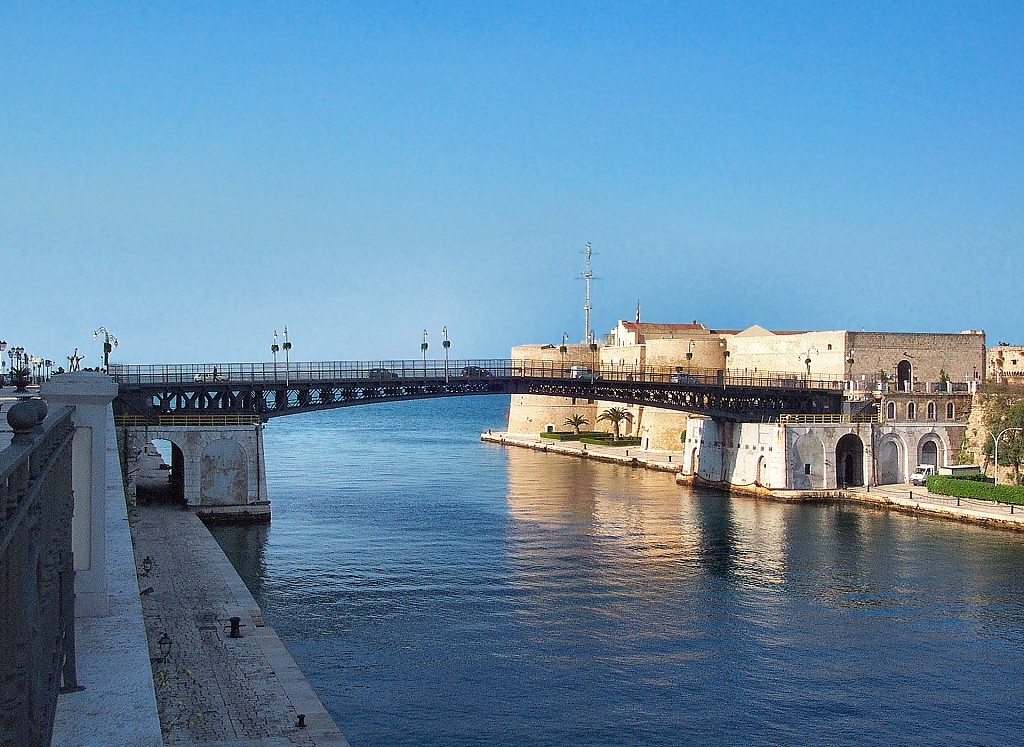
On 21 June, the French battleship Lorraine File:Provence-1.jpgopened fire on the port of Bardia in Italian Libya.File:Bardia port4.jpg French naval aircraft also attacked TarantoFile:Ponte Girevole Taranto.jpg and Livorno in mainland Italy during some of the last actions of the French against the Italians.
 

During the invasion, Italian casualties were far greater than French casualties. Italian losses were 631 men killed, 2,361 wounded, 2,000 cases of frostbite and 616 men missing. This compares to French losses of 40 men killed, 84 wounded, and 150 men missing.
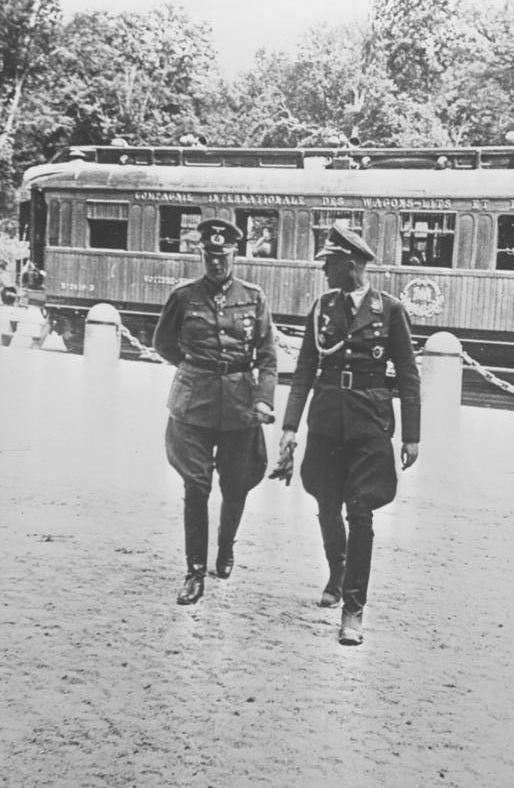
In the evening on 22 June 1940, France surrendered to Germany.File:Bundesarchiv B 145 Bild-P50287, Compiègne, Waffenstillstandvertrag, Keitel.jpg
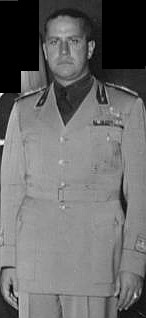
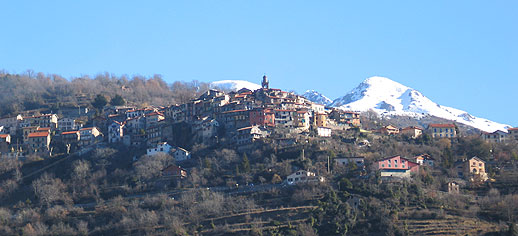
On 25 June, France and Italy signed an armistice. Galeazzo Ciano—who led the armistice delegation as Italian Minister of Foreign Affairs—reflected: "Mussolini is quite humiliated because our troops have not made a step forward." File:Galeazzo Ciano.jpgThe debacle forced Mussolini to abandon his pretensions of reconstituting an Empire at French expense, and Italy dropped its claims to the Rhône Valley,File:Leman img 0573.jpg Corsica, Tunisia, and Djibouti, settling for a modest 50 km (31 mi) demilitarized zone.With Germany′s blessing, Italy occupied Corsica and the Alpes-Maritimes, File:Belvédère.jpgplus some areas of French territory along the Franco-Italian border further north. Nevertheless,
The strutting Italian dictator had been quickly deflated—all the more so because of the miserable showing of the Italian army against a handful of French troops.For the terms see Franco-Italian Armistice

Friday, 30 March 2012

britains conversion

britains conversion

massacre in france


Oradour-sur-Glane ( is a commune in the Haute-Vienne department in the Limousin region in west-central France.
The original village  was destroyed on 10 June 1944, when 642 of its inhabitants, including women and children, were massacred by a German Waffen-SS company. A new village was built after the war on a nearby site and the original has been maintained as a memorial.File:MortainDasReich.jpg


In February 1944, 2nd SS Panzer Division ("Das Reich") File:Bundesarchiv Bild 101III-Zschaeckel-130-05, Russland, Fahrzeuge der SS-Division "Das Reich".jpgwas stationed in the Southern French town of Valence-d'Agen, north of Toulouse, waiting to be resupplied with new equipment and freshly trained troops. After the D-Day invasion of Normandy, the division was ordered to make its way across the country to stop the Allied advance. One of the division's units was the 4th SS Panzer Grenadier Regiment ("Der Führer"). Its staff included Standartenführer Sylvester Stadler as regimental commander, Sturmbannführer Adolf Diekmann as
commander of the regiment's 1st Battalion and Sturmbannführer Otto Weidinger,File:Bundesarchiv Bild 146-1984-101-05A, Otto Weidinger.jpg who was designated Stadler's successor as regimental commander and was with the regiment for familiarisation purposes. Command of "Der Führer" passed from Stadler to Weidinger on 14 June.
Early on the morning of 10 June 1944, Diekmann informed Weidinger at regimental headquarters that he had been approached by two members of the Milice, the French secret police that collaborated with the German Gestapo, who claimed that a Waffen SS officer was being held by the Resistance in Oradour-sur-Vayres, a nearby village. The captured German was alleged to be Sturmbannführer Helmut Kämpfe, commander of the 2nd SS Panzer Reconnaissance Battalion (another unit of the "Das Reich" division), who may have been captured by the Maquis the day before.

Burned out cars and buildings still litter the remains of the original village
On 10 June, Diekmann's battalion sealed off the town of Oradour-sur-Glane, having confused it with nearby Oradour-sur-Vayres File:France location map-Regions and departements.svgand ordered all the townspeople – and anyone who happened to be in or near the town – to assemble in the village square, ostensibly, to have their identity papers examined. In addition to the residents of the village, the SS also apprehended six people who did not live there but had the misfortune to be riding their bikes through the village when the Germans arrived.
All the women and children were locked in the church while the village was looted. Meanwhile, the men were led to six barns and sheds where machine-gun nests were already in place.
According to the account of a survivor, the soldiers began shooting at them, aiming for their legs so that they would die more slowly. Once the victims were no longer able to move, the soldiers covered their bodies with fuel and set the barns on fire. Only six men escaped; one of them was later seen walking down a road heading for the cemetery and was shot dead. In all, 190 men perished.
The soldiers proceeded to the church and placed an incendiary device there. After it was ignited, women and children tried to escape through the doors and windows of the church, but they were met with machine-gun fire. A total of 247 women and 205 children died in the carnage. Only two women and one child survived; one was 47-year-old Marguerite Rouffanche. She slid out by a rear sacristy window, followed by a young woman and child; the Germans' attention was aroused and the three were shot. Marguerite Rouffanche was wounded and her companions were killed. She crawled to some pea bushes behind the church, where she remained hidden overnight until she was rescued the following morning. Another group of about twenty villagers had fled Oradour-sur-Glane as soon as the soldiers had appeared. That night, the village was partially razed.
A few days later, survivors were allowed to bury the dead. No less than 642 inhabitants of Oradour-sur-Glane had been murdered in a matter of hours. Adolf Diekmann claimed that the episode was a just retaliation for partisan activity in nearby Tulle File:Tulle 2207.jpgand the kidnapping of Helmut Kämpfe.
On 12 January 1953, a military tribunal in Bordeaux heard the case against the surviving 65 of the approximately 200 German soldiers who had been involved. Only 21 of them were present. (Many were living in East Germany, which would not allow them to be extradited.) Seven of them were Germans, but 14 were Alsatians, French nationals of German ethnicity who had been regarded by the Nazis as members of the "Reich". All but one of them claimed to have been drafted into the Waffen-SS against his will, the so-called malgré-nous (a term which means "in spite of us").
The trial caused a huge protest in Alsace, forcing the French authorities to split the tribunal into two separate proceedings, according to the nationality of the defendants.On 11 February, 20 defendants were found guilty. Continuing uproar (including calls for autonomy) in Alsace pressed the French parliament to pass an amnesty law for all malgré-nous on 19 February, and the convicted Alsatians were released shortly afterwards. This, in turn, caused bitter protests in the Limousin region.
By 1958, all of the German defendants had been released as well. General Heinz Lammerding of the Das Reich division, who had given the orders for the measures against the Resistance, died in 1971 after a successful entrepreneurial career. At the time of the trial, he lived in Düsseldorf, which was located inside the British occupation zone of West Germany, and the French government never obtained his extradition from the British authorities.[4]
The last trial against a former Waffen-SS member took place in 1983. Shortly before, former SS-Obersturmführer Heinz Barth had been tracked down in the German Democratic Republic GDR. Barth had participated in the Oradour-sur-Glane massacre as a platoon leader in the "Der Führer" regiment, in charge of 45 soldiers. He was one of several war criminals charged with having given orders to shoot 20 men in a garage. Barth was sentenced to life imprisonment by the First Senate of the City Court of Berlin. He was released from prison in the reunified Germany in 1997, and he died in August 2007.
After the war, General Charles de Gaulle decided that the village would never be rebuilt. Instead, it would remain a memorial to the cruelty of the Nazi occupation. In 1999, French President Jacques Chirac dedicated a memorial museum, the Centre de la mémoire d'Oradour, near the entrance to the Village Martyr, ("martyred village").


The new village of Oradour-sur-Glane, (with a 2006 population of 2,188), was built after the war, at the northwest of the site of the massacre, where ruined remnants of the former village still stand as a memorial to the dead and a representative of similar sites and events. Its museum includes items recovered from the burned-out buildings: watches stopped at the time their owners were burned alive, glasses melted from the intense heat, and various personal items and money.

Tuesday, 27 March 2012

new revell staff car

German Staff Car "Admiral Cabriolet"Production of the "Admiral" stopped in 1939 when the manufacturer changed over to producing essential war equipment. The vehicle was exclusively designed for civilian use and would have established itself as the top-of-the-range model at the upper end of the market. In addition to the 4-door limousine, a cabriolet was available. Of the total of 6,404 cars produced, over 2,000 of which were cabriolets, many were requisitioned by the German army from private individuals. These were primarily used as staff cars for generals and senior officers. The model is resplendent with filigree and finely detailed components. The 3.6 litre six-cylinders in-line engine is authentically reproduced. The convertible top can be built either closed or open which gives a view of the detailed interior.


Sunday, 25 March 2012

Many Games Have I Seen...: Ross County 2 v 1 Falkirk

Many Games Have I Seen...: Ross County 2 v 1 Falkirk

nardi rebs

A time to love and a time to die

 On the Russian-German front in 1944, the German troops are in retreat, ragged and nearly frozen, with only the dead bodies that appear through the melting snow to signify that winter is almost over. After soldiers Ernst Graeber, bloodthirsty Steinbrenner and young Hirschland are ordered to execute Russian civilians accused of being guerrillas, Hirschland grows despondent and commits suicide. Moments later, Ernst learns that he has been awarded his first furlough in two years and heads home, only to discover that his beloved village has been destroyed by bombs and that his parents are among the missing. Desperate to find them, he visits his mother’s physician, Dr. Kruse, but finds only the doctor's daughter Elizabeth, who informs him that her father has been captured by the Gestapo. When an air raid siren rings out, Elizabeth at first refuses to go to the shelter, explaining that this is one small way she retains her personal freedom, but Ernst convinces her to join him. In the shelter, Ernst learns that many of his neighbors have died and that those that remain are crippled by grief. Later, Ernst offers Elizabeth his Army rations, but she assumes he wants to buy her companionship, and spurns him. He spends the rest of the day searching for his parents, to no avail, but meets Herman Boettcher, who is looking for his beloved two-hundred-pound wife. Boettcher invites Ernst to stay with him in the infirmary, where Reuter, a soldier suffering from gout, advises Ernst to live as if his three-week leave were the last weeks of his life. The next day, Ernst runs into old school friend Oscar Binding, now an important Nazi official with a luxurious home. After treating Ernst to fine food and wine and promising to help look for his parents, Binding brags that he imprisoned Pohlmann, a professor of theirs who gave him failing grades. Later, Ernst finds a note from Elizabeth on the community message board among the ruins, and goes to meet her. She apologizes for mistrusting him, and they manage to enjoy the day together, especially when they find a tree in bloom. By nighttime, they kiss, and later when Ernst asks Reuter where he should take Elizabeth, the officer finds him a clean uniform and reveals the secret password to gain entrance to the illicit nightclub in town. The club is gloriously decadent, and Elizabeth glows from happiness and champagne, until another air raid siren sounds. They rush to the shelter, which is quickly hit by bombs, forcing the well-dressed crowds to flee into the streets. At Elizabeth’s apartment, they see concentration camp inmates working in the street, but Dr. Kruse is not among them. Ernst proposes, but when he mentions his Army pay and death benefits, Elizabeth becomes upset. They fight briefly, then fall into each other's arms. The next day, as Reuter helps Ernst prepare for his wedding, Boettcher announces bitterly that although he has found his wife, she has lost one hundred pounds and no longer seems herself. At the registrar’s office, Ernst grows concerned that Elizabeth will be in danger if she identifies herself as Dr. Kruse’s daughter, and arranges to signal her if there is a problem. When the official agrees to the marriage, in his joy Ernst mistakenly signals to Elizabeth, who flees the building. Soon, however, the confusion is cleared up, and they are married. As they enjoy the wedding feast Binding has sent, Elizabeth mourns that, as a German, she will no longer be welcome in most of Europe. The next day, Ernst receives a package that his mother mailed to the front, and realizes that since she sent it after the evacuation, she is probably still alive. Soon after, however, he intercepts a note from the Gestapo demanding that Elizabeth meet with them. Afraid for her life, he searches for Prof. Pohlmann, who is rumored to be in hiding in the bombed-out museum. There, another bombing interrupts their conversation, and although Ernst fears that Elizabeth has been killed, they finally find each other in the street. They sleep in the museum, where Pohlmann introduces Ernst to Joseph, a Jew in hiding who agrees to help Elizabeth escape, if necessary. Shocked by Pohlmann’s continued belief in God and Joseph’s conscious decision not to despise all Germans, Ernst questions his own responsibility for the horrors of the war. The next day, he visits Binding to ask for help with the Gestapo, but there finds Heini, a concentration camp officer who brags drunkenly about his sadistic tortures. Disgusted, Ernst leaves without asking for help, and goes to the Gestapo in Elizabeth’s place. He discovers she has been called to collect the ashes of her murdered father, and that night, in the lovely, intact home Elizabeth has found for them, Ernst comforts her. After a bittersweet night, he returns to the front, where he finds the tattered remains of his company. Ernst is ordered to guard Russian civilians, but when the company has to move on, Steinbrenner prepares to kill them. Tired of the senseless bloodshed, Ernst shoots Steinbrenner and frees the prisoners. One of them, however, picks up Steinbrenner’s gun and shoots Ernst, who dies just as he is reading a letter from Elizabeth, in which she reveals that she is having their child. 

the last us cavalry charge


The last horse cavalry charge by an Army cavalry unit took place against Japanese forces during the fighting in the Bataan Peninsula, Philippines, in the village of Morong on 16 January 1942, by the 26th Cavalry Regiment of the Philippine Scouts. Shortly thereafter, the besieged combined United States-Philippine forces were forced to slaughter their horses for food and the 26th Regiment fought on foot or in whatever scarce vehicles were available until their surrender.
The 10th Mountain Cavalry Reconnaissance Troop of the 10th Mountain Division, while not designated as U.S. Cavalry, conducted the last horse-mounted charge of any Army organization in 1945, in Austria.
An impromptu pistol charge by the Third Platoon was carried out when the Troop encountered a machine gun nest in an Italian village/town sometime between 14–23 April 1945.
A Horse Cavalry Rifle Squad consisted of a Corporal and seven Privates in a set of Four. One of the Privates was the Squad 2nd In Command. Each set of Four consists of a Squad leader or 2IC, a Scout, a Horseholder and a Rifleman. To attack mounted troopers would attack with their pistols. At the command Charge troopers shorten their reins, lean well forward, and ride at full speed toward the enemy. Each trooper selects a victim in his immediate front and bears down on him with his pistol extended at arm's length, withholding fire until within 25 yards. To fight on foot the horseholder takes control of the other horse's in the Four after the other troopers dismount and take their rifles from the scabbards

royal fusiliers by atlantic