Wednesday, 7 April 2010

ARCHERS

The Archery Law 1363


The importance of archers grew in importance in Medieval England because the whole of the English population was involved in Medieval Warfare! In 1252 the 'Assize of Arms' was passed which decreed that every English man between the ages of 15 to 60 years old were to equip themselves with a bow and arrows. The Plantagenet King Edward III took this further and decreed the Archery Law in 1363 which commanded the obligatory practice of archery on Sundays and holidays! The Archery Law "forbade, on pain of death, all sport that took up time better spent on war training especially archery practise". The development of different weapons, in particular the cannon and gun, this requirement of Englishmen was abated freeing the archery 'Butts' for other types of buildings.There were two main types of a bow and arrow, the long bow and the crossbow. With advances in both machinery and archery the crossbow quickly became a deadly and accurate weapon. However, this weapon was flawed since its rate of fire was slower than the long bow. The long bow was an improved version of the bow and arrow. This weapon also had a flaw, for it was more expensive to make. The armies usually had both long bowmen and crossbowmen since both weapons were very effective
In Elizabetan times it started to dwindle.By the end of the 1500's firearms were in common use. The musket was invented towards the end of the Medieval era in 1520.
 By 1595 all bows were ordered to be exchanged for muskets. The most popular firearm was called a Matchlock (this name derived as it was fired by the application of a burning match). It was inaccurate, slow to load and expensive.
 It was eventually replaced by the Flintlock. Canons were developed which replaced the heavy artillery of the Medieval years such as the ballista, trebuchet and the Mangonel. These early canons were made of bronze or iron and fired stone or iron. They were made in different sizes and were used on both land and on sea

French plastic Marines

FRENCH PLASTIC
French marine fusiliers fighting in flooded trenches at Dixmude in December 1914 watercolor by artist Charles Fouqueray, present during combat .The story of the French Marines is one of the epics of the World War. Such is the story of the Breton's. At Dixmude, under command of their own officers, retaining not only the costume, but the soul and language of their profession they were still sailors. Grouped with them were seamen from all the naval stations.

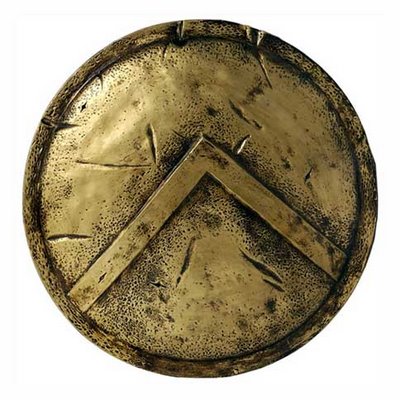
300

The 300 Spartans is a 1962 Cinemascope film depicting the Battle of Thermopylae. Made with the cooperation of the Greek government, it was shot in the village of Perachora in the Peloponnese. It starred Richard Egan as the Spartan king Leonidas, Ralph Richardson as Themistocles of Athens and David Farrar as Persian king Xerxes, with Diane Baker as Ellas and Barry Coe as Phylon providing the requisite romantic element in the film. In the film, a force of Greek warriors led by 300 Spartans fights against a Persian army of almost limitless size. Despite the odds, the Spartans will not flee or surrender, even if it means their deaths.


When it was released in 1962, critics saw the movie as a commentary on the Cold War,[1] referring to the independent Greek states as "the only stronghold of freedom remaining in the then known world", holding out against the Persian "slave empire".Xerxes I of Persia leads a vast army of soldiers into Europe to crush the small city-states of Greece to fulfill not only the idea of "one world ruled by one master", but also to avenge the defeat of his father, Darius I of Persia at the battle of Marathon 10 years earlier. Accompanying him are Artemisia I, the Queen of Halicarnassus who beguiles Xerxes with her feminine charm, and Demaratus, an exiled king of Sparta whose warnings Xerxes pays little heed toIn Corinth, Themistocles of Athens wins the support of the Greek allies and convinces both the delegates and the Spartan representative, Leonidas I, to grant Sparta leadership of their forces. Outside the hall, Leonidas and Themistocles agree to fortify the pass at Thermopylae until the rest of the army arrives. After this, Leonidas learns of the Persian advance and travels to Sparta to spread the news.
View of the Thermopylae pass at the area of the Phocian Wall. In ancient times the coastline was where the modern road lies, or even closer to the mountain


In Sparta, fellow king Leotychidas is fighting a losing battle with the Ephors over a festival that is due to take place, and that the army should wait until after the festival is over to march, by which time the Persians will have conquered Greece. Leonidas secretly decides to take his personal bodyguard of 300 men to the pass, who are exempt from the decisions of the Ephors and the Gerousia. They are reinforced by Thespians led by Demophilus and other Greek allies.


After days of fighting, Xerxes grows angry as his army is "slaughtered like sheep" by the Greeks, with the Spartans in the forefront. Leonidas further pressures his men after receiving word that the remainder of the Spartan army will only fortify the isthmus in the Peloponnese and will advance no further. The Greeks constantly beat back the Persians, and Xerxes begins to consider withdrawing to Sardis until he can equip a larger force at a later date. Just then, he receives word from Ephialtes of a goat-track through the mountains. Rewarding Ephialtes greatly, Xerxes sends his army onward.


Once Leonidas realises this, he sends away the Greek allies to alert the cities to the south. Being too few to hold the pass, the Spartans instead attack the Persian front, where Xerxes is nearby. Leonidas is killed in the meleé. Meanwhile the Thespians, who had refused to leave, are overwhelmed (offscreen) while defending the rear. Surrounded, the surviving Spartans refuse to leave Leonidas' body and are annihilated by arrowfire. After this, narration states that the Battle of Salamis and the Battle of Platea end the Persian invasion, which could not have been organized without the time bought by the 300 Spartans who defied the tyranny of Xerxes at Thermopylae. One of the final images of the film is the memorial bearing the epigram of Simonides of Ceos, which is recited.

Saturday, 3 April 2010

romans made in the 60's in italy

landi and fontaninilandi

two great companies. HELMET AND A.T.K.M

eric kemp runs helmet and makes these fantastic plastic soldiers .Find him at Helmet.com.
http://www.allthekingsmentoysoldiers.com/completed_projects.html


A.T.K.M dodes plastic and metal. They are really good. Check out his plastic stuff

exploring darkest africa

Sunday, 28 March 2010

PRUSSIANS

Waterloo company from Italy have these splendid Prussians. Better than Italeri

Fremch Hussar Conversions

This brilliant conversion was on e.bay and shows the use of Timpo and Britains

Nardi US Soldier

this seems to be taken from a real photo of the 2nd world war

Thursday, 25 March 2010

THE RED RIVER BATTLE

The Red River battle was one of the most brilliant displays of generalship by a Confederate officer.The campaign was primarily the plan of Union General-in-Chief Henry W. Halleck, and a diversion from Lt. Gen. Ulysses S. Grant's plan to surround the main Confederate armies by using the 30,000 soldiers in Banks's Army of the Gulf to capture Mobile, Alabama. It was a dismal Union failure, characterized by poor planning and mismanagement, in which not a single objective was fully accomplished. Taylor's successful defense of the Red River Valley with a smaller force is considered one of the most brilliant Confederate military accomplishments of the war. However, the decision of Taylor's immediate superior, General Edmund Kirby Smith to send half of Taylor's force north to Arkansas rather than south in pursuit of the retreating Banks after the Confederate victory at the Battle of Mansfield, led to bitter enmity between Taylor and Smith.


The soldier is a Nardi plastic figure from Italy
  1. nardi

Saturday, 6 March 2010

CHARBENS AND CHERILEA BY PLASTICS OF THE PAST

its not on the face of it a briliant product but once you see these john O'brien paint jobs you realise how good they can be.

PLASTIC ARMOUR

atlantic

Alpini ww2


All the rest are Hasegawa

Saturday, 20 February 2010

talon

In the 1650s, Montreal still had only a few dozen settlers and a severely underpopulated New France almost fell completely to hostile Iroquois forces. In 1660, settler Adam Dollard des Ormeaux led a Canadian and Huron militia against a much larger Iroquois force; none of the Canadians survived, but they succeeded in turning back the Iroquois invasion. In 1663, New France finally became more secure when Louis XIV made it a royal province. In 1665, he sent a French garrison, the Carignan-Salières Regiment, to Quebec. The government of the colony was reformed along the lines of the government of France, with the Governor General and Intendant subordinate to the Minister of the Marine in France. In 1665, Jean Talon was sent by Minister of the Marine Jean-Baptiste Colbert to New France as the first Intendant. These reforms limited the power of the Bishop of Quebec, who had held the greatest amount of power after the death of Champlain

joseph frobisher

Frobisher, Joseph (1740-1810), fur-trader, was born in Halifax, Yorkshire, England, on April 15, 1740. He appears to have followed his brother Benjamin to Canada, and to have first gone to the West in 1768. It is known that he made an attempt to pass beyond Grand Portage in 1769, but was turned back by the Indians. The statement is made in the McDonell diary, under date of September 4, 1793, that he wintered on the Red river in 1770-1; but this statement is open to doubt. Certainly he reached the Saskatchewan in 1773, with his brother Thomas; and spent the winter near the site of what afterwards became Fort Cumberland. In 1774-5 he wintered on the Athabaska river, in the hope of cutting off the fur-rade from Fort Churchill, and nearly perished of starvation. He was an original member of the North West Company in 1779; and he became one of its great figures. On the death of his brother Benjamin in 1787, he joined forces with Simon McTavish, to form McTavish, Frobisher and Co., which was for many years the virtual directorate of the North West Company. He retired from business in 1798, and lived at his place, Beaver Hall, in Montreal. He represented the East Ward of Montreal in the Legislative Assembly of Lower Canada from 1792 to 1796; and he died in Montreal on September 12, 1810. In 1779 he married Charlotte Joubert, of Montreal. His letter-book and his "Diary of my dinners" are preserved in the Library of McGill University.

Sunday, 14 February 2010

marx famous canadians

Sir Guy Carleton


CARLETON, Sir Guy, LOAD DORCHESTER, British soldier, born in Strabane, Ireland, 3 September, 1724; died in Maidenhead, 10 November, 1808. He greatly distinguished himself at the sieges of Louisburg, Quebec, and Belle Isle, and was wounded at the siege of Havana in 1762. In 1772 he became governor of Quebec, which he defended against the American army in December, 1775. He commanded the army that invaded New York in 1776, and fought a battle against Arnold on Lake Champlain. In 1777, on the nomination of Burgoyne to the command, he threw up his commission, but was appointed the same year lieutenant-general, and in 1781 appointed commander-in-chief in place of Sir Henry Clinton. When peace was concluded in 1783 he returned to England and was raised to the peerage.--His brother, Thomas, British soldier, born in 1736; died in Ramsgate, England, 2 February, 1817. He was appointed an ensign in Wolfe's regiment in 1755, became a captain in 1759, was brevetted major in 1773. appointed quartermaster-general of the army in Canada in November, 1775, lieutenant colonel of the 19th regiment in 1776, and colonel of the 29th on 20 November, 1782.
He was wounded in the naval conflict with Arnold on Lake Champlain in 1776.
When New Brunswick, previously a county of Nova Scotia, was organized as a separate province in 1784, he was appointed lieutenant governor of the new colony, and at the same time governor and commander-in-chief of Nova Scotia and Canada, taking the oath of office on 16 August, 1784. In 1786 he was superseded as governor-general of British North America, but retained the office of lieutenant governor of New Brunswick until his death. He resided in the colony continuously for nineteen years, and then went to England with the intention of returning at the end of two years, but remained there, the government being carried on for fourteen years by eight administrators. He was advanced to the rank of major general in the army in 1793, lieutenant-general in 1798, and genera.1 in 1803.