The Rio Grande (known in Mexico as the Río Bravo del Norte, or simply Río Bravo) is a river that forms part of the Mexico – United States border. Its length varies as its course changes. According to the International Boundary and Water Commission, its total length was 1,896 miles (3,051 km) in the late 1980s. Depending on how it is measured, the Rio Grande is the fourth or fifth longest river system in North America.[1] It serves as a natural border between the U.S. state of Texas and the Mexican states of Chihuahua, Coahuila, Nuevo León, and Tamaulipas. A very short stretch of the river serves as the boundary between the U.S. states of Texas and New Mexico. The tremendous water use of big cities and vast irrigated acreage along the river has taken a heavy toll on the river's flow; less than a fifth of its historical discharge reaches the sea today. Near the river's mouth, the heavily irrigated Rio Grande Valley is an important agricultural region.
By the river
Rio Bravo

I walk all alone
And I wonder as I wander by the river
Where my love has flown

All the birds in the cottonwood above her
Know I love her
Know I care
But my dreams, like the songs, she sang in Spanish
Seem to vanish
In the air
I wonder where
So I wonder as I wander
Will love come along
Must I live ever after
By the memory of her song
While the river Rio Bravo flows along
(Choir: Rio Bravo, Rio Bravo)
While the river Rio Bravo flows along
The Rio Grande's drainage basin (watershed) is 182,200 square miles (472,000 km2).[3] Many endorheic basins are situated within, or adjacent to, the Rio Grande's basin, and these are sometimes included in the river basin's total area, increasing its size to about 336,000 square miles (870,000 km2).The Rio Grande rises in the eastern part of the Rio Grande National Forest in the U.S. state of Colorado. The river is formed by the joining of several streams at the base of Canby Mountain, just east of the Continental Divide.

From there, it flows through the San Luis Valley, then south into New Mexico, passing through Espanola, Albuquerque, and Las Cruces to El Paso, Texas. Below El Paso it serves as part of the border between the United States and Mexico.
The official river border measurement ranges from 889 miles (1,431 km) to 1,248 miles (2,008 km), depending on how the river is measured.[1] A major tributary, the Rio Conchos, enters at Ojinaga, Chihuahua, below El Paso, and supplies most of the water in the border segment. Other well-known tributaries include the Pecos and the smaller Devils, which join the Rio Grande on the site of Amistad Dam. Despite its name and length, the Rio Grande is not navigable by ocean-going ships, nor do smaller passenger boats or cargo barges use it as a route. It is barely navigable at all, except by small boats in a few places.

THE FILM .LIKE CHINATOWN the title is a red herring the river does not mean anything to the film.
At the Texas border town of Rio Bravo, Joe Burdette, the brother of wealthy rancher Nathan Burdette, shoots and kills an unarmed man. Sheriff John T. Chance arrests him with the help of his former deputy, the alcoholic Dude. To prevent Chance from taking Joe to the Presidio to stand trial, Nathan hires a small army of professional gunmen to bottle up the town. Although Chance expects that it will take several days for help to arrive, he requests assistance from the U.S. marshal by sending a message via stagecoach.
When Chance’s friend Pat Wheeler arrives in town to deliver a shipment of explosives, he describes Chance’s situation as having "a bull by the tail." Seeing that Chance’s only professional help is the crippled and elderly deputy, Stumpy, and the shaky Dude, whom the townsmen ridicule and call Borochón ("drunk"), Wheeler offers his services, but Chance refuses, unwilling to risk the lives of "well-meaning amateurs." Chance tells Wheeler that Dude had been an excellent deputy, until a failed romance with Feathers, a female gambler, caused him to take up the bottle two years earlier. Wheeler suggests that Chance hire his new guard, the young Colorado, and praises his intelligence and gunmanship. However, Colorado declines the job, saying that he is better at "minding his own business," thus earning Chance’s respect because he feels no need to prove himself.
To protect Dude, Chance orders Feathers, who has just returned to town, to leave on the next morning’s stagecoach. Feathers takes a room for the night at the Alamo Hotel, which is run by married couple Carlos and Consuelo, and is also where Chance boards. That evening, when Chance sees Feathers winning at the card table using a deck missing three cards, Chance confronts her with an official notice reporting that a man, wanted for cheating at cards, is working with a woman who fits her description. She admits that the notice is referring to her and explains that her husband was cheating without her knowledge and then abandoned her. Weary of dodging her bad reputation, she suggests Chance search her for the missing cards. The tension is broken by Colorado, who suspects that a different player is cheating, prompting Chance and Colorado to search the man. After they find the missing cards up the man’s sleeve, Chance, acknowledging Feather’s innocence, says he will clear her name with the authorities; however, he still insists that she leave town.
When a gunman shoots Wheeler in the back, Chance assumes that his friend was killed for supporting him against Nathan. Chance and Dude investigate the stable where the shot originated and roust Wheeler's killer, who then runs to a nearby saloon. While suffering the derision of the saloon patrons, Dude discovers the murderer hiding in the saloon’s loft and outshoots him.
During the night, Feathers, who is attracted to Chance’s reserved charms, and Carlos worry about the sheriff’s safety and, while he sleeps, Feathers stands guard outside his room without his knowledge.
The next day, Nathan rides into town and demands to speak to Joe. Chance allows Nathan to enter the jailhouse, but threatens Joe with an "accident" if there are any attempts to storm the jail. After refusing to leave town, Feathers declares her feelings for Chance, who admits that he might return her interest if the situations with Dude and the Burdettes were less complicated.
Click for larger image
That night at the jail, Dude, noticing the burgeoning romance, reminds Chance that he once warned Dude about Feathers. When Chance and his colleagues notice that musicians have been playing the same song all day, Colorado states that the song is "El Deguelo," the "cutthroat song" played nightly by Mexicans to the men besieged at the Alamo, adding that he heard Nathan pay the musicians to play it as a signal to Joe.
After Chance re-deputizes Dude, who has abstained from drinking for several days, Dude celebrates by shaving and taking a bath at the hotel. During the night, Chance discovers Feathers asleep outside his room and carries her in. In the morning, Dude, suffering delirium tremens, is captured by Nathan’s men.
Soon after, three men ride into town claiming to need a doctor and, when they encounter Chance, they train their guns on him. Feathers, instructed by Colorado, distracts them by throwing a flower pot through the hotel window, allowing Chance and Colorado to shoot the men dead and rescue Dude.
Afterward, Feathers, who is upset by Chance’s near death, drinks too much and drunkenly declares frustration with her unrequited love, to which Chance responds that he is glad that she stayed. His confidence lost, Dude resigns as deputy and is tempted to resume drinking. To Stumpy’s dismay, Chance gives Dude a bottle of liquor and taunts him about his past humiliations, believing that treating Dude "rough" works better than sympathy. Colorado has changed his mind about accepting the job of deputy and, as Colorado is being deputized, Dude discovers that his "shakes" have subsided, passes on the liquor and takes his place with the other two deputies.
Observing that Nathan has caused trouble only when they are outside the jail, Chance decides they should take refuge inside it, using Joe as a hostage until the marshal arrives. Dude and Chance then go to the hotel for supplies, unaware that Nathan’s men have already overtaken it. After capturing Chance and Dude, Nathan orders Chance to fetch Joe, who will be traded for Dude. Escorted by three gunmen, Chance returns to the jail, but he, Colorado and Stumpy outwit and overcome them.
Upon returning to the hotel, they find that Nathan and his men have departed with Dude and left behind instructions for Chance to meet him with Joe at the edge of town. Colorado points out that Nathan cannot allow Chance and Dude to live, because their testimony in court regarding the murders will result in Joe being hanged. After ordering the less agile Stumpy to remain at the jail, Chance and Colorado take Joe to Nathan. As the prisoners are exchanged, Dude tackles Joe and knocks him unconscious, inciting a gunfight. When Nathan’s men attempt to surround them, Stumpy arrives and shoots them. After Colorado warns that Stumpy is standing next to a wagon full of dynamite, the older man retrieves a box of explosives and joins Chance. Working together, Stumpy throws sticks of dynamite toward the building sheltering Nathan and his men as Chance ignites each stick with a gunshot, causing an explosion. When the building erupts in fire, Nathan surrenders.

Later, Dude, who no longer desires alcohol or his lost love, sends Chance to Feathers.

The Rio Grande rises in high mountains and flows for much of its length at high elevation; El Paso is 3,762 feet (1,147 m) above sea level. In New Mexico, the river flows through the Rio Grande Rift from one sediment-filled basin to another, cutting canyons between the basins and supporting a fragile bosque ecosystem in its floodplain.

From El Paso eastward, the river flows through desert. Only in the sub-tropical lower Rio Grande Valley is there extensive irrigated agriculture. The river ends in a small sandy delta at the Gulf of Mexico. During portions of 2001 and 2002 the mouth of the Rio Grande was blocked by a sandbar. In the fall of 2003 the sandbar was cleared by high river flows of about 7,063 cubic feet per second (200 m3/s).


Millions of years ago, the Rio Grande ended at the bottom of the Rio Grande Rift in Lake Cabeza de Vaca. About one million years ago (mya), the stream was "captured" and began to flow east.


 Britains


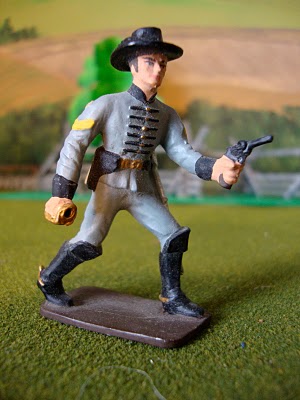


 face of a twat first class
 spare parts from replicants