The
Battle of the Rosebud (also known the
Battle of the Rosebud Creek) occurred June 17, 1876, in the Montana Territory between the United States Army and a force of Lakota Native Americans during the Black Hills War.

The Cheyenne called it the
Battle Where the Girl Saved Her Brother, because of an incident during the fight involving Buffalo Calf Road Woman.

General George Crook

commanded a mixed force of some 970 cavalry and mule-mounted infantry, 80 civilian teamsters and miners, and

260 Crow (or Absaroke) and Shoshone

Indian scouts, traditional foes of the Lakota. The expedition was part
of a three-pronged campaign by some 2,400 soldiers to force roughly
between 600 and 1,700

Lakota and Cheyenne warriors, and thousands of family noncombatants, to return to their reservations.

Crook had made a previous attempt in March to corner the Lakota. When his force got within a hundred miles of the Yellowstone River,

it was struck by a blizzard, forcing him to abandon his supply train and resulting in numerous frostbite
casualties.

When the force managed to locate a track of horses, Crook
sent three companies of the 2nd Cavalry under its commander, Colonel J.
J. Reynolds, to continue the search.

Reynolds discovered a village of Cheyenne which was in use as a
staging area, containing 800-1500 ponies as well as large stores of
guns, ammunition, food and other supplies.

Ordering a pistol charge by a
single company under his command, Reynolds took the Cheyenne by
surprise and drove their warriors from the immediate area, but failed to
support his attack with the rest of his force. When resistance on the
outskirts of the village stiffened, Reynolds ordered the Cheyenne
supplies destroyed and left with great haste, leaving several soldiers
behind and exhausting his force in attempting to reunite with Crook
thereafter. Guards posted that night to watch the ponies which had been
seized were so tired they fell unconscious, and the ponies were
liberated by Cheyenne trailing Reynolds' force.

For failing to follow through on the initial attack with his full
detachment, and for destroying rather than holding the Cheyenne
supplies, Reynolds was later court-martialed.

On 17 June 1876, Crook's column marched northward along the south
fork of Rosebud Creek.

The holiday atmosphere that prevailed since the
arrival of the Indian scouts on 15 June was suddenly absent. The Crow
and Shoshone scouts did not sense their enemies' presence.

The soldiers,
particularly the mule-riding infantry, were fatigued from the previous
day's 35 miles (56 km) march and the early morning reveille at 3:00 am.

bama
At 8 a.m., Crook stopped to rest his men and animals. Although deep
in hostile territory, Crook made no special dispositions for defense.
His troops halted in their marching order. The Crow and Shoshone scouts
remained alert while the soldiers rested. Soldiers in camp began to hear
gunfire coming from the bluffs to the north, where the scouts were
positioned. As the intensity of fire increased, a scout rushed into the
camp shouting, "Lakota, Lakota!"
By 8:30 am, the Sioux and Cheyenne had hotly engaged Crook's Indian
allies on the high ground north of the main body. Heavily outnumbered,
the Crow and Shoshone scouts fell back toward the camp, but their
fighting withdrawal gave Crook time to deploy his forces.
Crook directed his forces to seize the high ground north and south of the Rosebud Creek. He ordered Captain Van Vliet

, with two troops
of the 3d Cavalry, to occupy the high bluffs to the south. In the
north, the commands of Major Chambers with two companies of the 4th
Infantry and three companies of the 9th Infantry, and Captain Noyes with
three troops of the 2d Cavalry, formed a dismounted skirmish line and
advanced toward the Sioux. Their progress was slow due to flanking fire
from Indians occupying the high ground to the northeast.
To accelerate the advance, Crook ordered Captain Anson Mills,

commanding six troops of the 3d Cavalry, to charge the Sioux. Mills'
mounted charge unnerved the Indians and they withdrew along the
ridgeline, not stopping until they reached the next crest. Mills quickly
re-formed three troops and led another charge, driving the Indians
northwest again to the next hill. Preparing to drive the Indians from
there, Mills received orders from Crook to cease the advance and assume a
defensive posture. Chambers and Noyes led their forces forward in
support and, within minutes, joined Mills on top of the ridge. The bulk
of Crook's command, joined by the packers and miners, occupied Crook's
Ridge. Establishing his headquarters there at approximately 9:30 am,
Crook considered his next move.

At the west end of the field, Lieutenant Colonel William Royall,
Crook's second in command, pursued the Indians' attacking the rear of
Crook's camp. Leading Captain Henry's three troops of the 3d Cavalry and
two troops borrowed from Mills' command, Royall advanced rapidly along
the ridgeline to the northwest, finally halting his advance near the
head of Kollmar Creek.

Royall's detachment was a mile from the main body
and in danger of being cut off and destroyed. Sensing this
vulnerability, the Sioux and Cheyenne warriors shifted their main effort
to the west and concentrated their attacks on Royall. Seeing the
danger, Crooks sent orders to Royall to withdraw to Crooks Ridge. Royall
sent only one troop to join Crook, claiming later his forces had been
too hotly engaged.
Crook's initial charges secured key terrain but did little to damage
the Indian forces.

Assaults scattered the Indians but they did not quit
the field. After falling back, the Sioux and Cheyenne kept firing from a
distance and attacked several times in small parties. When
counterattacked by the soldiers, the warriors sped away on their swift
horses. Crook realized his charges were ineffective.
Crook returned to his battle plan. Believing the Sioux and Cheyennes'
fighting tenacity was based on defense of families in a nearby village,
Crook ordered Mills and Noyes to withdraw their cavalry from the high
ground and follow the Rosebud north to find the suspected village. He
recalled Van Vliet's battalion from the south side of the Rosebud.
Only 1 mile (1.6 km) away, Royall's situation was deteriorating. He
tried to withdraw across Kollmar Creek but found the Indians' fire too
heavy. Next he began to withdraw southeast along the ridgeline. A large
group of Sioux and Cheyenne broke off from the fight against Crooks'
main forces and charged boldly down the valley of Kollmar Creek,
advancing all the way to the Rosebud. The arrival of Van Vliet's command
checked the warriors' advance. Crook ordered the Crow and Shoshone
scouts to charge into the withdrawing warriors' flank.
Mills' advance up the Rosebud left Crook without sufficient force to
aid Royall and his hard-pressed battalion. While Mills made his way up
the Rosebud, searching for a village that did not exist, Royall's
situation grew worse.
At approximately 1130, Royall withdrew to the southeast and assumed a
new defensive position. He hoped to lead his command across Kollmar
Creek and rendezvous with Crook. Meanwhile, the Sioux and Cheyenne
attacked him from three sides. From his headquarters, Crook realized
that Royall needed help to get out of the situation, help only Mills'
force could provide. Crook sent orders to Mills redirecting him to turn
west and attack the rear of the Indians' pressing Royall.
At approximately 1230, Royall decided against further waiting and
withdrew his troops into the Kollmar ravine to remount their horses.
From there, they would have to ride through gunfire to reach the
relative safety of Crook's main position. As the US cavalry began their
dash, the Crow and Shoshone scouts countercharged the pursuing enemy and
relieved much of the pressure on Royall's men. Two companies
of infantry left the main position to provide covering fire from the
northeast side of the ravine. Royall's command still suffered grievous
casualties.

Mills arrived too late to assist Royall's withdrawal, but his
unexpected appearance on the Indians' flank caused the Sioux and
Cheyenne to break contact and retreat. Concentrating his mounted units,
Crook now led them up the Rosebud in search of the non-existent Indian
village. The advance came upon a narrow ravine which the scouts warned
was an excellent spot for an ambush. Crook halted his advance. The
battle of Rosebud was over. By the standards of Indian warfare, it had
been an extremely long and bloody engagement. Never before had the
Plains Indians fought with such ferocity, and never before had they
shown such a willingness to accept casualties. Nor was their sacrifice
in vain. Concerned for his wounded, short on supplies, and perhaps still
shaken by the Indians' ferocity, Crook returned to his camp on Goose
Creek and stayed there for seven weeks awaiting reinforcements. Unlike
his enemies, Crook's command would play no role in the momentous events
at The Little Bighorn.
The hard fought battle lasted for six hours. Hard fighting by Crook's
Indian allies during the early stages saved his command from a likely
devastating surprise attack. The gallantry of the Crow and Shoshone
scouts throughout the battle was crucial to Crook's averting disaster.
Historian Joseph Marshall III argues that the Lakota would have won
the battle had it not been for the fact that they were fighting after
riding all night to arrive at the battle.
Crook reported a loss of 32 dead and 21 wounded and 13 of the Lakota
dead. Although Crook's force was left in possession of the battlefield
and he claimed a victory, the battle caused Crook to return to his base
camp at Goose Creek and halted his advance which prevented him from
joining up with the 7th Cavalry under George Armstrong Custer.
Crook withdrew to a position on Big Goose Creek, near present-day Sheridan, Wyoming,

and waited 7 weeks for reinforcements from the 9th Infantry and 5th Cavalry before resuming the campaign on August 5.

The battlesite is preserved at the

Rosebud Battlefield State Park in Big Horn County, Montana. The site was listed on the National

Register of Historic Places in 1972 and was further designated a National Historic Landmark in 2008.

EE9s2ufGqzBQ+B8y)d6w~~60_12.JPG) One of the reasons I love astronomy is that it doesn’t flinch from the big questions. And one of the biggest is: are we alone?


 These relatively
lightly armored horsemen formed the most effective element of the
Muslim armies during the later stages of the Islamic conquest of the
Levant. The best use of this lightly armed fast moving cavalry was
revealed at the Battle of Yarmouk (636 AD) in which Khalid ibn Walid,
 Early Muslim historians
have given it the name Mutaharrik tulai'a( متحرك طليعة ), or the Mobile guard.
This was used as an advance guard and a strong striking force to route
the opposing armies with its greater mobility that give it an upper hand
when maneuvering against any Byzantine army. With this mobile striking force, the conquest of Syria was made easy.

 CE was a conflict between the Arab Abbasid Caliphate and the Chinese Tang Dynasty over the control of Central Asia. Chinese infantry were routed by Arab cavalry near the bank of the River Talas.


 Hassel claimed that he was born as Sven Pedersen at Frederiksborg, Zealand, Denmark, and later
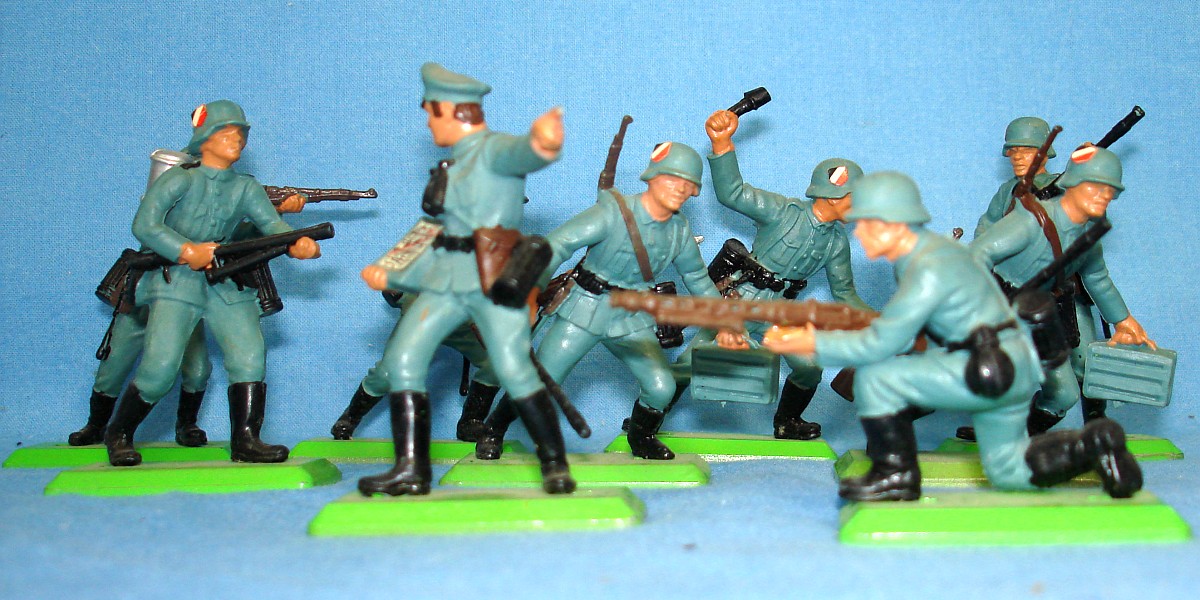 adopted his mother's maiden name, Hassel. At the age of 14 he joined the merchant navy as a cabin
 boy and worked on ships until his military service in 1936. In 1937, to escape the Great Depression,
the unemployed Hassel moved to Germany to join the army. In an
interview in 1990, he said,
 "Germany happened to be closer than England,
I went to a Wehrmacht
recruiting office to enlist, but it wasn't as easy as I had thought.
Only German citizens could serve. After six months of trying to join up,
the Seventh Cavalry Regiment finally accepted me on the condition that I
became a naturalized German."
 and in 1939 was a tank driver during the invasion of Poland.A year later he attempted to escape. He served with the 2nd Cavalry Regiment and later the 11th and 27th Panzer Regiments (6th Panzer Division) on all fronts except North Africa and was wounded several times. Eventually he reached the rank of lieutenant and received an Iron Cross 1st and 2nd class. He surrendered to Soviet troops in Berlin in 1945 and spent the following years in various POW camps. He began to write his first book, Legion of the Damned while he was interned.

 Wheels of Terror was made into a film titled The Misfit Brigade.

 undesirables. In addition to Sven, they include
Alfred Kalb, "Legionnaire" (ex-member of French Foreign Legion);
Wolfgang Creutzfeldt, a giant of a man ironically named Tiny (variously
Little John in some of the books); barracks fixer and shrewd thief
Joseph Porta; older sergeant Willie Beier, "Old Un" or "Old Man"; Julius
Heide, an ex-Waffen SS officer and Nazi fanatic, Barcelona Blom, a veteran of both sides of the Spanish Civil War,
Gregor Martin, who was a removals man before the war, Chief Mechanic
Wolf, and Staff Sergeant Hoffman, a typical German NCO of the period.
They serve on most fronts from Northern Finland to the Russian Front
(more than once), Italy (Monte Cassino), Greece (The Bloody Road to Death) and the Balkans, and to Normandy (Liquidate Paris) during the Normandy Invasion.
Whilst most of the action appears to occur in Russia, a quick
chronological analysis of the activities described in the books appears
to show that the regiment depicted in the books fought in several
places, hundreds of miles apart, at the same time. In some of the books
the 27th Regiment does guard duty for the Gestapo in Hamburg (Assignment Gestapo) and also at the military prison at Torgau
 (March Battalion). Hassel states that the characters are based on real people and events are related to historical events.


