 If one was wishing to recreate the two sides in the Lava bed wars then easy modifications would be the step,
  theres not much difference between them and ordinary indians except that they tended to wear hats usually
 captured from the army.The Modoc War, or Modoc Campaign (also known as the Lava Beds War), was an armed conflict between the Native American Modoc tribe and the United States Army in southern
 Oregon and northern California from
 1872–1873.] The Modoc War was the last of the Indian Wars to occur in California or Oregon.
 Eadweard Muybridge photographed the early part of the campaign.
Captain Jack led 52 warriors in a band of more than 150 Modoc people who left the Klamath ![Donald McKy [McKay], the celebrated Warm Spring Indian Scout and his chief men.](https://lh3.googleusercontent.com/blogger_img_proxy/AEn0k_sT5hy3zm-VAGPURh5ZgTjjLKUNkIYb-BOka7Ct5cQZPQQZWjn6VHUhHjEbUjpIyJtS2cvxL4xQTsLX52MkDYcVqCz_tWjE3dtcegy3lq5ZHeY26H4VgBI=s0-d) Reservation. Occupying defensive positions throughout the lava beds south of Tule Lake,
Reservation. Occupying defensive positions throughout the lava beds south of Tule Lake, for months those few warriors successfully waged a guerrilla war against hundreds of United
  States Army forces sent
  against them and reinforced with artillery. In April 1873, Captain Jack and others killed General Edward Canby
 and another peace commissioner, and wounded others.
Reservation. Occupying defensive positions throughout the lava beds south of Tule Lake, for months those few warriors successfully waged a guerrilla war against hundreds of United States Army forces sent against them and reinforced with artillery. In April 1873, Captain Jack and others killed General Edward Canby and another peace commissioner, and wounded others.

After more warfare with reinforcements of US forces, finally some Modoc warriors  surrendered, and Captain Jack and the last of his band were captured. Jack and five warriors
 several leaders were tried for the murder of two peace commissioners; Jack and three
 warriors were executed and two others sentenced for life imprisonment. The remaining 153 Modoc of the band were sent toIndian Territory, where they were held as prisoners of war
  until 1909. Some at that point returned to the Klamath Reservation, but most (and their
  descendants) stayed in what was then the state of Oklahoma. As a result, there are federally recognized Modoc tribes in Oregon and Oklahoma today.
 The specific events go back to 1852. Although the Modoc initially had no trouble with European Americans, after
  the murders of settlers in a raid by the Pit River Tribe, European-American militia, not familiar with the Indian (the California Volunteer
  Militia was in fact nothing more than an armed mob.)
 peoples, in revenge attacked an innocent Modoc village, killing men, women and children. (Kintpuash, the future ((th
 eer Militia was in fact nothing more than an armed mob.)chief also known as Captain Jack, survived the attack
  but lost some of his family.)
 In retaliation and to try to end European-American encroachment, some Modoc chose to attack the next whites they
 came across; they killed 65 white emigrants in a wagon train at what became known as Bloody Point.In another round of retaliation,
 California militia led by Ben Wright killed 41 Modoc at a peace parley.
surrendered, and Captain Jack and the last of his band were captured. Jack and five warriors several leaders were tried for the murder of two peace commissioners; Jack and three warriors were executed and two others sentenced for life imprisonment. The remaining 153 Modoc of the band were sent toIndian Territory, where they were held as prisoners of war until 1909. Some at that point returned to the Klamath Reservation, but most (and their descendants) stayed in what was then the state of Oklahoma. As a result, there are federally recognized Modoc tribes in Oregon and Oklahoma today.The specific events go back to 1852. Although the Modoc initially had no trouble with European Americans, after the murders of settlers in a raid by the Pit River Tribe, European-American militia, not familiar with the Indian (the California Volunteer Militia was in fact nothing more than an armed mob.)peoples, in revenge attacked an innocent Modoc village, killing men, women and children. (Kintpuash, the future ((theer Militia was in fact nothing more than an armed mob.)chief also known as Captain Jack, survived the attack but lost some of his family.) In retaliation and to try to end European-American encroachment, some Modoc chose to attack the next whites they came across; they killed 65 white emigrants in a wagon train at what became known as Bloody Point.In another round of retaliation, California militia led by Ben Wright killed 41 Modoc at a peace parley.Rounds of hostilities continued in the area until 1864, with warriors of the Klamath and the Yahooskin, a band of  Shoshone, also attacking settlers and migrants in their turns. The United States and the Klamath, Modoc, and
  Shoshone (Yahooskin band) tribes signed a treaty, by which the Indians ceded millions of acres of lands and the
 US established the Klamath Reservation, within the boundaries of present-day Oregon.
 Under the treaty terms, the Modoc, with Old Chief Schonchin as their leader, gave up their lands in the Lost River,
 Tule Lakeand Lower Klamath Lake regions of California, and moved to a reservation in the Upper Klamath River Valley.
Shoshone, also attacking settlers and migrants in their turns. The United States and the Klamath, Modoc, and Shoshone (Yahooskin band) tribes signed a treaty, by which the Indians ceded millions of acres of lands and the US established the Klamath Reservation, within the boundaries of present-day Oregon. Under the treaty terms, the Modoc, with Old Chief Schonchin as their leader, gave up their lands in the Lost River, Tule Lakeand Lower Klamath Lake regions of California, and moved to a reservation in the Upper Klamath River Valley.Reluctant to leave their territory, the Modoc finally relocated in 1869 following a council between Captain Jack (also known as Kintpuash), a Modoc leader; Alfred B. Meacham, US Superintendent of Indian Affairs for Oregon;  O.C. Knapp, US Indian agent on the reservation; Ivan D. Applegate, sub-agent at Yainax on the reservation; and W.C. McKay. Meacham was from Oregon, and knew Captain Jack and the Modoc. When soldiers suddenly
  appeared at the meeting, the Modoc warriors fled, leaving behind their women and children. Meacham placed the women and children in wagons and started for the reservation. He allowed "Queen Mary"
 , Captain Jack's sister, to go meet with Captain Jack to persuade him to move to the reservation. She succeeded. Once on the reservation,
 Captain Jack and his band prepared to make their permanent home at Modoc Point.
O.C. Knapp, US Indian agent on the reservation; Ivan D. Applegate, sub-agent at Yainax on the reservation; and W.C. McKay. Meacham was from Oregon, and knew Captain Jack and the Modoc. When soldiers suddenly appeared at the meeting, the Modoc warriors fled, leaving behind their women and children. Meacham placed the women and children in wagons and started for the reservation. He allowed "Queen Mary", Captain Jack's sister, to go meet with Captain Jack to persuade him to move to the reservation. She succeeded. Once on the reservation, Captain Jack and his band prepared to make their permanent home at Modoc Point.


 (excellent opportunity to convert here with crescent figure , change hat to dragoon model , change pistol to colt, use maybe the timpo confederate one,add sabre in other hand then cut off pockets and holster, paint in details of dragoon jacket)
 change this one into either infantry of tenneessee rifiles, keep hat but change rifle to look longer, change boots to trousers)"The Mexicans tried
 every form of government: an empire with a self made emperor, a federal republic, a centralist republic, and a dictatorship.
 The results were always disastrous. … The dominant feature in the history of early Mexico were rebellions of generals who pronounced themselves against the government and proclaimed a "plan" denouncing existing
  abuses and promising reforms." plastyic
 figures from the great blog i like what i like
 to a family of indifferent social standing, he had a gift for concocting plans and instigating pronunciamientos that remains unmatched to this day. A talented commander, revered as a hero for his battle victories, and a
  clever politician who was able to shift his allegiance when public opinion changed, he was in turn the champion of the liberals, the defender of the conservatives, and the promoter of dictatorship."

 He continued the battle until October 21, when the Spanish retreated to the harbor island fortress of San Juan de Ulua. Santa Anna proclaimed Veracruz liberated.
  He was emerging as a revolutionary hero.
 Drawing upon his authority as governor of the state of Veracruz, Santa Anna recruited and armed two thousand men. It was a small force, but it was large enough to be a formidable military threat. "The new general rushed to Tampico to beat off the Spaniards, who had already been defeated by heat and yellow fever. After a short but bloody action, the Spanish troops surrendered, and Santa Anna began to be known throughout Mexico as the "Savior of the Country" and the "Victor of Tampico." Santa Anna himself retired to his hacienda and was quoted as saying, "that I would not have to answer another call to arms."
 "Bustamante's administration improved government finances, but ruled Mexico through terror, imprisonment, and assassination. One victim of the firing squad was Guerrero." The execution of Guerrero angered many Mexicans and triggered another military revolt. Santa Anna was one of the first to pronounce against Bustamante. By the end of that year Bustamante was removed from office. On April 1, 1833, Santa Anna was elected president of the republic. United States forces captured the port of Veracruz on March 27, 1847.(above a conversion from the excellent blog I LIKE WHAT I LIKE)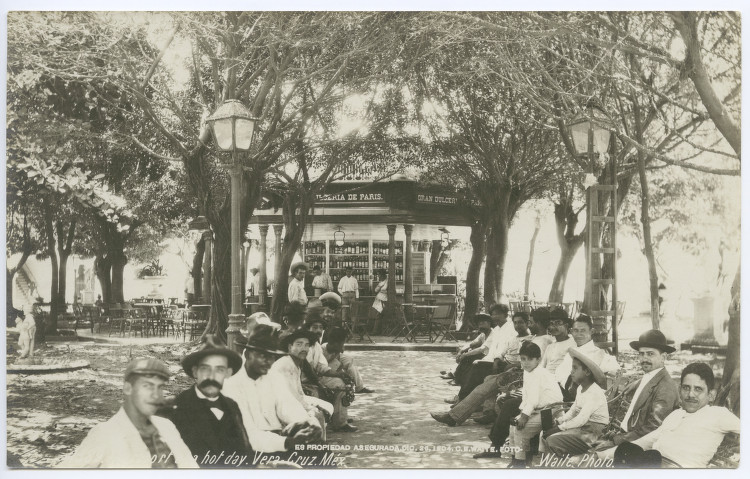


 Division.

 The Mexicans lost 1,000 killed and wounded with an additional 3,000 men taken prisoner. United States casualties comprised 64 killed and 353 wounded. General Santa Anna, caught off guard by the Fourth
 Regiment of the Illinois Volunteer Infantry, was compelled to ride off without his artificial leg,
  which was captured and is still on display at the Illinois State Military Museum in Springfield, Illinois.
 They had the most to fear being captured by the Americans, leading them to threaten with friendly fire fellow Mexican combatants intent on retreating or surrendering. Because of heavy artillery engagement by
  Americans, the battalion's members had to spend most of their time returning volley
 at the Americans; therefore, its unlikely that more than a few "friendly fire" incidents actually took place.


 senorita in vera cruz


