Saturday, 21 May 2011

bazooka from world war two magazine

Edward Uhl demonst rates the
army's new weapon in 1942
The Man Behind The Bazooka 2
World War II Magazine, November/December 2010
liant one at that. The tube was just long
enough so that the rocket would finish
its 1/50th-of-a-second burn by the time
it emerged from the front opening. The
whole thing weighed a mere 13 pounds
and could easily be carried in the field.
It took only two men to operate, one to
load the rocket into the back end of the
tube and hook up a wire that trailed out
of the rocket's tail, the other to aim and
fire by pulling a trigger that sent an
electric current to the igniter from a
battery in the stock of the launcher. It
could hit a tank or pillbox from 300
yards, putting a hole through four
inches of steel plate.
'I was walking by this
scrap pile, and there
was a tube that was
five feet long and 60
millimeters in
diameter...
I said, That's the
answer!'
Probably the real breakthrough for
Uhl and Skinner, though, came shortly
afterward. One day in May 1942 they
were firing some dummy rounds at a
moving tank at Aberdeen Proving
Ground in Maryland when Brigadier
General Gladeon Marcus Barnes, the
head of ordnance research and development,
happened to pass by with some
other visiting brass. Noticing all of the
flames and whooshes, they came over
to see what was going on. Skinner saw
his chance and—taking a certain
calculated risk—handed the launcher to
Barnes and offered to let him take a
shot. Barnes nailed the tank on his first
try, and pretty soon the visitors had
fired off all of the available rounds.
The weapon was ordered into
production that day; in one of the
fastest development contracts in history,
General Electric was given 30 days to
deliver an initial 5,000 launchers—and
finished the order with 89 minutes to
spare.
By the end of the war, 440,000
bazookas had reached the field. (The
name came from a joke musical instrument
comedian Bob Burns has made
famous in his 1930s radio shows; made
of 3-inch gas pipe and sounding like a
"wounded moose," it bore a definite
resemblance to the rocket launcher.)
Uhl left the army as a lieutenant
colonel in 1947 and went on to become
chairman of the giant defense contractor
Fairchild Industries, but he never forgot
the lesson of what a small team of
innovative thinkers can do. "We have
gotten into the bad habit of heaping
people onto projects," he once said.
"The trap we've fallen into is to believe
that a thousand incompetents properly
organized can do the job of a few dozen
outstanding people."

EDWARD UHL was barely out of
college and barely into uniform when he
found himself constituting 50 percent of
the U.S. Army's rocket research
program. Along with another engineer,
a young major named Leslie Skinner,
Uhl was to figure out some way that
armor-piercing could hurl an armorpiercing
grenade at a target.50 Green Kneeling Bazooka Combatants
The grenades were extremely effective,
using a hollow explosive charge to
form a focused funnel of gas that cut
through armor like a blowtorch. But at
nearly four pounds, they weighed too
much to throw by hand or be fired from
the end of a rifle barrel. So far, the only
idea anyone had for delivering it was
for some poor sap to run up and stick it
directly on the surface of an oncoming
enemy tank.
The army had done a few experiments
with rocket-propelled projectiles as
early as the end of World War I. The
catch was finding some way to shield
the soldier who fired it from the jet of
flame and hot gases that spewed
directly back as the rocket took off. Uhl
was probably engaging in a little
hyperbolic hindsight when he told the
story years later of the eureka moment
he had one day in the spring of 1942
that solved the problem: "I was walking
by this scrap pile, and there was a tube
that was five feet long and 60
millimeters in diameter, which
happened to be the same size as the
grenade that we were turning into a
rocket. I said, 'That's the answer! Put
the tube on a soldier's shoulder with the
rocket inside, and away it goes."
But it was no exaggeration that the
firing tube was the solution, and a bril-

Friday, 20 May 2011

coclkeshell heroes

The Cockleshell Heroes raided Nazi-occupied Bordeaux in 1942. The Cockleshell Heroes target was the harbour in Bordeaux. They succeeded in sinking one ship and severely damaging four others and doing enough damage to greatly disrupt the use of the harbour for months to come. Such was the significance of the raid, that Winston Churchill said that it helped to shorten to World War Two by six months.
For a number of months during the war, merchant ships had used Bordeaux to supply the German military that was stationed in that part of France. German U-boats used the area as a base. Any supply ships that came through the English Channel could be dealt with but plenty of merchant ships were willing to sail to Bordeaux harbour via the Mediterranean and there was little the British Navy could do about it. A raid by bombers would have led to many civilian casualties – so this was excluded.
The task of the Cockleshell Heroes was simple – destroy as many ships in the harbour as was possible so that the harbour itself would be blocked with wreckage, thus rendering it incapable of fully operating as a harbour. This was to be called Operation Frankton.
The Cockleshell Heroes were Royal Marine Commandos. These men got their nickname as the canoes they were to use were nicknamed ‘cockles’. After months of training, they were ready to set-off for their target – except that none of them knew what their target was. This was only made known to them once the submarine HMS Tuna had surfaced off of the French coast.
The twelve men that formed the Cockleshell Heroes were taken by submarine and dropped off the coast of Bordeaux. The plan was for the six teams of two men to paddle five miles to the mouth of the River Gironde, paddle seventy miles up it, plant limpet mines of the ships in the harbour and then make their way to Spain.
The raid started badly once the men were due to be dropped off by HMS Tuna. One of the canoes was holed as it was being made ready on the Tuna. The two Royal Marines who were meant to have used this canoe – called ‘Cachalot’ – could not take part in the raid. It is said that Marines Fisher and Ellery were left in tears at their disappointment.
The leader of the raid was Major ‘Blondie’ Hasler. His partner was Marine Bill Sparks. Their canoe was code-named ‘Catfish’. As the canoes approached the mouth of the Gironde they hit a violent rip tide. The waves were five feet high and the canoe ‘Conger’ was lost. The two crew of Conger – Corporal George Sheard and Marine David Moffat – were towed by the other canoes. Once near the shoreline, both men had to swim to the shore as they were slowing down the remaining canoes. Neither men made it to the shore and they were assumed to have drowned.
The crew of the canoe ‘Coalfish’ – Sergeant Samuel Wallace and Marine Jock Ewart - were caught by the Germans and shot.
The crew of the ‘Cuttlefish’ – Lieutenant John Mackinnon and Marine James Conway – had to abandon their canoe after it was damaged. They were also caught by the Germans, handed over to the Gestapo and shot.
With four canoes down, the raiders were only left with two canoes. Along with ‘Catfish’, ‘Crayfish’ was left crewed by Marine William Mills and Corporal Albert Laver.
By now, the Germans knew that something was up and they had done a great deal to increase patrols along the river. The two crew paddled at night and hid during the day.
The two canoes got to the harbour. Here they were spotted by a sentry who failed to raise the alarm – possibly he mistook what he saw for driftwood as both crews remained motionless in their canoes as they had been trained to do.
The crew of both remaining cockleshells placed limpet mines on the merchant ships they found in the harbour. They had an eight minute fuse on them, giving the Marines time to get away. Both ‘Crayfish’ and ‘Catfish’ escaped on the tide. The damage to Bordeaux harbour was severe. Now the crews had to leave their canoes, move on foot and link up with the French Resistance at the town of Ruffec. The Germans automatically assumed that the men would travel south to Spain. In fact, they travelled 100 miles north of Bordeaux – a journey that took them two months.
Laver and Mills, who were moving separately from Sparks and Hasler, were caught by the Germans and shot. With the help of the French Resistance, Hasler and Sparks reached Spain and then Gibraltar. Even here, Sparks met problems. Hasler used his rank to get transported back to Britain. However, Sparks did not have such luck and was arrested. In fact the Chief of Combined Operations, Lord Louis Mountbatten, had assumed all the men were dead, so anyone claiming to be them would have been treated with suspicion.


Sparks was put under guard by the military police. However, he slipped these guards at Euston Station in London and, after visiting his father, made his way to the Combined Operations Headquarters.Bordeaux city council have established a stunning 100-mile walk tracing the route of the operation and subsequent escape of the only two survivors, which they have named the Frankton Trail. There are nine other memorials scattered around the Gironde region celebrating aspects of the story, the main one being on the dockside itself in Quai des Chartrons, with a museum exhibition nearby. Although the temptation in Bordeaux is always to linger, Rugby World Cup visitors should stir themselves one morning, stretch their legs and sniff a bit of history along a stretch of the trail.
Herbert Hasler was an extraordinary man and details of Operation Frankton still make your hair stand on end. Put down your coffee for a minute and just try to imagine this...
Six two-man crews disembarked into heaving seas from the British submarine HMS Tuna on a moonless night late on Dec 7, 1942. The Cockleshell Heroes were: Major H E 'Blondie' Hasler, Marine W E Sparks, Lieutenant J MacKinnon, Marine J Conway, Corporal A F Laver, Marine W N Mills, Marine Ellery, Marine E Fisher, Sergeant S Wallace, Marine R Ewart, Corporal G Sheard and Marine D Moffatt.
One of the six Cockle MkII kayaks was immediately damaged beyond repair, and a second soon capsized in the huge, ice-cold Biscay surf with the crew drowning. Deathly chaos.
Another canoe also capsized but remarkably the crew made it ashore, only to be captured and summarily executed. Another crew then became separated after hitting an underwater obstruction and sinking near Bordeaux. They were captured by the Gestapo at La Reole and taken to Paris.
The four remaining men pressed on and, thanks to their brilliant boat-handling skills, reached their targets after four arduous days, laying low during daylight and paddling by night against strong tidal currents and having to take long detours to avoid mines and coastal defences. Not all the limpet mines attached to targets detonated but four cargo ships were flooded and a Sperrbrecher (mine-sweeper) was damaged.
The raiders then made their way over land 90 miles north-east to Ruffec, where they stopped at the Hotel Restaurant la Toque Blanche to contact the French Resistance to organise their escape to Gibraltar and Britain. Only Hasler and partner Bill Sparks made it; the other two were betrayed by locals and captured at Montlieu. They also ended up in Paris with the men captured at La Reole, and all four are believed to have been executed in March 1943.
In civilian life Major Hasler DSO dedicated himself to competitive sailing and invented the first self-steering gear for yachts, which revolutionised single-handed sailing by freeing the skipper from constant steering and giving time for other essential activities.

Blondie was also partly responsible for the Ostar race - the first single-handed yacht race across the Atlantic. He and Francis Chichester came up with the idea in 1956 but, unable to find sponsorship, said they would race for a half-crown bet if necessary. The race eventually took place in 1960. From the 50 participants who sent letters of intent, five made the start line, all of whom used Hasler self-steering equipment.

Thursday, 19 May 2011

ITALIAN OL BILL by Atlantic

the sand pebbles

The Sand Pebbles is a 1966 American period war film directed by Robert Wise. It tells the story of an independent, rebellious U.S. Navy Machinist's Mate aboard the fictional gunboat USS San Pablo in 1920s China.Photobucket
The Sand Pebbles features Steve McQueen, Richard Attenborough, Richard Crenna, Candice Bergen, Mako and Marayat Andriane (later known as a writer of erotic fiction - Emmanuelle Arsan). Robert Anderson adapted the screenplay from the 1962 novel of the same name by Richard McKenna

PlotIn 1926, Machinist's Mate 1st Class Jake Holman (Steve McQueen) transfers from the Asiatic Fleet flagship to the Yangtze River Patrol gunboat USS San Pablo (the ship is nicknamed the "Sand Pebble" and its sailors refer to themselves as the "Sand Pebbles").
However, life aboard a gunboat is very different from that on a flagship. The gunboat has a labor system — condoned by the officers — wherein coolies do all of the manual work, leaving the sailors free for combat drills and idle bickering. Because he likes to work taking care of the ship's engines, Holman bucks the system. Although he becomes close friends with one seasoned and sensitive seaman, Frenchy (Richard Attenborough), most of the other crewmen see Holman as a Jonah. Holman's desire to work on the engines also antagonizes the ship's coolie laborers whose "rice bowl" (source of income) is derived from doing the work that the sailors would normally do.
Shortly after coming aboard, Holman discovers a serious defect in the ship's engine that the coolies have not fixed. Holman informs the Captain (Richard Crenna), who declines to authorize an engine shutdown for the repair; however, after the Executive Officer observes the same problem, the Captain agrees to the repair. During the repair, the chief engine room coolie is killed in an accident when the jacking gear slips due to its poor condition. The chief coolie of the ship blames Holman for the death. When questioned, Holman explains to the captain that the death was caused by the deceased coolie's own poor work. Holman blames the ship's system of untrained coolie labor for the death. He asks the Captain to allow him to run the engine room properly, without the use of coolies. Instead, the Captain orders Holman to train a replacement coolie and then concentrate on his military duties.
these bmc have the correct legs for conversion
Holman selects Po-han (Mako) as the replacement to lead the engine room coolies, and invests time training him. As he does so the two form a friendship. Po-Han is harassed by one sailor (Simon Oakland), leading to a boxing match on which the crewmen place bets. Po-Han's victory leads to more antagonism between Holman, some crewmembers, and the chief coolie (who wants to kick Po-Han off the ship, but is foiled by Holman).
An incident involving British gunboats (not shown) leads to the Captain ordering the crew not to fire or return fire from Chinese, to avoid diplomatic incidents. Shortly after these orders are issued, Po-Han is sent ashore by the chief coolie (with the apparent intent of getting him killed). Po-han is captured and tortured by a mob of Chinese in full view of the crew on the ship, only yards from shore. With the crew poised to repel boarders, and under intense pressure, the Captain attempts to negotiate for Po-Han's release; his efforts are fruitless. Po-Han begs for someone to kill him, and Holman disobeys orders and ends Po-Han's suffering with a fatal rifle shot.
The San Pablo is stuck in port for the winter due to low water levels, and must deal with increasingly hostile crowds surrounding it in numerous smaller boats. This greatly strains the morale of the ship, and the captain fears possible mutiny. Frenchy had saved a Chinese woman, Mai Ling (Emmanuelle Arsan), from prostitution by paying her debts. He marries her and sneaks off the ship regularly during the long winter to visit, but he dies of pneumonia while with her one night. The next day, during a regular trip to the U.S. consulate, Holman makes a side trip to Mai Ling's residence to find Frenchy.the above figures from marx could maybe be made into sand pebbles figures with a bit of skill
 Holman finds Mai Ling sitting stunned by Frenchy's corpse, when Kuomintang nationalists burst in, beat up Holman, and drag Mai Ling away. Holman returns to the ship. The next day, Chinese float out to the ship and demand the "murderer" Holman be turned over to them. Apparently, the nationalists killed Mai Ling and blamed Holman, trying to provoke an incident. Holman informs the Captain what really happened. When the Chinese demand for Holman is refused, they blockade the San Pablo. The American crew fears for their safety and demand that Holman surrender to the Chinese against the Captain's orders. Order is restored when the captain fires across the bow of one of the Chinese junks.


With spring at hand, the Captain decides to risk

lone star knights

conversion of macmahon from awc officer

recently painted acw by me

comparison

whoever made the crescent ffl bugler was far far more artistic than the block of inanimate wood of the advancing rifleman of lone star. lone star was a southgate based company known for its bad wages.

more wooden poses for the lone star marines

Tuesday, 17 May 2011

snow troops

marie by mokarex


Marie Antoinette was born in Austria, a daughter of Francis I, Holy Roman Emperor, and Austrian Empress Maria Theresa. She was born on the same day as the famous earthquake of Lisbon.
As with most royal daughters, Marie Antoinette was promised in marriage in order build a diplomatic alliance between her birth family and the family of her husband. Marie Antoinette married the French dauphin, Louis, grandson of Louis XV of France, in 1770. He ascended the throne in 1774 as Louis XVI.
Marie Antoinette was welcomed in France at first. Her frivolity contrasted with the withdrawn personality of her husband. After her mother died in 1780, she became more extravagant and this led to growing resentment. The French were suspicious of her ties to Austria and her influence on the King in attempting to foster policies friendly to Austria.
Marie Antoinette, formerly welcomed, now was vilified for her spending habits and opposition to reforms. The 1785-86 Affair of the Diamond Necklace, a scandal in which she was accused of having an affair with a cardinal in order to obtain a costly diamond necklace, further discredited her and reflected on the monarchy.
After an initial slow start at the expected role of childbearer -- her husband apparently had to be coached in his role in this -- Marie Antoinette gave birth to her first child, a daughter, in 1778, and sons in 1781 and 1785. By most accounts she was a devoted mother.
After the Bastille was stormed on July 14, 1789, the queen urged the king to resist the Assembly's reforms, making her even more unpopular, and leading to the attribution to her of the remark, "Qu'ils mangent de la brioche!" -- "Let them eat cake!" In October, 1789, the royal couple were forced to move to Paris.
Reportedly planned by Marie Antoinette, the escape of the royal couple from Paris was stopped at Varennes on October 21, 1791.The Louis XVI Clock Tower Imprisoned with the king, Marie Antoinette continued to plot. She hoped for foreign intervention to end the revolution and free the royal family. She urged her brother, the Holy Roman Emperor Leopold II, to intervene, and supported a declaration of war against Austria in April, 1792, which she hoped would result in the defeat of France.Joseph II, Holy Roman Emperor (1741-1790)
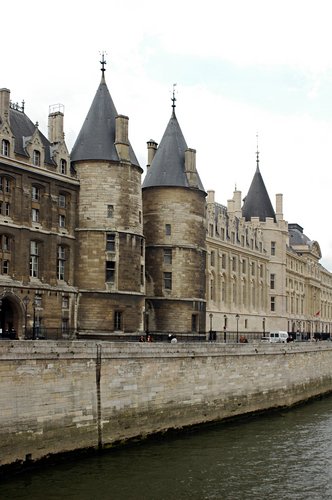
Her unpopularity helped lead to the overthrow of the monarchy when Parisiennes stormed the Tuileries palace on Aug. 10, 1792, followed by the establishment of the First French Republic in September. The family was imprisoned in the Temple on August 13, 1792, and moved to the Conciergie on Autust 1, 1793. There were several attempts to escape, but all failed.
Louis XVI was executed in January 1793, and Marie Antoinette was executed by the guillotine on October 16 of that year. She was charged with

mokarex standard bearer

Sunday, 15 May 2011

my collection

all of these foreign legion and arab horseman were bought in lodi in a toy shop I was passing in the early 90's and which had them on sale at about 20p each. There were a lot of other deetail there but for some reson I didnt go back.The crescen officer has a new metal sabre and was bought in a job lot of old crap on ebay. It cost me bout two pounds and the crecent officer was going unoticed