 reamsa
Under the pretext of reinforcing the Franco-Spanish army occupying Portugal, French Imperial troops began filing into Spain; the populace greeted them with enthusiasm in spite of growing diplomatic unease.
 In February 1808 Napoleon ordered the French commanders to seize key Spanish fortresses, and in doing so he had officially
  turned on his ally. A French column, disguised as a convoy of wounded, took Barcelona on 29 February by persuading the authorities to open the city's gates. Many commanders were not particularly concerned about the fate of the ruling regime, nor were they in any position to fight. (When Mariano Alvarez de Castro
 garrisoned the Barcelona citadel against the French, his own superiors ordered him to stand down.)
The Spanish Royal Army of 100,000 men found itself paralysed: under-equipped, frequently leaderless, confused  by the turmoil in Madrid and scattered from Portugal to the Balearic Islands.
 Fifteen thousand of its finest troops, (Pedro Caro
 , 3rd Marquis of la Romana's Division of the North) had been lent to Napoleon in 1807 and remained stationed in
  Denmark under French command. Only the peripheries contained armies of any strength: Galicia, with Joaquín Blake
 y Joyes's troops, and Andalusia, under Francisco Javier Castaños.
  The French were consequently able to seize much of northeastern Spain by coups de main, and any hope of turning back the invasion was stillborn.
by the turmoil in Madrid and scattered from Portugal to the Balearic Islands. Fifteen thousand of its finest troops, (Pedro Caro, 3rd Marquis of la Romana's Division of the North) had been lent to Napoleon in 1807 and remained stationed in Denmark under French command. Only the peripheries contained armies of any strength: Galicia, with Joaquín Blake y Joyes's troops, and Andalusia, under Francisco Javier Castaños. The French were consequently able to seize much of northeastern Spain by coups de main, and any hope of turning back the invasion was stillborn.
To secure his gains Napoleon pursued a series of intrigues against the Spanish royal family. A coup d'état instigated by the Spanish aristocrats forced Charles IV
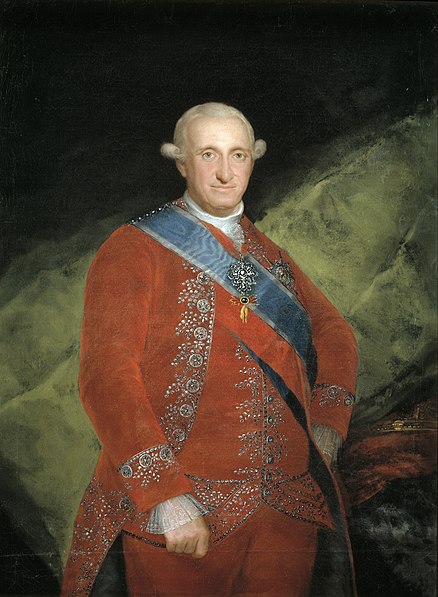 from his throne and replaced him with his son Ferdinand
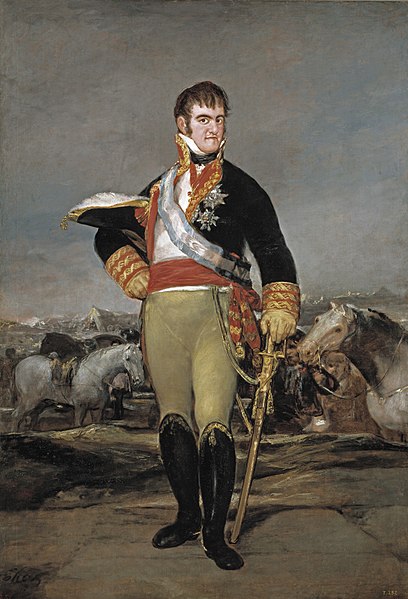 . Napoleon removed the royals to Bayonne
 and forced them both to abdicate on 5 May, handing the throne to his brother Joseph Bonaparte.When his father's abdication was extorted by a popular riot at Aranjuez in March 1808, he ascended the throne but turned again to Napoleon, in the hope that the emperor would support him.
 He was in his turn forced to make an abdication on 6 May 1808 but his father had relinquished his rights to the Spanish throne on 5 May 1808 (the previous day) in favour of Emperor Napoleon, so Ferdinand effectively had given the throne to Napoleon. Napoleon kept Ferdinand under guard in France for six years at the
  Chateau of Valençay.Five years later after experiencing serious reverses on many fronts, Emperor Napoleon agreed to acknowledge Ferdinand VII as king of Spain on 11 December 1813 and signed the Treaty of Valençay, so that the king could return to Spain. This, however, did not happen until Napoleon was nearly defeated by the allied powers several months later. The Spanish people, blaming the liberal, enlightened policies of the Francophiles (afrancesados) for causing the Napoleonic occupation and the Peninsular War by allying Spain too closely to France, at first welcomed Fernando. Ferdinand soon found that in the intervening years a new world had been born of foreign invasion and domestic revolution. In his name Spain fought for its independence and in his name as well juntas had governed Spanish America. Spain was no longer the absolute monarchy he had relinquished six years earlier. Instead he was now asked to rule under the liberal Constitution of 1812. Before being allowed to enter Spanish soil, Ferdinand had to guarantee the liberals that he would govern on the basis of the Constitution, but, only gave lukewarm indications he would do so.
 A puppet Spanish council approved the new king, but the usurpation provoked a popular uprising that eventually spread throughout the country. The Spanish revolt was the first example of the nationalism of another country being turned against Napoleon, although it was led largely by priests and nobles who stood for the conservative values of the old regime. On 2 May, the citizens of Madrid rose up in rebellion
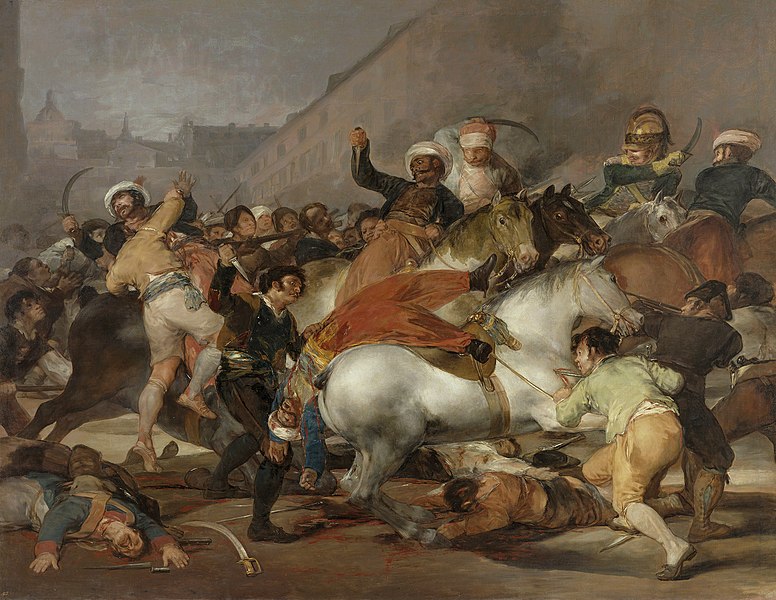 against the French occupation, killing some 150 French soldiers, before the uprising was put down by Joachim
 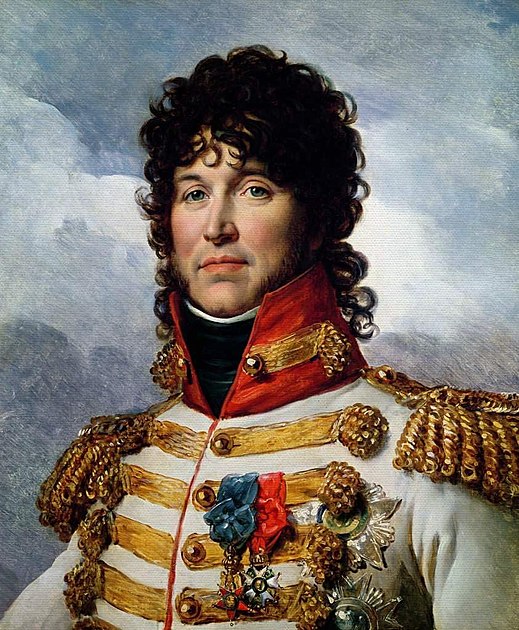 Murat's elite Imperial Guard and Mamluk cavalry, which crashed into the city, trampling the rioters.
In 1820 ferdinands misrule provoked a revolt in favor of the Constitution of 1812 which began with a mutiny of the troops under Col. Rafael del Riego
 and the king was quickly made prisoner. He grovelled to the insurgents as he had done to his parents. Ferdinand had restored the Jesuits upon his return; now the Society had become identified with repression and absolutism among the liberals, who attacked them: twenty-five Jesuits were slain in Madrid in 1822. For the rest of the 19th century, expulsions and re-establishment of the Jesuits would continue to be touchmarks of liberal or authoritarian political regimes.
At the beginning of 1823, as a result of the Congress of Verona, the French invaded Spain "invoking the God of St Louis, for the sake of preserving the throne of Spain to a descendant of Henry IV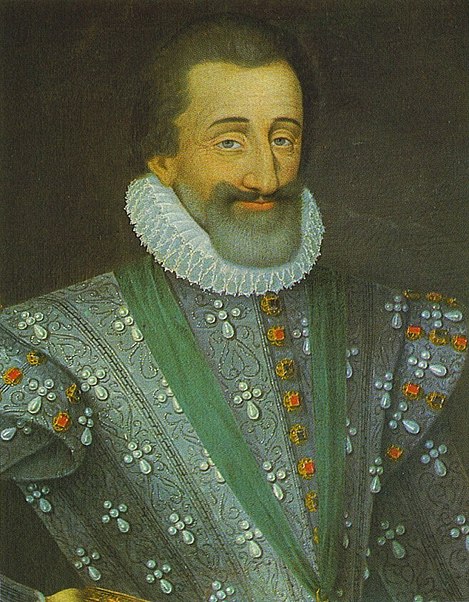 , and of reconciling that fine kingdom with Europe." When in May the revolutionary party carried Ferdinand to Cádiz, he continued to make promises of amendment until he was free.
, and of reconciling that fine kingdom with Europe." When in May the revolutionary party carried Ferdinand to Cádiz, he continued to make promises of amendment until he was free.When freed after the Battle of Trocadero and the fall of Cádiz he revenged himself with a ferocity which disgusted his far from liberal allies. In violation of his oath to grant an amnesty he avenged himself, for three years of coercion, by killing on a scale which left his "rescuers" sickened and horrified. The Duke of Angoulême, powerless to intervene, made known his protest against Ferdinand's actions by refusing the Spanish decorations Ferdinand offered him for his military services.
and the fall of Cádiz he revenged himself with a ferocity which disgusted his far from liberal allies. In violation of his oath to grant an amnesty he avenged himself, for three years of coercion, by killing on a scale which left his "rescuers" sickened and horrified. The Duke of Angoulême, powerless to intervene, made known his protest against Ferdinand's actions by refusing the Spanish decorations Ferdinand offered him for his military services.During his last years Ferdinand's energy was abated. He no longer changed ministers every few months as a sport, and he allowed some of them to conduct the current business of government. He became torpid, bloated and unpleasant to look at. His last ten years of reign (1823–1833) are generally known as the "Ominous Decade", and saw the relentless restoration of a reactionary absolutism, the re-establishment of archaic university programs and the suppression of any opposition, both of the Liberal Party and of the reactionary revolt (known as "War of the Agraviados") which broke out in 1827 in Catalonia and other regions.
After his fourth marriage, with Maria Christina of Bourbon-Two Sicilies in 1829, he was persuaded by his wife to set aside the law of succession of Philip V,
 which gave a preference to all the males of the family in Spain over the females. His marriage had brought him only two daughters. The change in the order of succession established by his dynasty in Spain angered a large part of the nation and led to a civil war, the Carlist Wars.
in 1829, he was persuaded by his wife to set aside the law of succession of Philip V, which gave a preference to all the males of the family in Spain over the females. His marriage had brought him only two daughters. The change in the order of succession established by his dynasty in Spain angered a large part of the nation and led to a civil war, the Carlist Wars.When well he consented to the change under the influence of his wife. When ill he was terrified by priestly advisers who were partisans of his brother Carlos . Ferdinand died on 29 September 1833 in Madrid.
. Ferdinand died on 29 September 1833 in Madrid.King Ferdinand VII kept a diary during the troubled years 1820–1823 which has been published by the Count de Casa Valencia.


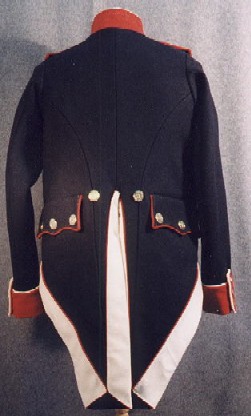
 rear
rear



 old rectory at Burnham Thorpe. His father was the rector here from 1755 to 1802. Horatio entered the Navy at the age of twelve,

 Hamilton was flourishing by this time and he and his wife seperated.
 the daughter of a blacksmith, probably on 26 April 1765. Her mother took her to North Wales and then to London to seek employment.
 She was a nursery maid in the 1770s but was soon employed as one of the vestal virgins in Dr. James Graham's Temple of Health. In this role she probably met many men!
 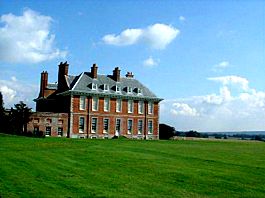 At 16, Emma became pregnant as the mistress of Sir Harry Featherstonehough of Uppark.
 She appealed to Sir Charles Greville, the second son of the Earl of Warwick and he agreed to be her protector. Emma became Sir Charles' mistress but as he was a younger son he had a modest income of about £500 a year. Sir Charles took Emma into his house and Emma's mother was installed in a house near Marble Arch. In March 1782 Emma's baby was born and sent to be cared for by her grandmother on the Wirral. Sir Charles commissioned Romney to paint Emma when she was 17.
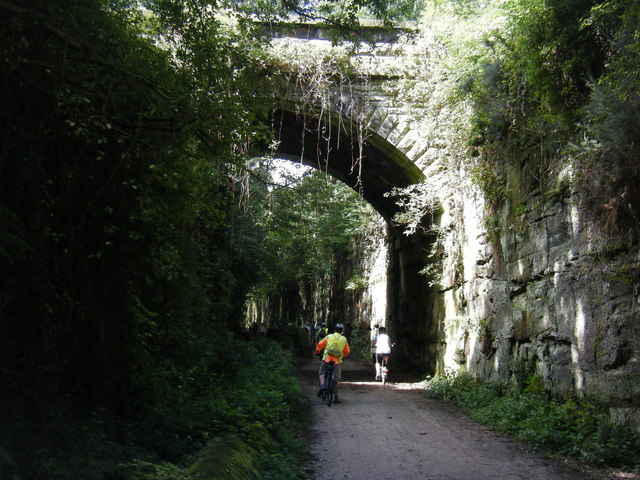 above wirral way at little neston
 relationship with Lady Hamilton was officially platonic and "perfectly pure", she bore him two children.
 flagship. The Battle of Trafalgar began on October 21, 1805, and Nelson hoisted his famous signal "England expects that every
 man will do his duty." The battle was won, but Nelson was hit while on the quarter-deck and died a few hours later. His body was brought home, and, after lying in state at Greenwich, was buried in St. Paul's
 Cathedral on January 6, 1806.


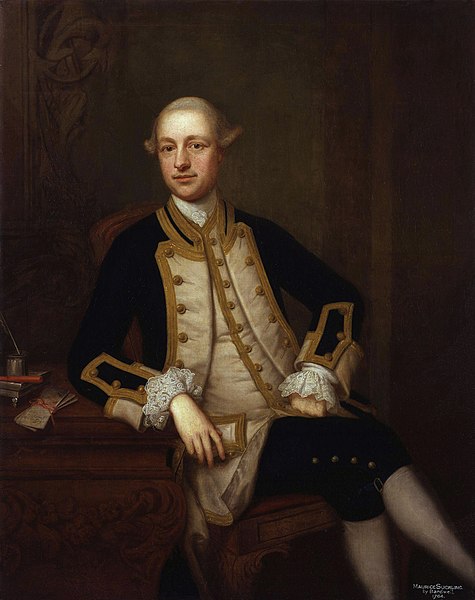 He rose rapidly through the ranks and served with leading naval commanders of the period before obtaining his own command in 1778. He developed a reputation in the service through his personal valour and firm grasp of tactics but suffered periods of illness and unemployment after the end of the American War of Independence. The outbreak of the French Revolutionary Wars allowed Nelson to return to service, where he was particularly active in the Mediterranean. He fought in several minor engagements off Toulon and was important in the capture of Corsica and subsequent diplomatic duties with the Italian states. In 1797, he distinguished himself while in command of
  HMS Captain at the Battle of Cape St Vincent.
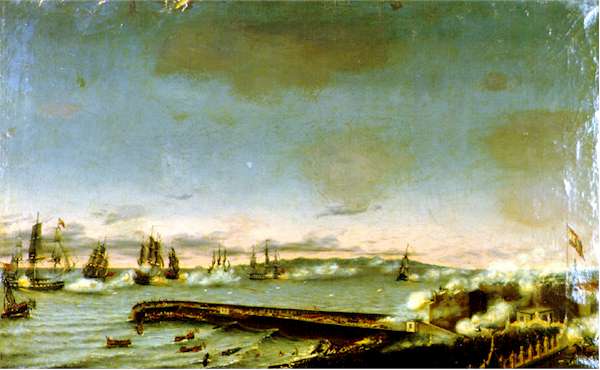 and he was badly wounded, losing his right arm, and was forced to return to England to recuperate. The following year, he won a decisive victory over the French at the Battle of the Nile and remained in the Mediterranean to support the Kingdom of Naples against a French invasion. In 1801, he was dispatched to the Baltic and won another victory, this time over the Danes at the Battle of Copenhagen.
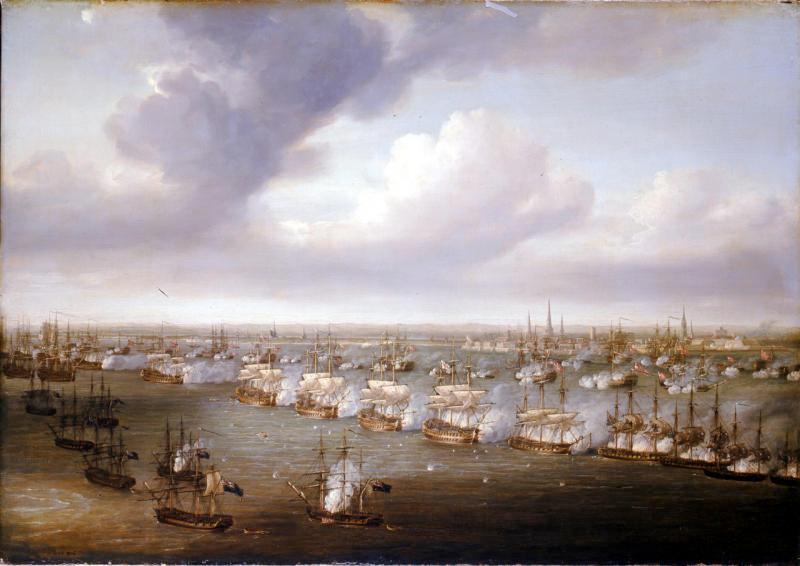 He subsequently commanded the blockade of the French and Spanish fleets at Toulon and, after their escape, chased them to the West Indies and back but failed to bring them to battle. After a brief return to England, he took over the Cádiz blockade in 1805.
 On 21 October 1805, the Franco-Spanish fleet came out of port, and Nelson's fleet engaged them at the Battle of Trafalgar. The battle was Britain's greatest naval victory, but during the action Nelson was fatally wounded by a French sniper. His body was brought back to England where he was accorded a state funeral.