Due to problems invented by Blogger and Google this blog will be moving on . It seems every time we get near to being paid out for the ads this and my other blogs create (but especially for them) they find an excuse not to pay.The latest one was that my photos were too big. This was given as an excuse on THE ITALIAN WARS OF INDEPENDECE. The other excuse was that I was inciting readers to click ads. I have no incitements like this. So we'll be leaving. I'd just ask you not to get involved with Google blogs. In my opinion =Not honest.
Tuesday, 11 October 2011


Sunday, 9 October 2011

wDg~~60_12.JPG)


3NOzp3BOPW!fvmRw~~0_12.JPG)
Tuesday, 4 October 2011
the development of armour by L.A. Long
 In my initial studies of medieval armor I examined six sources. At first I searched the Internet for broad information on the topic and found a few sites of interest. T
 he most useful website that I found appeared to be a personal work that discussed some influences in the development of metal armor. Then I turned to bound literary works for more precise information. Five such sources proved useful to me.below 1066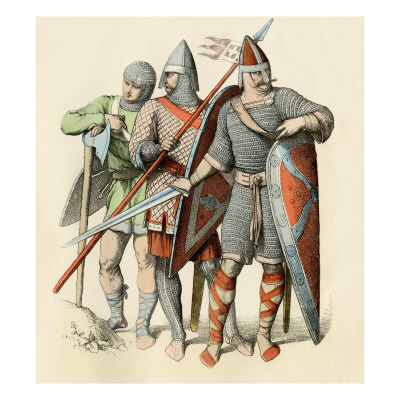
The first source I will discuss here is a large folio entitled Medieval Warfare by H.W. Koch. This book discusses details on the weapons, armor, and battles of medieval times . From what I had read, Koch writes rather eloquently, but the topics do not suit the subject of this paper. Instead I examined the artwork 1156 below
 reproduced in the folio. The paintings provided primary source information about the armor that existed and how it was used during the
  Middle Ages. Using paintings to study technology does have its risks though.
 Unlike photographs, paintings are subject to the interpretations of the painter and the painter is not always accurate. In a large number of medieval works the painter never intends to be accurate.
  Such inaccuracies are especially evident in fifteenth century portrayals of ancient heroes such as Alexander the Great and his soldiers donning full chain mail and plate armor.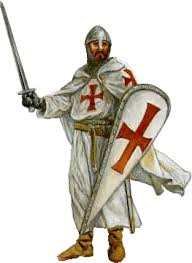
. From what I had read, Koch writes rather eloquently, but the topics do not suit the subject of this paper. Instead I examined the artwork 1156 belowreproduced in the folio. The paintings provided primary source information about the armor that existed and how it was used during the Middle Ages. Using paintings to study technology does have its risks though. Unlike photographs, paintings are subject to the interpretations of the painter and the painter is not always accurate. In a large number of medieval works the painter never intends to be accurate. Such inaccuracies are especially evident in fifteenth century portrayals of ancient heroes such as Alexander the Great and his soldiers donning full chain mail and plate armor.Another source that I looked at was Richard Barber's The Knight and Chivalry. In this book Barber restates 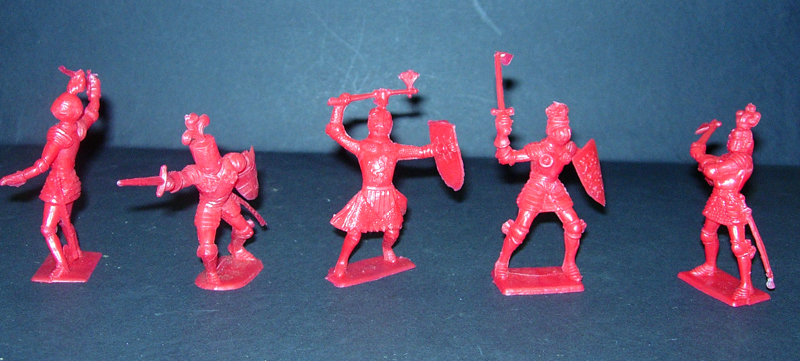 many of the older beliefs about medieval armor that are now contested by modern historians.
 In some parts his technological determinist views proclaim how certain technologies caused armor to appear or how the
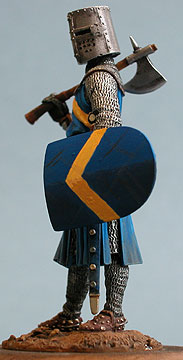 appearance of new armor led to new technologies, such as in his statement,
  "The knight's role in the actual fighting was strongly influenced by the development of armour." (Barber 193) Barber's main argument about armor seems to be that medieval armor was ineffective in combat and ultimately failed because it restricted mobility too much without enough gain in protection.
 I disagree with many of Barber's statements in favor of the arguments presented in the other sources.Gerhard Jaritz presents views opposite to Barber's on his Internet website.
 Jaritz states that "Modern reconstructions have shown that fighters in full suits of mail or plate can perform cartwheels, leap up directly from the ground, and even sprint for short distances." (Jaritz http://www.ceu.hu/medstud/manual/SRM/armor.htm) Furthermore, he argues that medieval armor was extremely effective and rendered armored warriors almost invincible. The contradicting views of these two authors presents another problem in the study of medieval armor. There is really no way to tell how effective armor was in battle unless it is actually tested in a real battle situation. All we can do is examine the evidence we have and make informed speculations based on our findings.
many of the older beliefs about medieval armor that are now contested by modern historians. In some parts his technological determinist views proclaim how certain technologies caused armor to appear or how the appearance of new armor led to new technologies, such as in his statement, "The knight's role in the actual fighting was strongly influenced by the development of armour." (Barber 193) Barber's main argument about armor seems to be that medieval armor was ineffective in combat and ultimately failed because it restricted mobility too much without enough gain in protection. I disagree with many of Barber's statements in favor of the arguments presented in the other sources.Gerhard Jaritz presents views opposite to Barber's on his Internet website. Jaritz states that "Modern reconstructions have shown that fighters in full suits of mail or plate can perform cartwheels, leap up directly from the ground, and even sprint for short distances." (Jaritz http://www.ceu.hu/medstud/manual/SRM/armor.htm) Furthermore, he argues that medieval armor was extremely effective and rendered armored warriors almost invincible. The contradicting views of these two authors presents another problem in the study of medieval armor. There is really no way to tell how effective armor was in battle unless it is actually tested in a real battle situation. All we can do is examine the evidence we have and make informed speculations based on our findings.The remaining three sources I have examined are less extreme in their arguments, but offer a wealth of seemingly objective information. Particularly interesting is Stephen Turnbull's Book of the Medieval Knight, which details many of the causes, effects, and consequences of new advances in armor. Turnbull does a great job in describing the development of armor in terms of actor/network theory by outlining specific events and problems that forced changes in existing armor designs. Change might not have occurred so quickly as suggested by Turnbull, but his argument is presented thoughtfully and convincingly.
effects, and consequences of new advances in armor. Turnbull does a great job in describing the development of armor in terms of actor/network theory by outlining specific events and problems that forced changes in existing armor designs. Change might not have occurred so quickly as suggested by Turnbull, but his argument is presented thoughtfully and convincingly.Another book, The Shield and the Sword by Ernle Bradford is not extremely interesting, but one comment did stand out. Bradford acknowledges that it took tremendous amounts of training and endurance for a medieval knight to effectively wear heavy armor and use weapons in combat, such that modern men cannot perceive how medieval arms could ever have been used effectively. He quotes, "It is one of the mysteries in the history of armour how the crusaders can have fought under the scorching sun of the East in thick quilted garments covered with excessively heavy chain mail." (Bradford 40) What was effective in the middle ages may not be effective in modern times, so one cannot argue that medieval arms were ineffective and failed. Any technology that endured and evolved over several hundred years as metal armor did must have been useful. Medieval armor had lived up to its main purpose of saving lives.
The final source that I looked at was The Medieval Machine by Jean Gimpel. The focus of the book is not on medieval knights and warfare, but it focuses on medieval invention. Because of this, it offers a different perspective on the development of armor. Armor was only briefly mentioned, but Gimpel discussed medieval iron production in detail. According to Gimpel, armor production during the middle ages was much higher than I had anticipated, facilitating the ability to equip entire armies with metal armor. Though heavy armor was exclusively used among the wealthy, some rulers were wealthy enough to amass fairly large armies of heavy calvary.
The main trend that I noticed among all of my sources was that older books tended to argue that armor was very slow and ineffective, whereas modern sources tended to claim that armor was crafted well enough that it was fairly light, easy to maneuver in, and highly effective. I believe that it was more of the latter, or else plate armor would never have evolved into the glorious heavy suits that we all know from legend.Chain mail armor was used very extensively throughout the medieval times.
 It consisted of thousands of riveted iron rings to form a mesh. The chain mesh was then crafted into relatively light protective garments such as shirts or leggings. A chain mail shirt was called a hauberk or byrnie, while mail leggings for the lower legs and feet were called the chausses. Hauberks and chausses were made at varying lengths depending on how much weight the warrior could carry for protection. Usually heavy padding was worn underneath chain mail armor to prevent painful chafing and absorb the shock of blows taken in battle. This padding was called the gambeson or aketon. Gambesons were simply tunics packed with wool and were used early in the Middle Ages. The aketons worn later on were padded garments that were lighter than gambesons.Go to the brilliant Knights of Avalon site.
  Here is the introduction
Welcome to Knights of Avalon
I started Knights of Avalon in 1999 at that time my reference books on lead figures were well use, but many times I found them lacking, the photographs were sometimes poor quality often too small and mostly in black and white. My main interest was Timpo Round Table Knights and their correct naming, but the site took on a life of its own and grew. It now has hundreds of pages and gets about 600 visitors a day . I add to this site constantly, all area get new pictures when they become available, often thought fellow collectors generously sending me pictures from their collections.The site now also contains hundreds of pictures of toy,cowboys,Indians, and many lead figures from British makers from the 50’s alongside the knights.Thank you for visiting...
Sunday, 2 October 2011
MARINES UK by LONE STAR

. Consider the mastery of Historex or Deetail or Eyes Right then consider the heaps of junk art put out by mosdt of the others. When I was a kid I would never entertain Lone Star or much of Cherilea or Timpo. To me most of it was done by would be artists who had no idea. Now these soldiers are collectors items solely for the fact that they existed.
Saturday, 1 October 2011
NWF
 The Mohmand Campaign (Aug-Sep 1935) by tim moreman
The Mohmand operations provided a practical test of the various changes introduced during the early 1930s. A combination of lightened personal equipment and light infantry training speeded up piqueting and improved cross-country mobility, but the Vickers machine gun company in each battalion remained a serious brake on mobility. Perhaps the most striking feature of the campaign was the willingness of Indian commanders to undertake large operations at night, enabling them to seize the initiative, upset tribal plans, and avoid the delay inherent in mounting deliberate attacks. As a result columns penetrated deeper into tribal territory before they had to return to the security of a perimeter camp each night .
New equipment also made its debut. A single tractor-drawn battery of 18lb supplemented the mountain artillery, whose longer ranged and more powerful guns were able to support several widely separated Indian columns. Perhaps of greater significance was the successful deployment of a single company of Mk II light tanks. Their invulnerability to rifle fire and cross-country mobility quickened the pace of operations as tanks could easily advance through tribal positions. Although cavalry was needed to reconnoitre the ground and engineers had to construct tank crossings over nullahs and improve the track across the Nahakki Pass, the terrain in Mohmand country did not present an appreciable obstacle nor did an attempt by the tribesmen to impede movement by digging pits and strewing the roads with rocks and boulders
'Mohforce' was heavily dependent on large quantities of ancillary units throughout the fighting which had both tactical and administrative implications for frontier warfare. A large number of non-combatant signallers, field ambulances, engineer parks, ordnance depots and motor vehicles accompanied 'Mohforce' and each day MT carried ammunition, supplies and water to a roadhead from where pack transport carried it to the forward troops. To encompass the large number of vulnerable vehicles and non-combatant troops, perimeter camps grew in size and complexity. It often proved difficult to find a flat space large enough for all troops and equipment and their construction was both time consuming and required considerable labour. The amount of manpower required for their defence, moreover, was considerable but as the proportion of infantry to other arms had fallen it was often difficult to provide sufficient troops [52]. A heavy consumption of ammunition made it vital to maintain and protect a permanent line of communication along the Gandab Road to service growing logistical requirements, facilitate the movement of reinforcements and evacuate casualties .
Armoured cars regularly patrolled the Gandab road, but the burden of protection, as always, fell on the infantry. Permanent piquets were constructed in the Karappa Pass, but the intricate and relatively low-lying land between Kialgai and Karappa lacked terrain features that afforded a field of vision and fire. Nowshera Brigade and 3rd (Jhelum) Brigade adopted a new system based on mobility and offensive defence employing lightly equipped fighting patrols who operated between strong posts constructed on either side of the road to deny tribal marksmen good positions .
Armoured cars regularly patrolled the Gandab road, but the burden of protection, as always, fell on the infantry. Permanent piquets were constructed in the Karappa Pass, but the intricate and relatively low-lying land between Kialgai and Karappa lacked terrain features that afforded a field of vision and fire. Nowshera Brigade and 3rd (Jhelum) Brigade adopted a new system based on mobility and offensive defence employing lightly equipped fighting patrols who operated between strong posts constructed on either side of the road to deny tribal marksmen good positions .
The lessons learnt in Mohmand country had clearly convinced the General Staff in India and many other British officers that both the tactical and administrative conduct of hill warfare had undergone major changes. A detailed section discussing this campaign in the A.H.Q. India Training Memorandum for the 1935-36 collective training season began:
The recent Mohmand operations showed marked advance in the conduct of operations of this nature and the methods employed. Apart from the advantages of a L. of C. with a road for M.T., which was effectively maintained, and of efficient administrative arrangements, the rapid and complete success obtained in this campaign may be attributed to enterprising leadership, development of existing methods, and the introduction of innovations.
Units throughout India were ordered by the Commander-in-Chief to follow guidelines laid down in this publication during the forthcoming training season which incorporated various lessons learnt regarding the employment of night operations, light tanks, armoured cars and the protection of the lines of communication. Sufficient practical experience of the impact of changes in the tactics, training, organisation and equipment on the conduct of hill warfare had now been gained to prompt the military authorities to begin preparation of a long awaited replacement for The Manual of Operations on the North-West Frontier of India .
The improving relations between the Air Staff and the General Staff, following the appointment of Air Marshal Edgar Ludlow-Hewitt as AOC in India, meant the RAF also took a greater interest in tactical co-operation with the army in mountain warfare during 1936 . Under his command in April 1935 the Air Staff in India had already issued instructions that RAF training in the subcontinent should henceforth be directed solely towards efficiency in tribal warfare, although primarily employing independent bombing operations . This decision had strengthened Wing Commander John Slessor's - CO of No. 3 (Indian Wing) - growing conviction that a radical change should be made in the system of army co-operation used in India, as the existing 'Aldershot model'- devised for conventional European warfare - was largely ineffective in mountainous terrain. Writing on 10th April 1936 he urged:
The great cry now-a-days seems to be co-operation - the balanced use of all arms and Services in Frontier warfare I should have thought there could be no better way of ensuring that good co-operation than by having a combined manual on which we all work, containing the description of all methods of Frontier warfare .
During the summer 'Tactical Exercises Without Troops' were held near Rawalpindi to demonstrate the effectiveness of close air support and study the inherent problems from the viewpoint of ground troops, while the Vickers-Bomb-Lewis (VBL) ground attack method was developed at Peshawar. 2nd (Rawalpindi) Brigade and aircraft from No. 3 (Indian) Wing took part in a large combined exercise at Khanpur between 17th and 25th November 1936, to both develop and test close air support tactics in mountain warfare, based on a provisional close-support manual written by Slessor and a draft of the new frontier warfare manual . These manoeuvres, (simulating tribal opposition to an Indian column engaged in road construction) conclusively demonstrated the practicalities of close-support and indicated the importance of RAF liaison officers at column HQs to direct operations, as well as an effective means of inter-communication between the aircraft and forward troops and between columns and airfields .
dragoons
 France was to call up a total of 1,600,000 men during the Napoleonic Wars, of whom a mere 600,000 were to survive. For those conscripted into service, one of the better fates would be recruitment as a cavalryman. Napoleon's dragoons were not just any band of individuals sorted and labelled cavalrymen; they were mounted infantrymen, trained to be adept with both musket and sabre, and proud of that distinction. Originally mounted for the sake of mobility but generally fighting on foot, they evolved into an army equally at home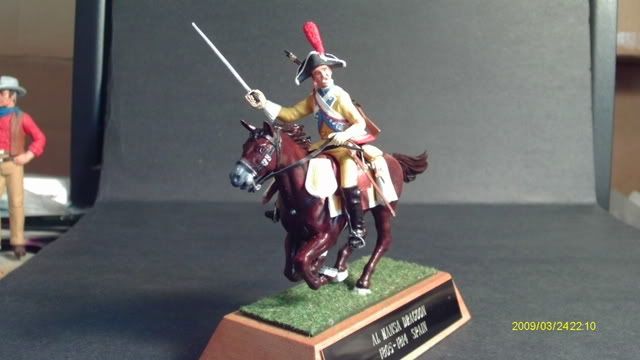
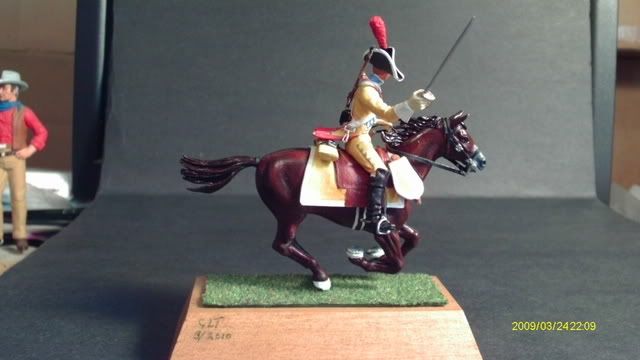
 sabring at the charge as firing dismounted.
Wednesday, 28 September 2011

capone v ness

Eliot Ness was born April 19, 1903 in Chicago, Illinois. He was the youngest of five siblings born to Norwegian immigrants, Peter and Emma Ness. Ness attended Christian Fenger High School in Chicago.(now closed because of student violence)
 He was educated at the University of Chicago, where he was a member of the Sigma Alpha Epsilon fraternity, graduating in 1925 with a degree in economics.
 He began his career as an investigator for the Retail Credit Company of Atlanta. He was assigned to the Chicago territory, where he conducted background investigations for the purpose of credit information. He returned to the University to take a course in criminology, eventually earning a Master's Degree in the field.
It was lucky that America also had scandanavian refugees as Eliot Ness one of greatest lawmen came from that ilk.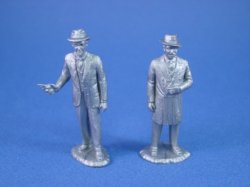 His showdown with Capone showed the difference between where an immigrant comes from unfortunately.
In 1926, Ness's brother-in-law, Alexander Jamie, an agent of the Bureau of Investigation (which later became the Federal Bureau of Investigation in 1935), influenced Ness to enter law enforcement. He joined the U.S. Treasury Department in 1927, working with the 300-strong Bureau of Prohibition, in Chicago .The Capone family immigrated to the United States in 1893 and settled at 95 Navy Street, The Capone family immigrated to the United States in 1893 and settled at 95 Navy Street, in the Navy Yard section of downtown Brooklyn, near the Barber Shop that employed Gabriele at 29 Park Avenue. When Al was 11, the Capone family moved to 38 Garfield Place in Park Slope, Brooklyn.in the Navy Yard section of downtown Brooklyn, near the Barber Shop that employed Gabriele at 29 Park Avenue. When Al was 11, the Capone family moved to 38 Garfield Place in Park Slope, Brooklyn.The Capone family immigrated to the United States in 1893 and settled at 95 Navy Street, in the Navy Yard section of downtown Brooklyn, near the Barber Shop that employed Gabriele at 29 Park Avenue. When Al was 11, the Capone family moved to 38 Garfield Place in Park Slope, Brooklyn.Shortly after he was expelled, his father moved the family to 21 Garfield Place, in the neighborhood that would influence the direction of Capone's life and ultimately, his future. Capone joined two local street gangs, the Brooklyn Rippers and the Forty Thieves Juniors. Among the members were Johnny Torrio and Lucky Luciano
Following the election of President Herbert Hoover, U.S. Treasury Secretary Andrew Mellon was specifically charged with bringing down gangster Al Capone. The federal government approached the problem from two directions: income tax evasion and the Volstead Act. Ness was
 chosen to head the operations under the Volstead Act, targeting the illegal breweries and supply routes of Capone.
With Chicago's corrupted law-enforcement agents endemic, Ness went through the records of all Prohibition agents to create a reliable team, initially of 50, later reduced to 15 and finally to just eleven men called, "The Untouchables". Raids against illegal stills and breweries began immediately; within six months Ness claimed to have seized breweries worth over one million dollars. The main source of information for the raids was an extensive wire-tapping operation. An attempt by Capone to bribe Ness's agents was seized on by Ness for publicity, leading to the media nickname, "The Untouchables." There were a number of assassination attempts on Ness, and one close friend of his was killed.

The efforts of Ness and his team had a serious impact on Capone's operations. However, Ness had very little to do with the IRS convicting Capone with income tax evasion, which lead to Capone's downfall. In a number of federal grand jury cases in 1931, Capone was charged with 22 counts of tax evasion and also 5,000 violations of the Volstead Act. On October 17, 1931, Capone was sentenced to 11 years in prison, and following a failed appeal, he began his sentence in 1932.

Lake View Cemetery
By 1938, Ness's personal life was completely transformed, while his career began to have some ups and downs. Ness concentrated heavily on his work, which may have been a contributing factor in his divorce from his first wife, Edna. He declared war on the mob, and his primary targets included "Big" Angelo Lonardo,
 "Little" Angelo Scirrca, Moe Dalitz,
 John Angerola and George Angersola and Charles Pollizi. Ness was also Safety Director at the time of several grisly murders that occurred in the Cleveland area from 1935 to 1938. Unfortunately, what was otherwise a remarkably successful career in Cleveland, withered gradually. Ness's critics at the time pointed to his divorces, his high-profile social drinking and his conduct in a 1942 car accident.
Ness moved to Washington, D.C. in 1942, and worked for the federal government in directing the battle against prostitution in communities surrounding military bases, where venereal disease was a serious problem. Ness's later life saw him make a number of forays into the corporate world, all of which failed from his lack of business acumen. In 1944, he left to become chairman of the Diebold Corporation, a security safe company based in Ohio. He ran unsuccessfully for mayor of Cleveland in 1947, after which he was expelled from Diebold. In the aftermath, Ness began drinking more heavily and spending his free time in bars telling (often exaggerated) stories of his law enforcement career. He also spent himself into debt. Ness was forced into taking various odd jobs to earn a living, including as an electronics parts wholesaler, a clerk in a bookstore, and selling frozen hamburger patties to restaurants. By 1953, he came to work for an upstart company called Guaranty Paper Corporation, which specialized in watermarking legal and official documents to prevent counterfeiting. Ness was offered a job because of his ex
 pertise in law enforcement. The company soon moved from Cleveland to the quiet rural town of Coudersport, Pennsylvania where operating costs were lower. He made a decent income from GPC and moved with his wife and adopted son into a modest rental house. Once again, he enjoyed going to local bars and regaling amazed audiences with his tales of crime fighting. He collapsed and died at his home of a massive heart attack on May 16, 1957. Collaborating with Oscar Fraley in his last years, he co-wrote the book, The Untouchables, which was published a month after his death.
Ness was married to Edna Staley (1900-1988) from 1929 to 1938, illustrator Evaline Ness (1911-1986)
 from 1939 to 1945, and artist Elisabeth Andersen Seaver (1906-1977) from 1946 until his death. He also had an adopted son Robert (1946-1976).Ness's ashes were scattered in one of the small ponds on the grounds of Lake View Cemetery, in Cleveland.
Subscribe to:
Posts (Atom)